

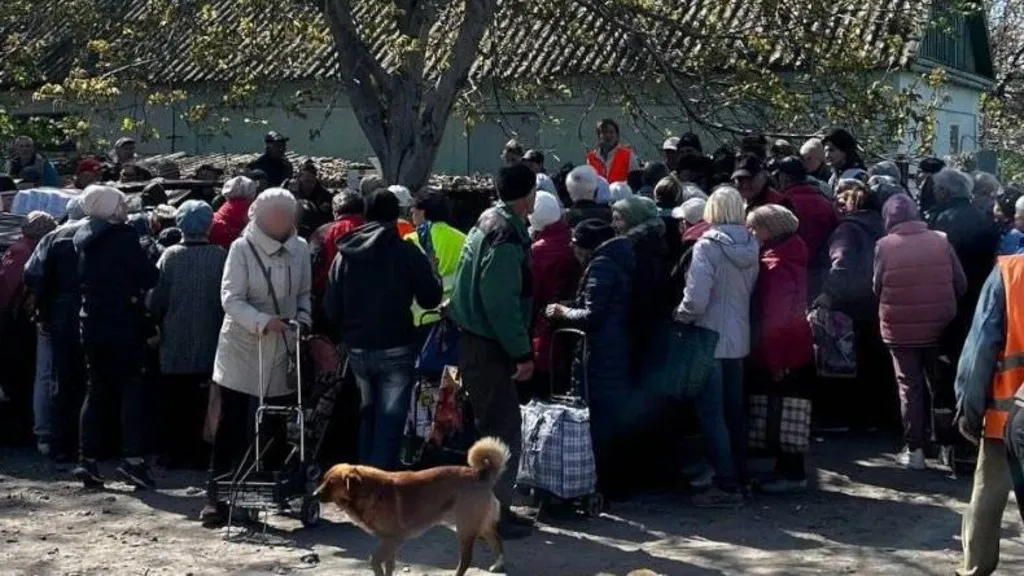
A 12-year-old with a high fever died without medical care in Russian-occupied Kherson Oblast, Hola Prystan official in exile Svitlana Linnyk told Ukrinform on 13 August 2026.
No medicine or medical worker was available locally, and the child’s mother could not reach an ambulance pickup point, she said.
The child's reported death comes amid a wider humanitarian crisis in Russian-occupied Kherson Oblast. UN and OSCE monitors found drone attacks, mines, and movement restrictions obstructing medical aid and evacuations around Oleshky and Hola Prystan, two occupied communities across the Dnipro from Kherson city. About 6,000 civilians, including 200 children, remained in and around the two communities as of May. Similar medical shortages span occupied Ukraine, while access to free medicines has been tied to having a Russian passport.
The Hola Prystan community where the child died has no operating hospital or rural medical post, Linnyk said. Only two pharmacies remain: one in the city of Hola Prystan and another in the nearby village of Nova Zburivka. Both are selling their remaining supplies.
The nearest hospital is in Skadovsk, an occupied Black Sea port about 60 kilometers by road from Hola Prystan. Nova Zburivka’s ambulance has not operated since 2025.
Russian occupation authorities have distributed no humanitarian aid for at least eight months to villages surrounding Hola Prystan, or for over a year in the city itself, Linnyk said.
Linnyk said a Moscow Patriarchate priest occasionally brought supplies but gave them only to Russian passport holders. This reflects a broader pattern of tying basic services in occupied Ukraine to accepting Russian citizenship.
Ukrainian children face a medical system stripped bare
The medical dangers surrounding the 12-year-old’s death are not confined to Hola Prystan.
In April 2025, Ukraine’s National Resistance Center reported that occupation officials were administering vaccines to children under six in Luhansk Oblast. It described the vaccines as uncertified and of unknown origin.
That November, the Center said a Russian inspection found Crimea’s main children’s hospital lacked breathing bags and cardiac monitors. It said infant mortality on the occupied peninsula had risen 9% over the previous year.
Aid comes with a Russian passport
Hola Prystan is not the only occupied community where access to care has depended on Russian citizenship.
In 2023, Russian-installed officials in occupied Zaporizhzhia Oblast threatened to deny medical care to residents without Russian passports. A 2025 Kremlin policy later tied free medicines for chronic illnesses to Russian citizenship.
Ukraine’s Health Ministry reported in July 2024 that Russian forces had destroyed 214 medical facilities. It said the full toll remained unknown because authorities had limited access to occupied territories.


