


Ukraine's drone operators struck 11 more Russian vessels in the Sea of Azov overnight on 14 July, bringing a nine-day total to 116, the Unmanned Systems Forces (SBS) said. SBS commander Robert "Madyar" Brovdi laid out what the campaign is for. The strikes paralyze the courier tanker fleet that moves Russian oil to export and fuel to occupied Crimea.
One night's haul: five tankers, five dry cargo ships, one tug
The overnight strikes hit five tankers, five dry cargo ships, and one tug, all in the Azov Sea. Operators of the 1st Separate Center, the 413th Separate Regiment Raid, and the 20th Separate Brigade K-2 struck the tankers and cargo ships. The 413th regiment hit the tug.
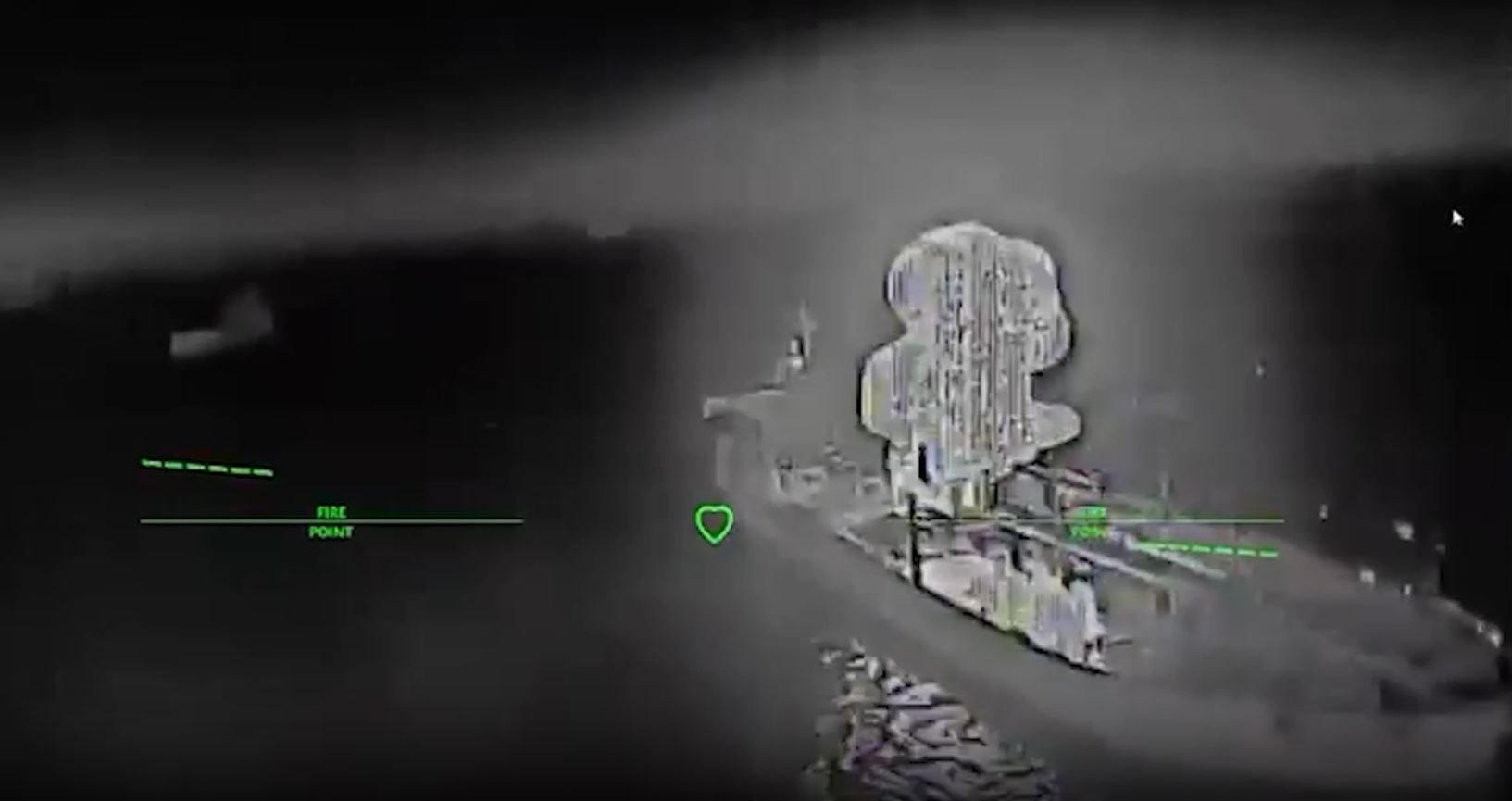
The operation, now at its ninth day, carries the name MoLoChKa, a Ukrainian term for dairy products. Both Brovdi and the SBS shared thermal video of the strikes.
NASA FIRMS satellite data again shows fires at the anchorage north of occupied Kerch — the same spot that burned on 12 July and 13 July — plus at Russia's Port Kavkaz across the strait.
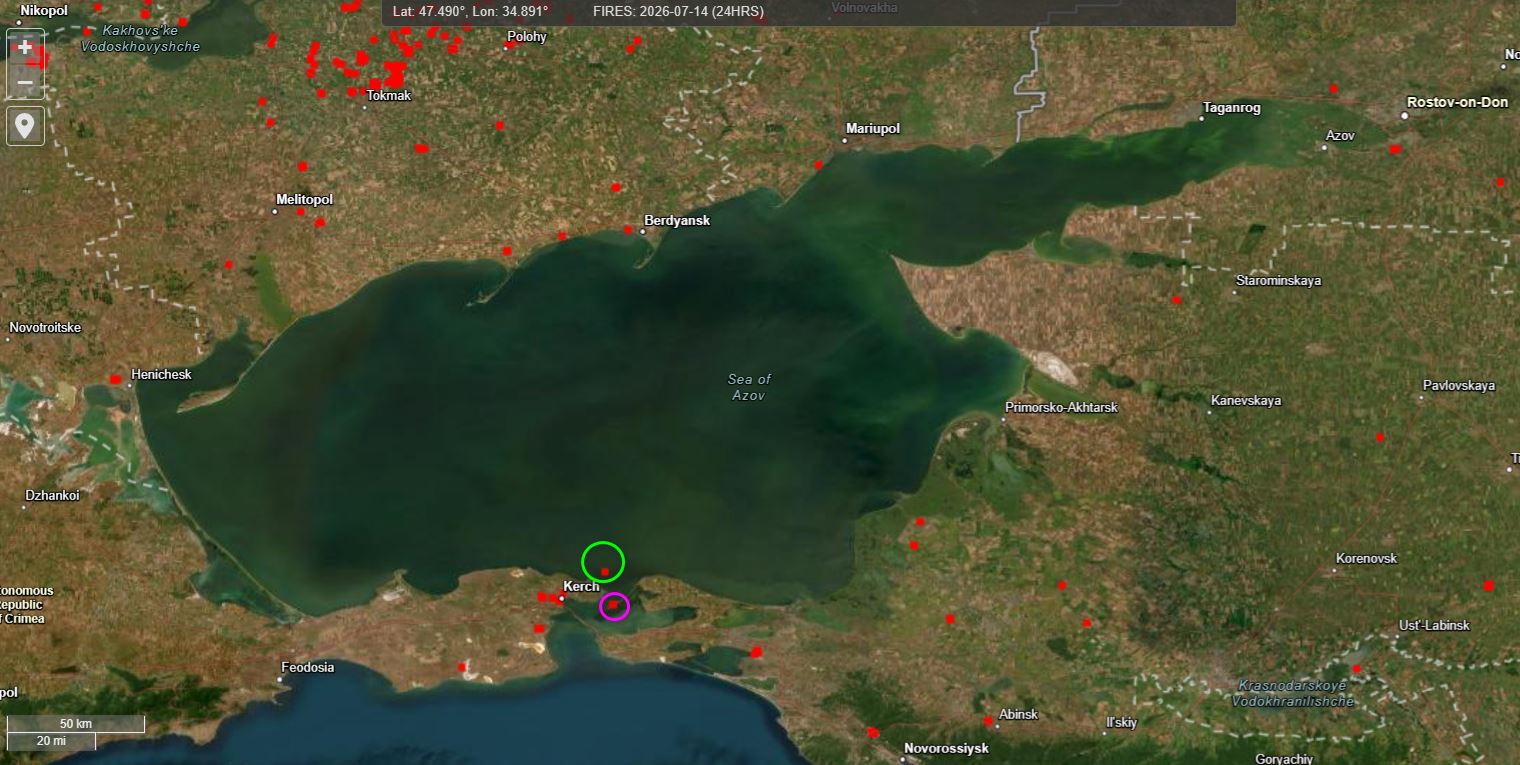
The July tally stood at 91 vessels by 12 July. A day later, strikes on 15 more ships spread across the whole Azov Sea.

Why the drones don't sink the ships
Brovdi said his operators strike the vessels without sinking them, turning them into ghosts drifting across the sea.
"The shadow fleet is wasting away, but it must disappear as a species," he wrote.
He promised to record a video explaining the operation in detail.
Euromaidan Press earlier suggested why the drone operators target the ships' controls instead of trying to sink them: this still knocks out the ships, doesn't carry environmental harm, and prompts Russia to send tugs to tow them away — adding the tugs to the target list.

One Russian ship every 112 minutes for a week: Ukraine hits 14 more vessels as total tally nears 100
The courier-tanker bottleneck
The campaign's core target is Russia's feeder fleet, Brovdi explained. These are small and medium flat-bottomed tankers, 140 meters long with 7,000 tons deadweight. They carry oil from Russian river transshipment bases down the Volga-Don Canal and across the Azov Sea. Russia's large export tankers sit too deep to enter those shallow terminals. They load at anchor in the Black Sea instead, each taking the volume of 12–15 courier runs. Paralyzing the couriers, therefore, effectively blocks the export of Russian oil at its source, Brovdi said. His drones also burn the tugs that tow struck tankers across the sea.
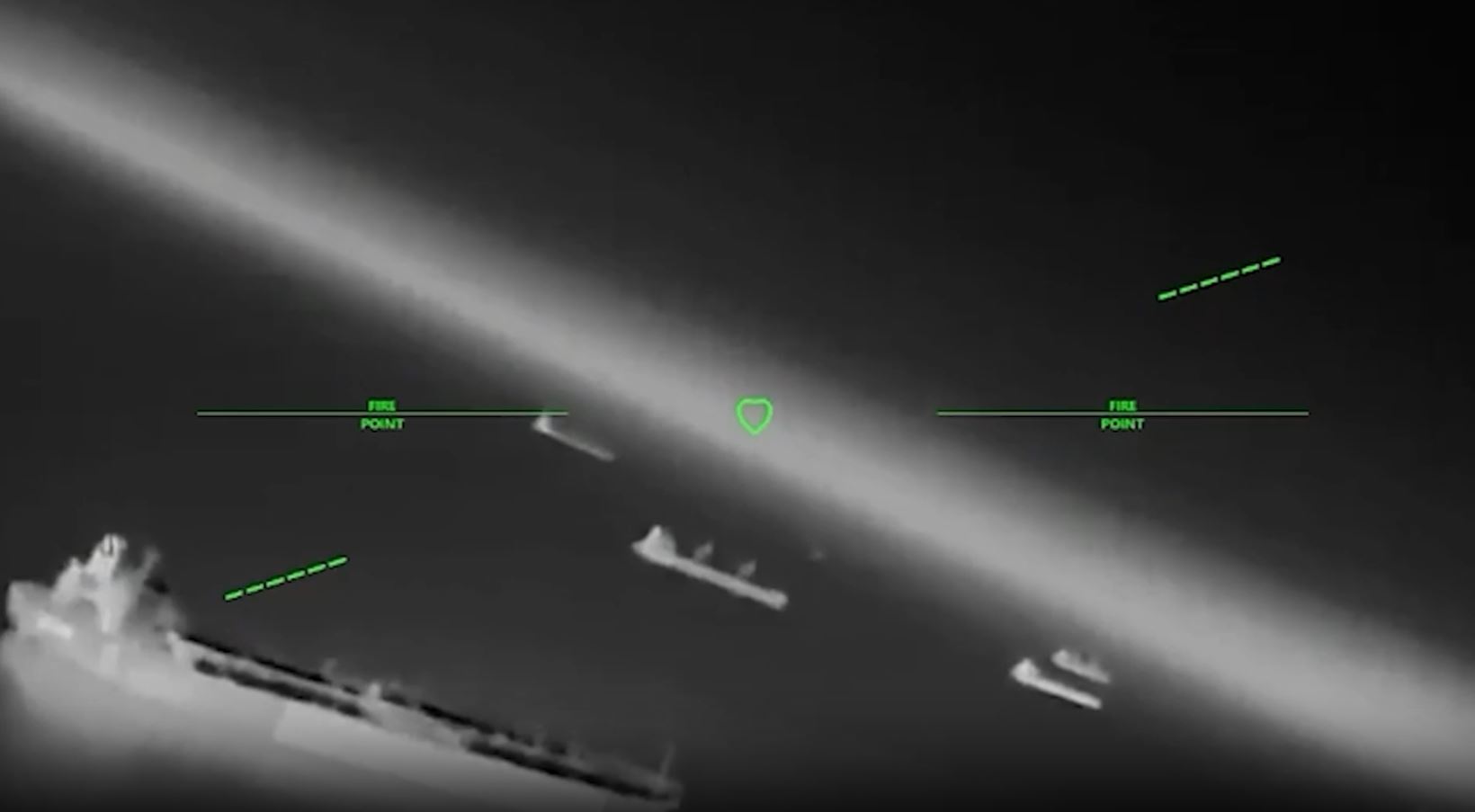
The same squeeze limits gasoline deliveries to Crimea through the shallow neck of the Azov Sea. That leaves road and rail cisterns as Russia's main and very dangerous option, since Ukrainian drones keep both under fire control.
SBS: the target is Russia's war logistics and war money
Despite international sanctions, Russia keeps exporting oil through its shadow fleet and spends the revenue on the war against Ukraine, the SBS noted. The operation's goal is the consistent disruption of the enemy's logistics chain. Disabling tankers, dry cargo carriers, and auxiliary vessels complicates oil exports and limits maritime transport. It also cuts Russia's ability to fuel its troops and the occupation grouping in Crimea.


