


Russia wants to start moving grain and other cargo through the Syrian naval base it leases, keeping warships at one berth and commercial shipments at the other, Reuters reported. Syrian officials describe the plan as central to Moscow's effort to hold on to Syria through trade after losing its closest Middle Eastern ally. Syria's port authority denies the project exists.
Wheat at one berth, warships at the other
Russia hopes the logistics hub at Tartus will be working by mid-July, Syrian officials said. The first cargoes, according to Ajaj, run from wheat, grain, and animal feed to vegetable and mineral oils, timber, steel, clinker, coal, rice, and sugar. Organizers are targeting about 250,000 tons of cargo a month. The opening shipment is meant to be 30,000 tons of grain.
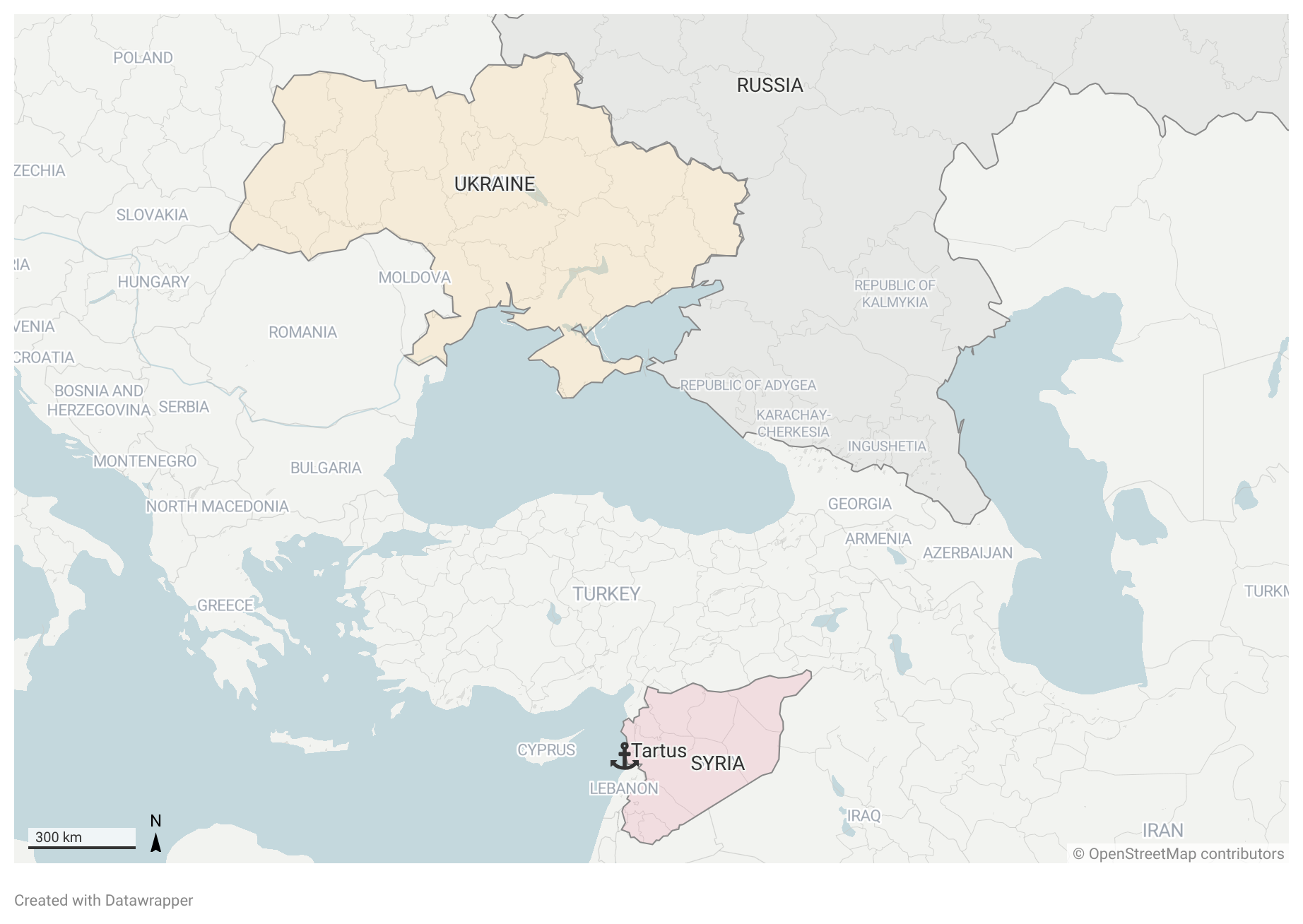
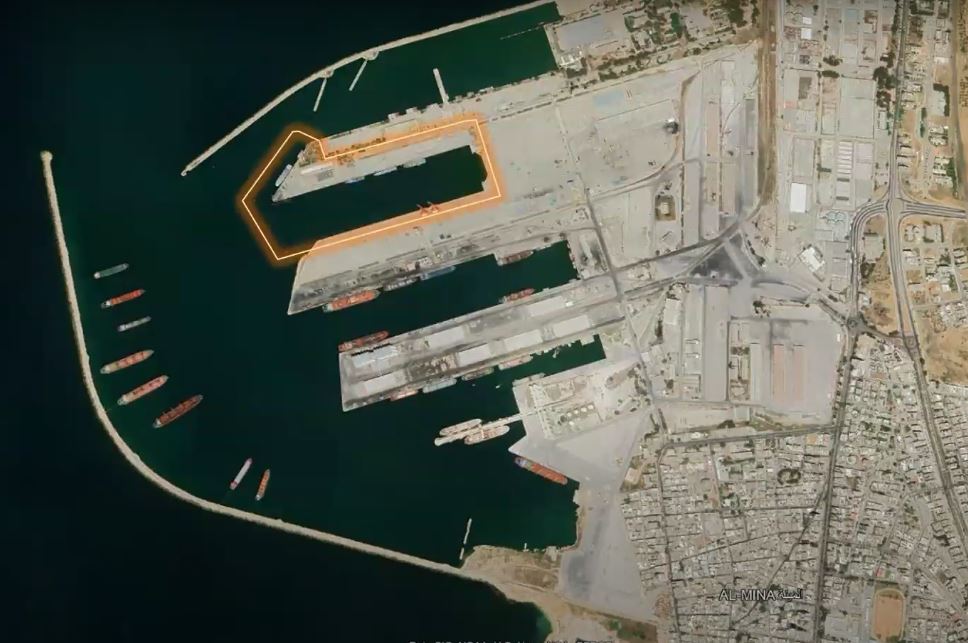
Rus Line, a Syrian logistics firm, is developing the hub together with Russian companies that sit under the Russian-Syrian Business Council — a body run by Russia's Industry and Trade Ministry. The council announced an "assembly and distribution center for Russian goods" at the port on 6 June.
Pier No. 4 is where the cargo will be handled, Rus Line chief executive Jinan Mubadda said. The company's general manager, Ossama Ajaj, called that pier a "restricted zone" of the naval base, and said the site stays under Syrian command: nothing moves without a green light from Syria's General Authority for Ports and Customs. Ajaj also suggested Russia would keep a "reduced military presence."

Russia maintains military presence in post-Assad Syria – but Damascus now holds leverage
The port authority rejected the account after publication. Spokesman Mazen Alloush called reports of a Russian commercial hub at Tartus "entirely false" and said any deal over Syrian ports or border crossings would go public only via official state channels.
The plan builds a regular shipping line between Novorossiysk—Russia's port on the northeastern Black Sea coast—and Tartus, with goods distributed onward across Syria and its neighbors. Iraq and Jordan come first on Ajaj's list of destinations, with the Gulf — Saudi Arabia, Kuwait, Qatar, Bahrain — next in line.
What Moscow already holds in Syria
The hub would extend an economic grip that survived the collapse of Russia's military position. Russia and Russian-occupied Crimea supply 85% of the wheat Syria imports — 2.9 million tons this 2025-26 season, according to a Syrian customs document. Ukraine's Foreign Intelligence Service has documented that shipments of grain grown on occupied Ukrainian land resumed to Syria in 2025.
Syrian reliance on Russian crude has grown since Assad's fall. The country took about 16.8 million barrels of Russian oil in 2025 and roughly 60,000 barrels a day in early 2026.

After Assad fell in 2024, Moscow lost its main Middle Eastern ally, and its Syrian leases became uncertain. In 2025, Syria canceled Stroytransgaz's 49-year contract to develop commercial facilities at Tartus — the very business Russia is now trying to restart.
Russian military flights returned to the Hmeimim airbase in late October 2025. Moscow and Damascus are still negotiating the fate of both installations. Russian Foreign Ministry spokeswoman Maria Zakharova claimed in June that the sides were discussing a possible "reformatting" of Russia's military facilities.


