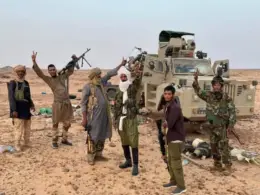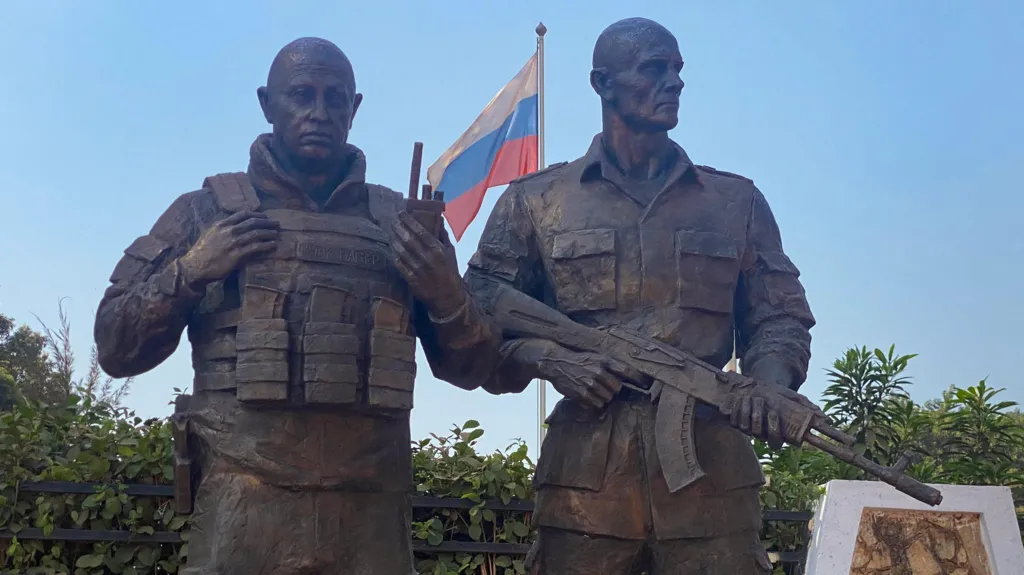
Remnants of Russia's Wagner mercenary group have built a drug empire in the Central African Republic on the painkiller tramadol — a fief beyond the reach of law enforcement or even Moscow itself, the Wall Street Journal reported. Up to 500 mercenaries remain along the upper Oubangui River, led by Pavel Prigozhin, son of the group's late founder. Their control of the opioid trade now funds weapons, militias, and a deepening grip on the country.
Poor man's cocaine
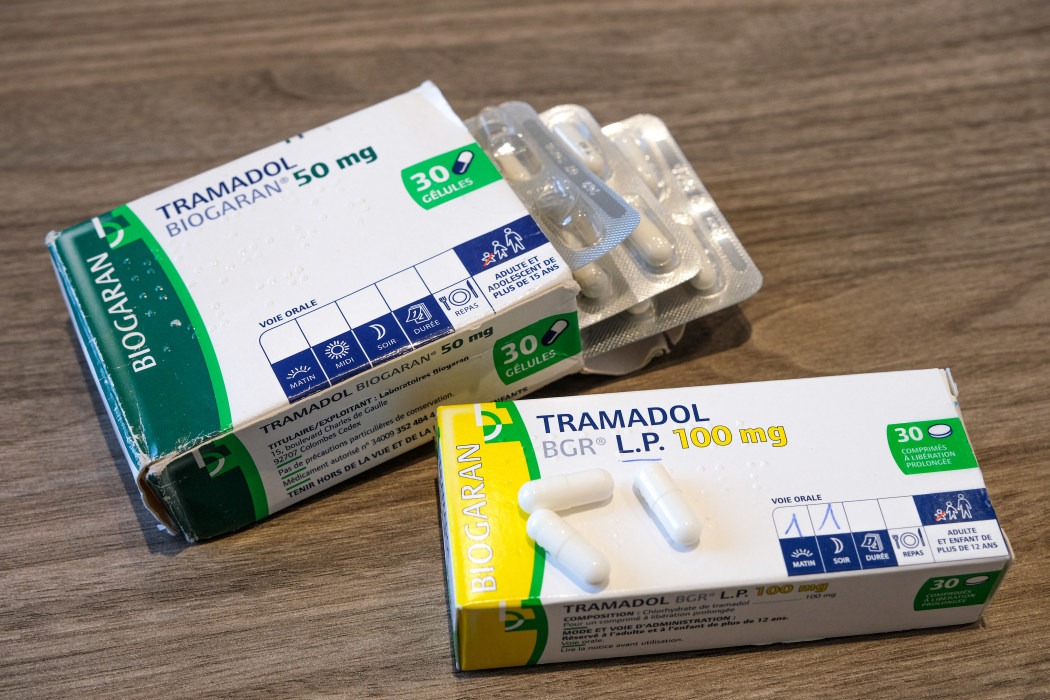
Tramadol is normally prescribed for aching joints or post-surgery recovery. At high doses, the opioid turns into a fiercely addictive stimulant — the poor man's cocaine, as it is nicknamed. The recommended dose runs 50–100 milligrams. Shops across the Central African Republic routinely stock tablets of 200 milligrams and higher.
The pill runs through every layer of Wagner's local economy, the WSJ found. Miners at the group's gold pits take it to push through punishing shifts. Demonstrators rallying for Russia's involvement swallow the pills to keep hunger and exhaustion at bay. Fighters in the country's long insurgency swallow high doses for courage.
"In battlefield contexts, tramadol is being taken in massive doses," Nathalia Dukhan of the Global Initiative Against Transnational Organized Crime told the outlet. "Fear vanishes and agitation surges as combatants enter a pharmacological trance."
The river that feeds the empire
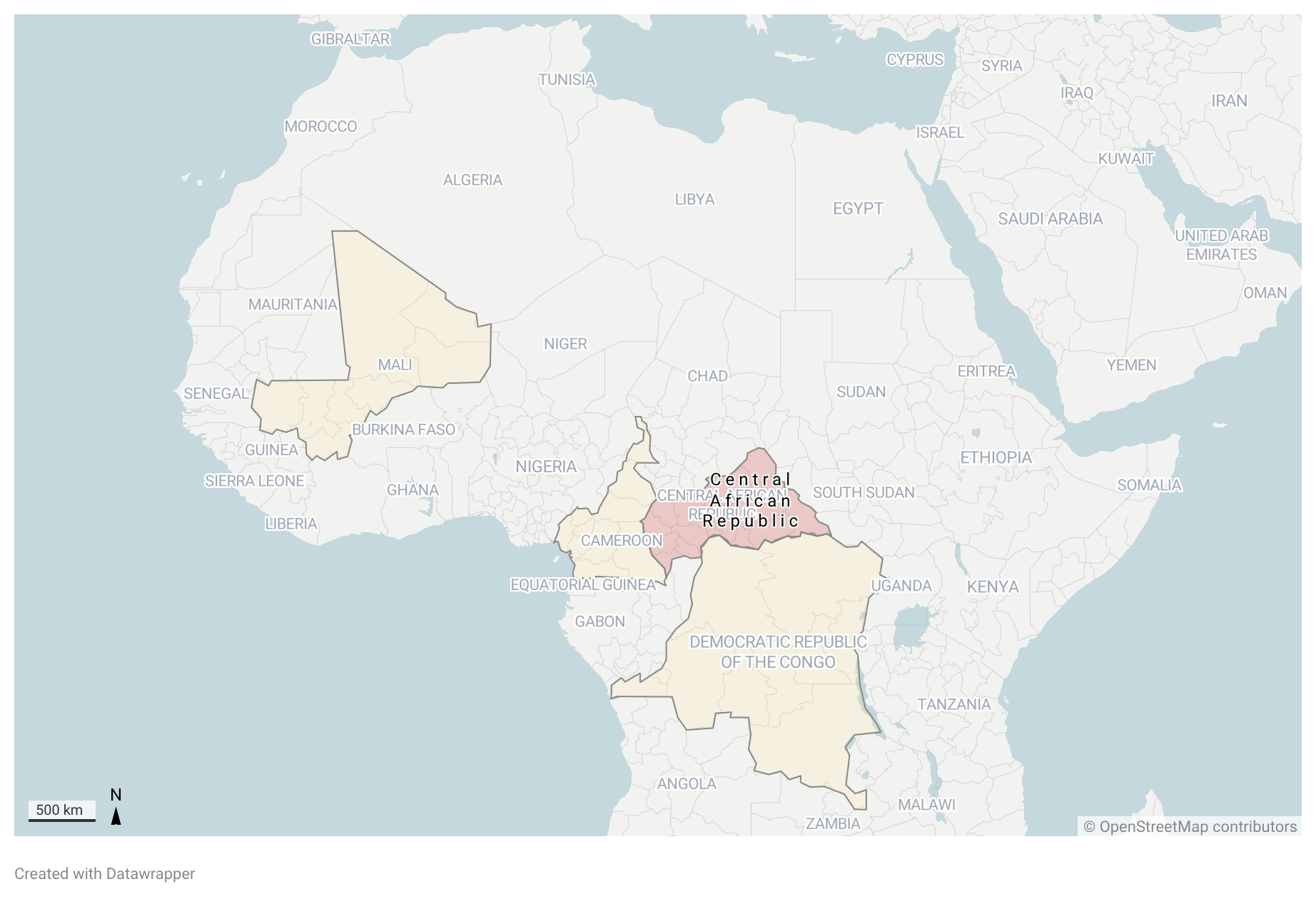
The pipeline starts in India: pharmaceutical companies there ship the drug to firms in the Democratic Republic of Congo. Shipments are registered as standard 50-milligram doses, researchers and traders told the WSJ. High-dose pills travel concealed in the cargo. From Kinshasa, smugglers move the pills to the border town of Zongo, then across the Oubangui River. On the other side, they fill shops and market stalls throughout Bangui, the Central African Republic's capital.
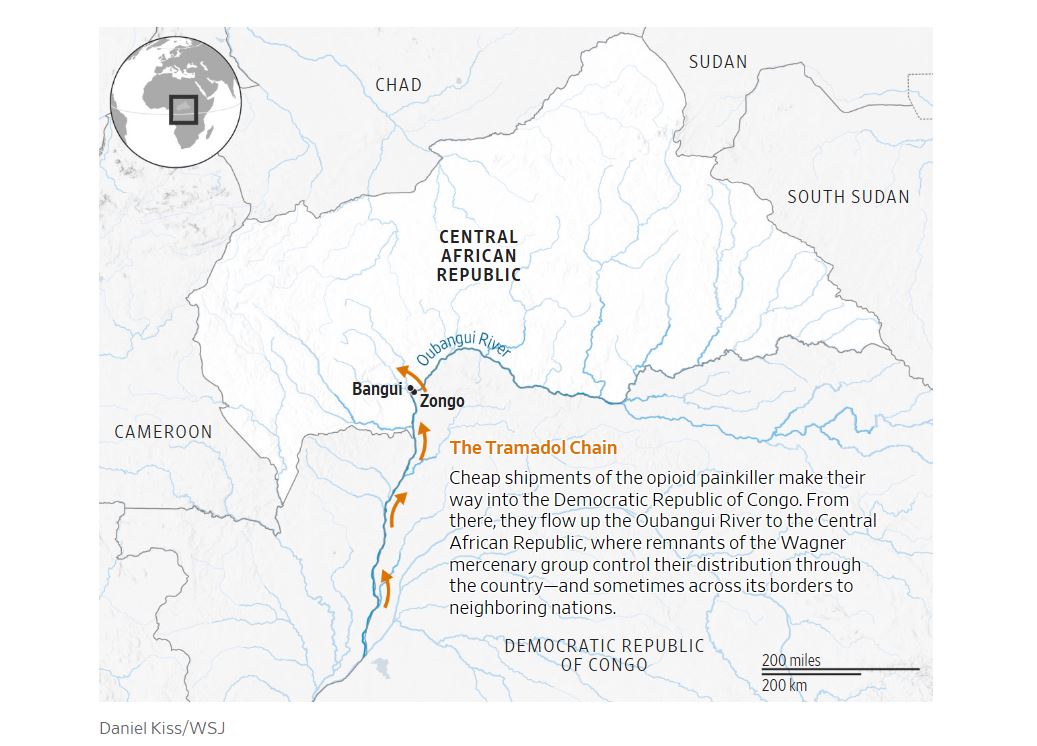
The mercenaries' chief target in recent months has been that river trade, and their hold on it has tightened. Demand is strong enough that the local price tripled over the past year. Profits multiply again abroad. A consignment worth about $7,000 in the country can fetch up to $21,000 in Cameroon — once smugglers hand roughly $4,000 to Wagner and allied armed groups en route, traders told the outlet.

In Mali, Russians and Malian army killed four civilians, then staged a corpse into a swastika
Prigozhin's son inherits the last fief
The remnants hold their ground upriver under the younger Prigozhin's command. Wagner arrived in 2018 under a security pact with President Faustin-Archange Touadéra and beat back the insurgency threatening his rule. After the elder Prigozhin died in a 2023 plane crash, Russia absorbed most of the group's operations worldwide — but not here. The country's remoteness and the remnants' deep entrenchment blocked the takeover. The Pentagon-sponsored Africa Center for Strategic Studies says the old Wagner has in effect taken over the state.

Illicit gold exports alone bring the group an estimated $180 million a year, the Global Initiative calculates. Tramadol trafficking adds a second revenue stream — and the cash buys more weapons for Wagner's forces and militias.
The country's isolation has kept Wagner off the international radar, former State Department official Cameron Hudson told the WSJ. That gives the group a freer hand — much as its Africa Corps successors operate with impunity in Mali. And the fief is looking outward: the researchers warn Wagner is entering Sudan's Darfur in coordination with the Rapid Support Forces rebels.
Read also
-
Russia plans to open eight new cultural centers in Africa to court a loyal generation, HUR says
-
Russia listed Ivory Coast as a “promising country” for influence operations — then ran four anti-Ukraine campaigns there in five months
-
Over 1,000 Kenyans lured into Russia’s war in Ukraine, 50+ Ghanaians killed there — three governments confirmed it, none confronted Moscow