

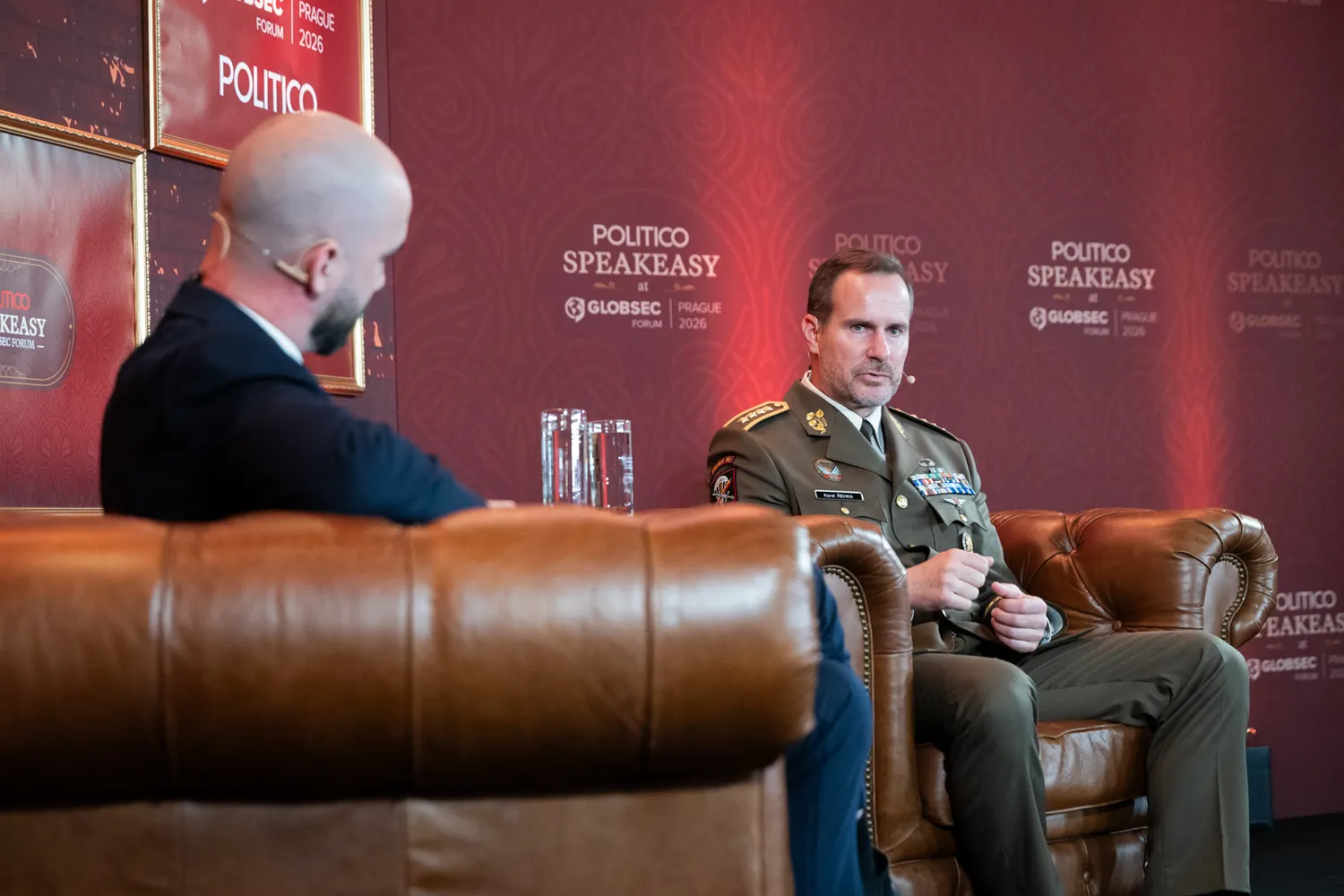
Ukraine is buying the West time to rearm against Russia, and the country should join NATO once the political consensus catches up, General Karel Řehka, outgoing Chief of the Czech General Staff, told Euromaidan Press at the GLOBSEC Forum in Prague this week.
"I don't want to be rude, but no one wants this war to go on because you're buying us time," Řehka said. "Helping you to fight the Russians is helping ourselves."
The remarks come from a serving European military leader weeks before he leaves his post after four years as Chief of the General Staff, and they land at a moment when the political space around Ukraine's NATO bid has narrowed sharply.
By December 2025, with US-led peace talks underway, President Volodymyr Zelensky had pivoted from demanding NATO membership to seeking "Article 5-like" bilateral US security guarantees as the achievable compromise — calling it "already a compromise on our part." Řehka, on the record at GLOBSEC, made the case for the opposite trajectory: that Ukraine providing security to Europe is the institutional argument for Ukraine being inside European structures, not outside them.
"Sure. I think it's a logical step," Řehka said when asked directly whether he wants to see Ukraine as a NATO member during POLITICO's discussion at GLOBSEC. "I'm not saying it's easy. It is, in the end of the day, it's about political consensus of the different interests." Later in the exchange: "I don't see any good European security without getting Ukraine integrated into all those structures."
GLOBSEC2026
-
Ukraine’s fight against Russia reaches Africa as Ukrainian drone specialists support forces battling Moscow
-
Russia strikes passenger train near Polish border as drone swarms reach deeper into western Ukraine
-
Watch first naval battle in history fought entirely by drones: Ukrainian uncrewed boat spots, fires on, and sinks Russian one in Black Sea
"It's not about price"
Pressed by Euromaidan Press on whether the price Ukraine is paying in lives for the security service it provides Europe is adequate, Řehka refused the framing.
"I wouldn't put it even this way," he said. "What is adequate?" Ukraine, in his account, is defending itself against unlawful attack and defending Europe at the same time.
"If you fell, let's say, if we stopped supporting you, then in the end of the day, Russia could go on with other aggressions and they could focus on rebuilding their capabilities, strengthening their military and everything else faster," Řehka added. "You're defending us by holding the Russians away."
"In no way do I want this war to continue," he added. "I think as soon as it finishes, it's better, as long as it's the right peace."
"This is not charity"
"But it's not only buying the time; you are also weakening the major threat to us. You are containing Russia. So all that is basically good for European defense and NATO. [...] And the reason I'm saying it is just for people to understand—this is not charity. This is really actually what we need because in the end of the day, you are providing security to Europe by being able to face the Russia and keep them away from us," he said.
Ukraine, he added, is not just a security consumer but a security provider, generating effects Europe could not otherwise buy: "They buy us time, they are weakening Russia, they giving us inspiration, they giving us valuable lessons and information."
Czech-Ukrainian training cooperation has run in both directions, Řehka confirmed, including Ukrainian experts giving Czech forces seminars and lessons from the battlefield.
The hard number behind the abstraction is the Czech-led artillery shell initiative. When it started, Ukraine was firing roughly one shell for every seven to ten fired by Russian forces. The ratio is now approximately 1 to 2.8, Řehka said, citing Ukrainian figures, consistent with Czech Foreign Minister Jan Lipavský's account earlier this year.
Russia's dominant battlefield artillery advantage—the volume of fire that ground Ukrainian lines back through 2024—has been roughly halved. The know-how came from Prague, the financing from donors across the alliance, and the mechanism, Řehka said, is "not replaceable in short term."
The initiative now faces political opposition at home. Former Prime Minister Andrej Babiš, who returned to office after October 2025 elections, branded the program "rotten" during the campaign and pledged to scrap it, though he has since said it will continue if international partners fully fund it.
"We missed leadership"
The hardest edge of Řehka's remarks turned inward. Asked what the Czech Republic must do this year—not by 2029 or 2030—he was direct: admit the problem at the political level, build societal consensus on the Russian threat, and stop pretending the work can be deferred.
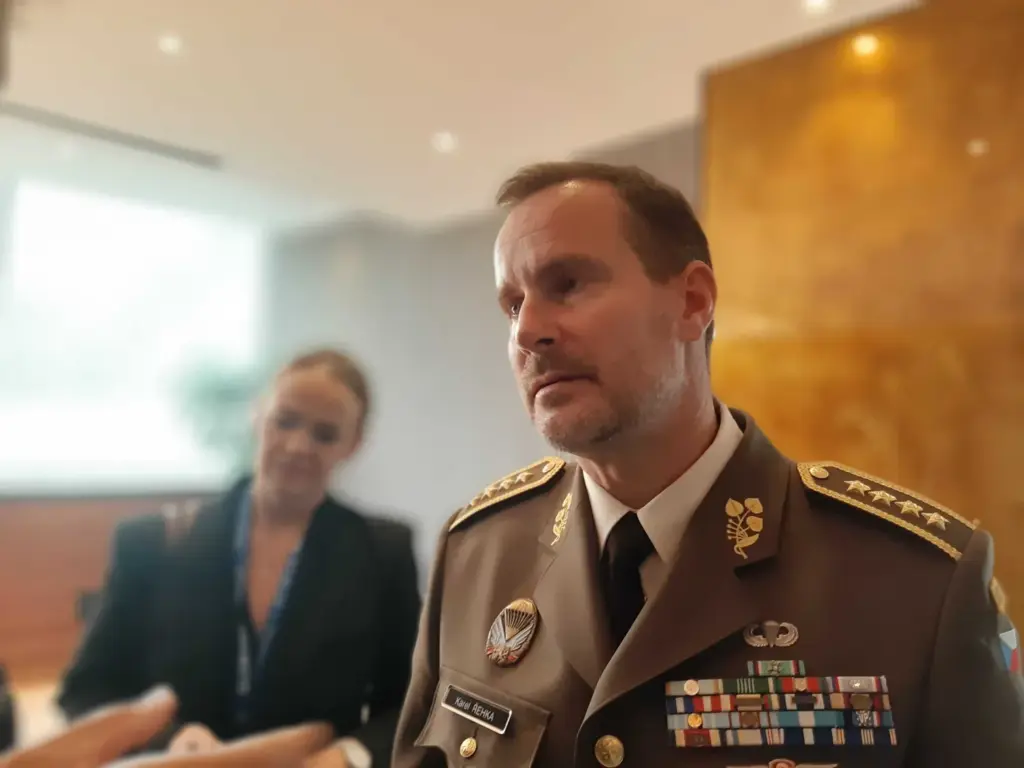
"We missed leadership," Řehka said. "We need the real leadership."
The Czech military, he added, "will fight with whatever we have." But the country's legislation, reserve system, industrial base, and public understanding of the threat have all lagged badly, and the gap cannot be closed in the five or six years European militaries are giving themselves before the next possible Russian test of NATO.
For four years, Řehka said, he has given "brutally honest, unfettered, and straight military advice" to Czech political leaders, sometimes unsolicited, sometimes earning "colorful criticism" for it.
Read also
-
Ukraine’s fight against Russia reaches Africa as Ukrainian drone specialists support forces battling Moscow
-
Russia strikes passenger train near Polish border as drone swarms reach deeper into western Ukraine
-
Watch first naval battle in history fought entirely by drones: Ukrainian uncrewed boat spots, fires on, and sinks Russian one in Black Sea
This material was produced as part of a project by the Institute of Mass Information with the support of the Ministry of Foreign Affairs of the Netherlands. The content of this publication does not reflect the official position of the IMI or the Kingdom of the Netherlands.


