

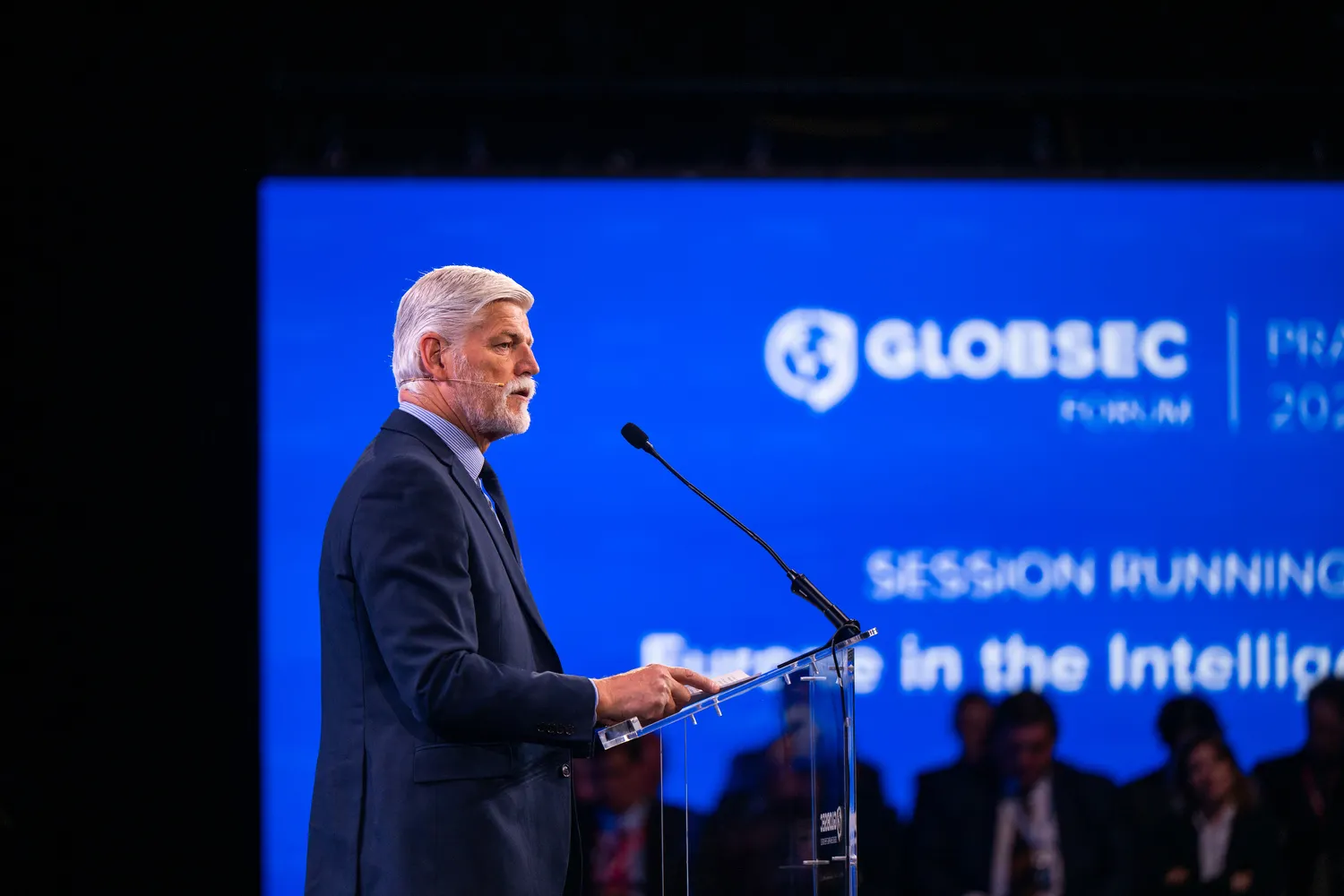
Czech President Petr Pavel opened the GLOBSEC Forum in Prague on 21 May with a strategic case for Ukraine that broke with the language of charity and aid. "Supporting Ukraine is not a charity," he told the conference. "This is a direct investment in Europe's own security." His sharpest line came in the same passage: "If Ukraine is forced into a bad peace, we all will live with the consequences."
The warning carries weight because Pavel was, before his presidency, chairman of NATO's Military Committee and the architect of the Czech-led ammunition initiative that delivered more than a million artillery shells to Ukraine. H
is speech amplified a framing first put on record two weeks ago in Prague, when Finnish President Alexander Stubb, standing alongside Pavel, said: "Instead of talking about what Ukraine needs from Europe, perhaps we should discuss what we in Europe need from Ukraine."
Pavel made that frame his own at GLOBSEC, and added a tactical critique to it.
Ukraine as Europe's defense laboratory
"Ukraine has become one of Europe's most capable defense actors," Pavel said. "It has demonstrated remarkable resilience, gained extensive combat experience, and developed technological innovation. Ukraine is changing the way Europe thinks about warfare itself—from drones and electronic warfare to industrial production and battlefield innovation."
The strategic argument leans on a tactical observation Pavel returned to later in the forum. "I visited Ukraine a number of times and also companies producing drones," he said. "They are producing them in vast variety of versions, sending them straight to the front line, testing in days and having feedback in companies again in days."
That cycle—design, deploy, learn, redesign, all within a week—does not exist in any NATO procurement system.
Ukrainian drone procurement in the first quarter of 2026 alone exceeded all of 2025, according to the Defense Ministry, with drones now responsible for roughly 90% of confirmed Russian troop losses. The first joint Ukrainian-partner drone production line opened in Germany in February. President Volodymyr Zelenskyy said the target is ten such ventures by year-end.
"Losing the conflict on bureaucratic obstacles"
Europe is starting to respond, but at peacetime tempo. The European Commission on 1 April activated procurement derogations under the €90 billion Ukraine Support Loan, explicitly to fast-track drone purchases. France's Defense Innovation Agency opened a joint grant program with Ukraine's Brave1 cluster in February. The US Department of Defense issued an Acquisition Transformation Strategy in November 2025.
But these are exceptions inside a system whose default cycle remains years, not days. A March policy brief from the Bruegel Institute concluded that Europe's defense-industrial base is not yet structured to produce Ukrainian-style unmanned systems at scale.
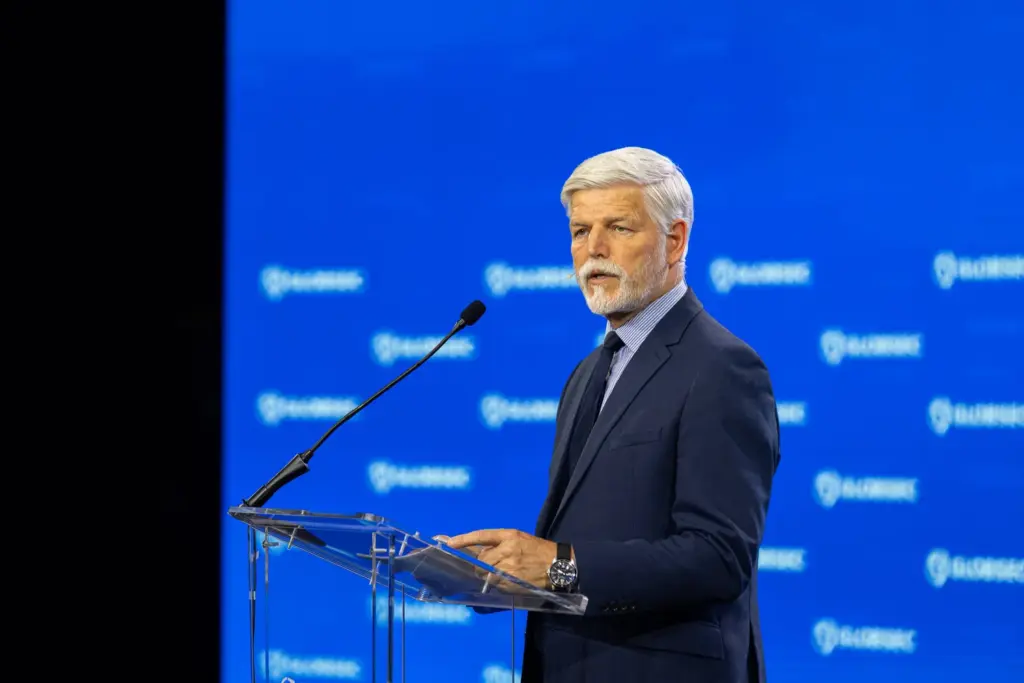
"We have to think about our procurement processes, about our legislative measures if we want to succeed in any potential future conflict," Pavel said. "We have to have the procedures that will be much faster than that we have today because otherwise we will be losing the conflict on bureaucratic obstacles."
"Burden shifting," not burden sharing
The policy argument behind the speech is a rebalancing of the alliance. Pavel called for "burden shifting, not just burden sharing"—a stronger European pillar inside NATO, not parallel to it. NATO defines military requirements; the EU has the funding, infrastructure, and industrial tools NATO lacks. Connecting them, Pavel said, is the work that has been postponed for two decades.
Either Europe accelerates that integration, he said, "or we will lose not only our credibility but also our relevance at global stage."
The Czech case is its own illustration
Pavel publicly backed the Czech government's effort to hit the 2% defense spending target this year—a rare alignment between him and Prime Minister Andrej Babiš, whose ANO movement formed a government after the October elections and includes the pro-Russian SPD as a coalition partner.
But the alignment ends there. Pavel's January proposal to send L-159 light combat jets to Ukraine for drone defense, aircraft he said could be transferred "in relatively short time," was blocked within days by Babiš.
Read also
-
Russia’s new jet Shaheds run on turbojets from one Chinese company. It deleted them from its English website
-
Iskander Russia fired at Kyiv Oblast in July held 62 American parts. Ukraine has now named more than 100 Russian ballistics producers and wants its allies to sanction all of them
-
Three Ukrainian units received kit that makes an uncrewed vehicle out of whatever they’re already driving
This material was produced as part of a project by the Institute of Mass Information with the support of the Ministry of Foreign Affairs of the Netherlands. The content of this publication does not reflect the official position of the IMI or the Kingdom of the Netherlands.


