

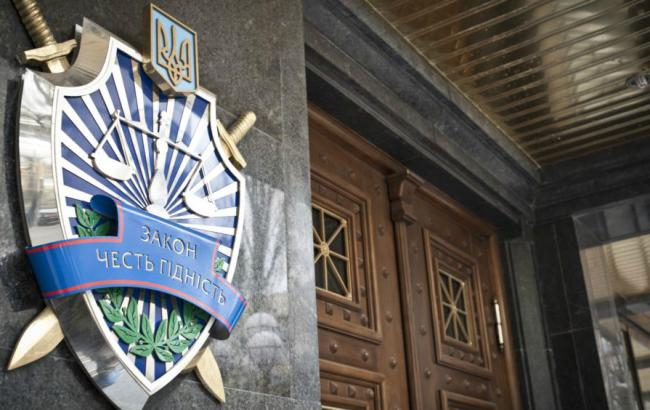
Ukraine submitted a new package of materials to the Office of the Prosecutor of the International Criminal Court on the forced deportation and illegal detention in Russia. Prosecutor General Ruslan Kravchenko says the cases concern more than 1,800 Ukrainian prisoners from the Kherson and Mykolaiv oblasts.
In November 2022, Russian forces forcibly transferred these people through occupied Crimea to penal colonies inside its territory, in what the submission characterizes as a pre-organized operation that ran from the seizure of Ukrainian prisons through to the detainees' incarceration on aggressor-state territory.
Ukrainians in Russia threatened with execution and forced to build military fortifications
"In Russian colonies, Ukrainian prisoners are beaten, tortured, subjected to psychological pressure, threatened with execution, and forced to build enemy military fortifications," Kravchenko said.
They are forcibly imposed Russian citizenship, illegally held after the end of their sentence, or re-detained.
He characterized the alleged conduct as war crimes and crimes against humanity under international humanitarian law.
The submission was made possible, by the active work of the NGO Zakhyst Viazniv Ukrainy ("Protection of Ukrainian Prisoners"), the European Prison Litigation Network, and the Kharkiv Human Rights Protection Group.
Guilty of illegal border crossing into their own land
When Russian forces withdrew from the city of Kherson and the right bank of the Dnipro in November 2022 under Ukrainian counter-offensive pressure, they took with them roughly 2,000 Ukrainian prisoners from the city's detention facilities, openDemocracy reported in November 2023, nearly a year after the events.
More than 1,500 of those prisoners remained in Russian penal colonies at the time of that reporting. Many who had since completed their Ukraine-issued sentences had been released inside Russia but were "unable to get home without a passport."
Ukraine has consistently characterized the transfer as forced deportation. Russia's framing, as of openDemocracy's documentation, was that the prisoners were "guilty of illegal border crossing," a position based on Moscow's continued claim that the Kherson Oblast forms part of Russia, despite Russian forces having lost control of the right bank, including the regional capital.
The new submission turns documented facts into a formal evidentiary case before the ICC. It expands the legal framework already used by the court. Since March 2023, the ICC has held arrest warrants for President Vladimir Putin and Russia’s children’s rights commissioner Maria Lvova-Belova over the forced deportation of Ukrainian children. The new case applies that framework to a different group of victims: adult prisoners.
The ICC will now review the materials. What is already clear is the scale of the prosecution case Ukraine has built over four years of the full-scale war.
Read also
-
Drones now cause about 96% of Russia’s battlefield losses. Ukraine’s drone force says it has hit more than 100,000 Russian troops this year alone
-
Fears that Ukraine will lose Starlink are back after Musk backed Trump against Zelenskyy. Adviser says profit makes cutoff unlikely
-
Russia is building jet drones that fly 800 kilometers per hour, and Ukraine says it is already working on how to stop next generation


