

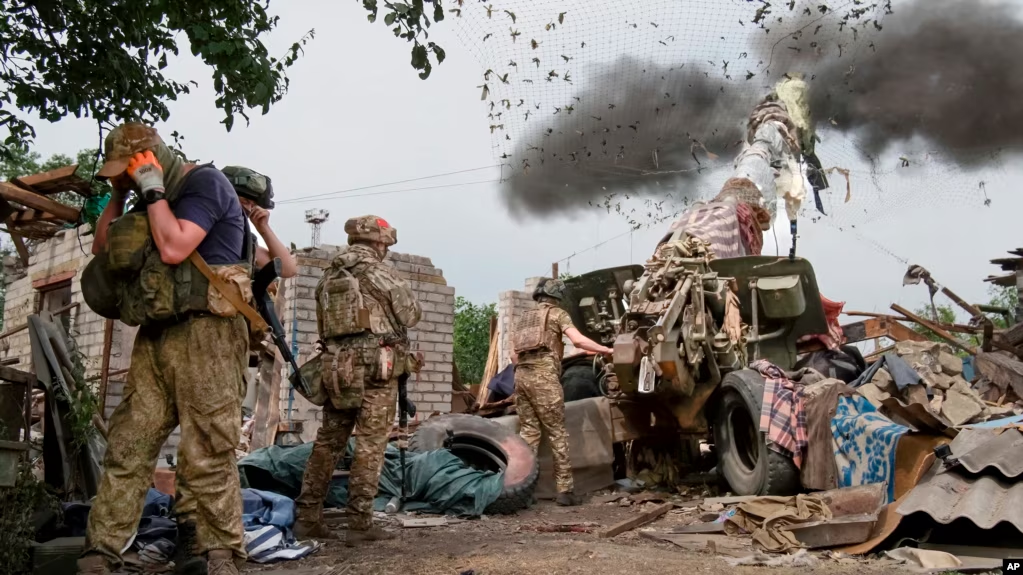
Ukraine destroyed 250 Russian artillery systems in two nights during Operation Artashan using a newly developed munition designed specifically to destroy artillery barrels, Defense Minister Mykhailo Fedorov announced in a PRESSING YouTube interview with Army Media. Operation Artashan is the sequel to last year's Operation Ashan, which targeted Russian armored vehicles, with the new operation focused specifically on Russian artillery.
The Artashan operation matters because Russian artillery remains responsible for over 10% of Ukrainian military casualties on parts of the front, reaching up to 20% on some sectors, per Fedorov.
The new munition specifically addresses a tactical problem that has limited Ukrainian counter-artillery effectiveness: standard drone or projectile strikes often damage but don't permanently disable Russian artillery, allowing Russian forces to repair systems and return them to combat positions.
Ukrainian engineers spent recent months developing the specialized munition that targets the artillery barrel — the key element whose destruction renders a system permanently inoperable.
Special munition destroys artillery barrels to prevent Russian repair
"A special projectile was developed that destroys artillery barrels. In two nights, 250 Russian artillery systems were destroyed. We have video confirmation for all of it," Fedorov stated.
The conventional Ukrainian counter-artillery approach, using FPV drones, loitering munitions, or counter-battery fire, often damages Russian artillery systems without rendering them permanently inoperable, allowing Russian forces to repair damaged guns and return them to combat.
The new munition specifically targets the barrel, the most expensive and hardest-to-replace component of any artillery system.
Earlier, Fedorov launched an additional $113 million in procurement funding for middle-strike drones. The middle-strike program targets Russian rear-area logistics, command posts, and key military capabilities at depths of 20 to 300 kilometers behind the front line.
Ukrainian middle-strike operations have contributed to a steady rise in the cost of Russian advances, from roughly 120 soldiers killed or wounded per square kilometer of advance a year ago to 316 in Q1 2026 in Donetsk Oblast.
Read also
-
Russia’s Victory Day parade goes without armor in 2026 after losing 24,486 combat vehicles in Ukraine
-
Ukraine strikes Russian plant supplying batteries for ballistic missiles and glide bombs with Storm Shadow missiles, OSINT reports – another hit on Russia’s weapons supply chain
-
Pope’s envoy becomes first foreign representative to gain access to Ukrainian POWs held by Russia since 2022


