
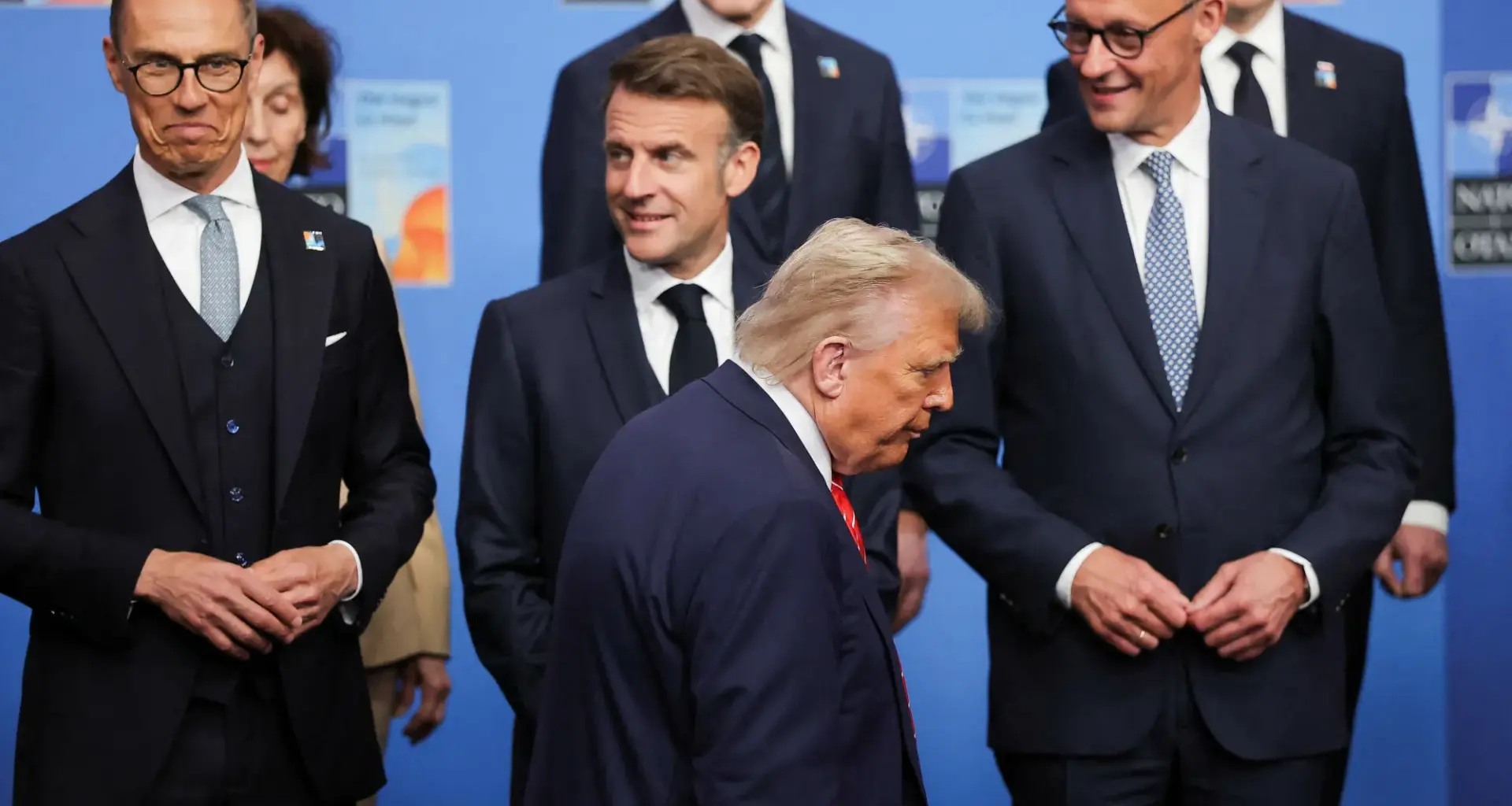

Since September 2023, I have questioned the survival of NATO. There is no single obstacle, but multiple and compounding issues undermining its credibility.
The main purpose of any armed force in a democracy is to deter war—to convince a potential foe that war entails unacceptable costs. Only when deterrence fails are armed forces designed to fight. That is also NATO's core mission: to deter any potential enemy from waging war against its member states.
As I have repeatedly argued, the Alliance no longer deters Russia. Europe stopped investing in security and started rearming too late. The United States has already de facto turned its back on its NATO commitment. The Alliance has stepped away from its strategic ambitions in the face of the risk of an open confrontation with Russia, despite Russia waging an ever-escalating war on NATO territory.
The Alliance is divided on multiple levels: by a US that threatens its allies with land grabs, launches a trade war, promotes a "peace plan" that undermines European security, and dismantles the rules-based world order; by members in bed with Russia; by members failing to support Ukraine and, therefore, European security; by disagreement on strategic ambitions; by failure to respond to Russian aggression; and, not least, by a fundamentally flawed decision-making process.
The West must either establish a new and credible military alliance, or face the consequences if NATO collapses
As a result, Germany, Poland, France, the UK and others fear a war with Russia by 2029. Russia, meanwhile, is convinced the Alliance will not live up to its collective defense commitment and is acting accordingly.
As NATO cannot be reformed, the West is faced with two options: either establish a new and credible military alliance, or face the consequences of NATO's likely collapse when challenged.
I have long championed a Coalition of Like-Minded (CALM) European countries, focused on strength through unity rather than numbers, built on explicit and mandatory membership criteria, shared values, comprehensive support to Ukraine, and—not least—Ukraine's battle-hardened Ground and Unmanned System Services paired with modern European Air Forces and Navies as the basis for its credibility.

Discussing alternatives to NATO has long been taboo. That changed in 2026.
NATO members quietly plan the fallback
European officials are quietly advancing contingency plans for a "European NATO" that could maintain deterrence against Russia even if the US withdraws troops, withholds support, or refuses to invoke Article 5, the Wall Street Journal reported.
Germany's historic reversal on European defense sovereignty has unlocked broader support from the UK, France, Poland, the Nordic countries, and Canada.
Europe's push for greater defense autonomy inside NATO comes as Russia continues its years-long all-out war in Ukraine, while the continent faces a narrowing window between a Russian threat timeline of 2029 and a European readiness timeline of 2035.

The plans are advancing informally through side talks around NATO—aimed not at replacing the Alliance but at maintaining deterrence, preserving command continuity, and preserving nuclear credibility if Washington steps back. Officials are working through who would take over air and missile defense, reinforcement routes, logistics, and major exercises. Leaders such as Finland's Alexander Stubb argue that reinstating compulsory military service will be essential as Europe takes on more responsibility for its own defense.
High-level meetings reveal the architecture taking shape
On 20 January 2026, Canadian Prime Minister Mark Carney called for countries to organize in the face of great power rivalry, arguing for different coalitions for different issues based on common values and interests. Carney explicitly mentioned Canadian cooperation with the Nordic-Baltic Eight to further secure the Alliance's northern and western flanks. He stressed that "we are no longer just relying on the strength of our values, but also the value of our strength."
Stressing that the old world order is rupturing, Carney said:
"Nostalgia is not a strategy, but we believe that from the fracture we can build something bigger, better, stronger, more just. This is the task of the middle powers, the countries that have the most to lose from a world of fortresses and the most to gain from genuine co-operation. The powerful have their power. But we have something too: the capacity to stop pretending, to name realities, to build our strength at home and to act together."
Carney never mentioned the US. Yet the speech was all about Trump's USA and its effects on common security and stability. Implicitly pointing at Washington as a problem, NATO—as it was in its original form, dominated by the US—inevitably becomes part of the same problem.
On 15 March 2026, Canada met the Nordic countries in Oslo. In the joint statement by their Prime Ministers, they stressed that "international cooperation, based on international law, shared values and interests, remains the best way to strengthen our common security and prosperity."
The Nordics and Canada promote Ukraine's crucial importance for European security as the US is turns its back on NATO.
In support of collective defense, security, and resilience, the Nordic countries and Canada committed to "enhance defence industrial capacity to ramp up defence production, strengthen capabilities, respond to hybrid threats, build resilient infrastructure, and develop interoperable, innovative and dual-use technologies."
While NATO remains the apparent framework, the statement by the Nordics and Canada built a foundation that works irrespective of the Alliance's future relevance. By stressing that their support for Ukraine's independence, sovereignty, and territorial integrity remains unwavering, and by highlighting that Ukraine's security is integral to European and Euro-Atlantic security, they demonstrated fundamental dissent from the US position.
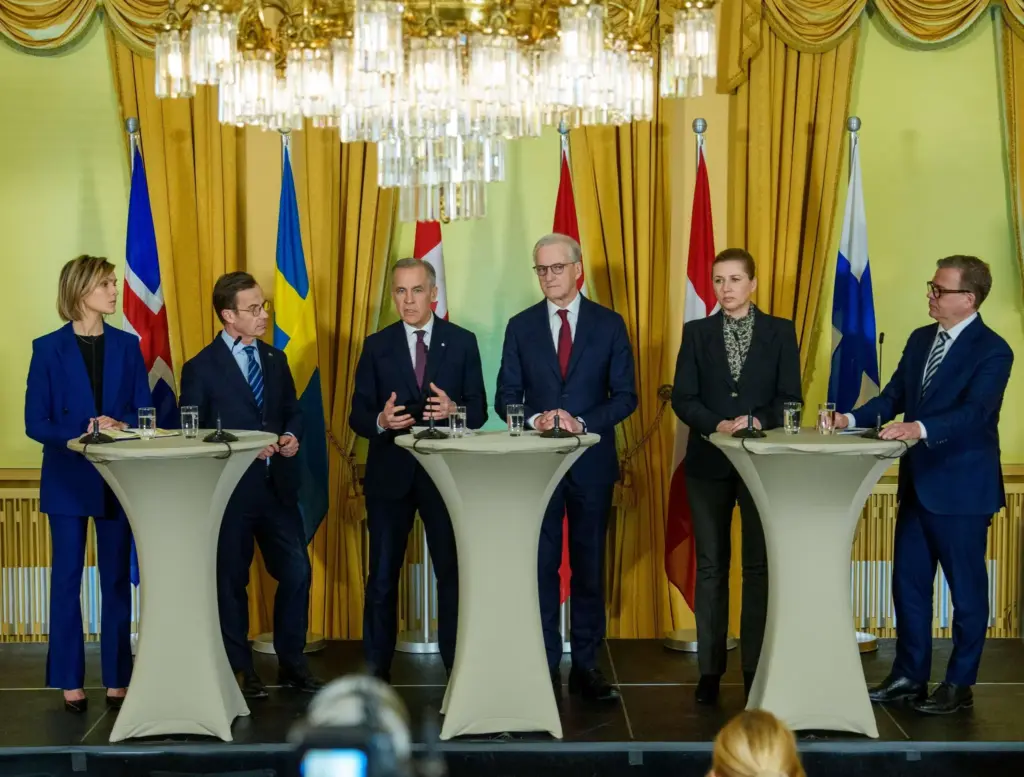
Europe sees Ukraine as crucial to its security. The US, in contrast, pursues a policy that undermines both Ukraine and, therefore, European security.
The crux of the matter is that Canada, Denmark, Finland, Iceland, Norway, and Sweden are not only openly pursuing a policy at odds with the current NATO-US position; they are also promoting Ukraine's crucial importance for European security at the very moment the US is turning its back on NATO's collective defense.
The US pivot away from shared values and its effort to reset relations with Russia make Ukrainian membership in a defensive military alliance more crucial, not less. Since that will not happen through NATO, the Coalition of Like-Minded becomes increasingly pertinent.
The Joint Expeditionary Force builds outside NATO's framework
On 26 March 2026, leaders of the Joint Expeditionary Force (JEF) met in Helsinki to reaffirm "their commitment to European security and stability, their strengthened support to Ukraine and pressure on Russia, and their continuous effort to respond to regional security challenges together."

The JEF is a coalition of ten like-minded nations—Denmark, Estonia, Finland, Iceland, Latvia, Lithuania, Netherlands, Norway, Sweden, and the UK—comprising high-readiness forces configured to respond rapidly to crises.
If needed, it can integrate into larger international operations led by NATO, the UN, or other security coalitions, and can conduct the full spectrum of operations.
Last year in Oslo, Ukraine was invited to form an Enhanced Partnership with the JEF. In their Helsinki statement, JEF leaders agreed to reinforce support to Ukraine through ambitious delivery of the JEF–Ukraine Enhanced Partnership. They committed to maximizing future operational collaboration, including active participation of Ukrainian units in JEF exercises and increasing exchange of tactical and operational experience on modern warfare, including total defense and technological innovation.

The Joint Expeditionary Force is yet another coalition outside the NATO framework seeking to integrate Ukraine closer into European security and defense.
As the transatlantic link unravels under the Trump administration's foreign policy, the JEF found it prudent to highlight that its nations "are committed to contributing to credible deterrence in peacetime, and to reacting quickly and flexibly in close coordination with NATO in a crisis situation, especially in response to security threats that do not meet the threshold of NATO's Article 5."
Even Ukraine is changing its tune
In 2019, Ukraine amended its Constitution to enshrine a strategic course toward membership in both the EU and NATO. Seven years later, NATO membership still eludes it. The ongoing war remains a hurdle, but the problems go beyond it.
Some countries see Ukrainian NATO membership as a strategic risk. It clashes with Russia's demand that the Alliance not only halt its so-called "eastward expansion"—in reality, countries seeking protection from Russia—but roll back to its 1997 borders. They fear Ukrainian accession would escalate international tension and the risk of open conflict with Russia. Ukrainian neutrality—and therefore vulnerability—has been offered as a bargaining chip in the ongoing peace negotiations.
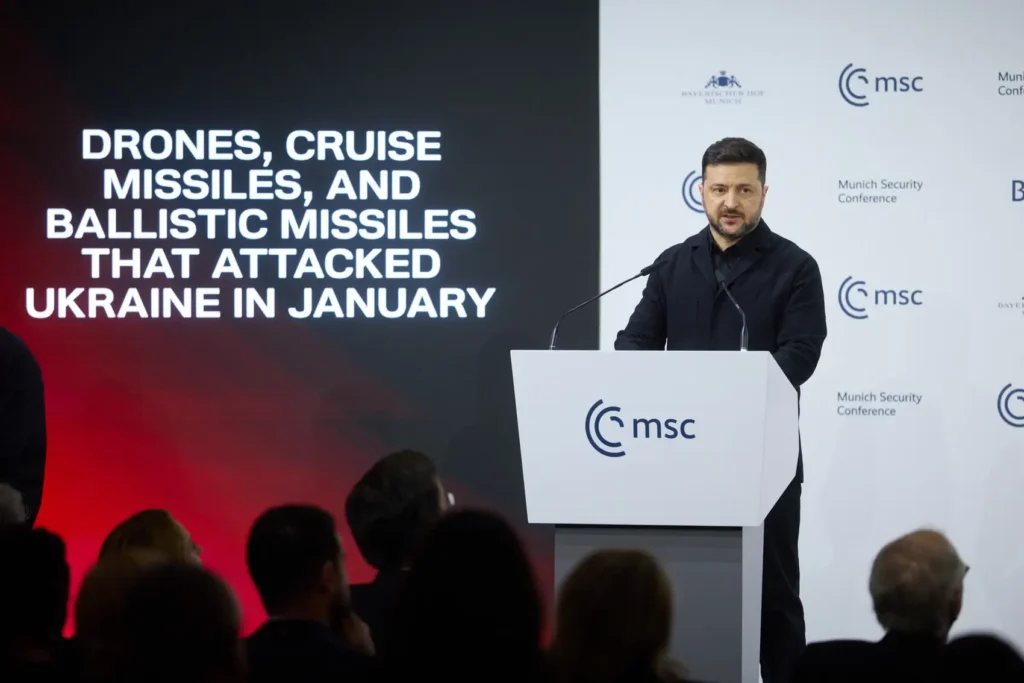
Ukraine is slowly realizing it might never become a NATO member. Observing the Alliance from outside, it may also have grasped that NATO itself is slowly disintegrating as the US turns its back on Europe.
Like the rest of Europe, Ukraine desperately needs the security guarantees only a defensive military alliance can provide. Zelenskyy has stated that Ukraine does not seek partial or "simplified" integration into the EU or NATO. It seeks full membership in both. Failing that, Ukraine has started promoting alternatives:
- In his speech at the Munich Security Conference on 15 February 2025, President Zelenskyy argued that if NATO cannot serve as the foundation for Ukraine's security guarantees, he favored establishing "a different form of NATO in Ukraine." He pointed out that Putin seems to be the most influential NATO member, "because his whims have the power to block NATO decisions. And that's despite the fact that it was Ukraine's army that stopped Russia—not a NATO country, not NATO troops, but only our people and army."
- On 20 January 2026, the president said that "Ukraine is not opposed to joining a new military and political alliance in Europe if it wants to create it as a replacement or alternative to NATO. Ukraine can become a fundamental contribution." He argued for a unified European armed forces against the backdrop of the Russian threat, stressing this did not mean competition with the US or the destruction of NATO. Europe, as a separate continent, should be able to defend itself.
- Commenting on reports of a possible US withdrawal from NATO on 9 April 2026, Zelenskyy suggested that Europe needed to maximize its power. The EU, he said, needed to join forces with Ukraine, the UK, Türkiye, and Norway to create a military bloc big enough to deter Russia. "Without Ukraine and Türkiye, Europe will not have an army comparable to the Russian one. With Ukraine, Türkiye, Norway, and Britain, you will also control security at sea."
- He reiterated this on 21 April 2026: "Ukraine is not looking for an alternative to joining the European Union, but a union of Ukraine, Great Britain, Türkiye, and Norway would make the EU the strongest in the world."
The awakening
When I presented my recommendation for a Coalition of Like-Minded Countries, I listed Czechia, Denmark, Estonia, Finland, France, Germany, Iceland, Latvia, Lithuania, the Netherlands, Norway, Poland, Sweden, Ukraine, and the United Kingdom as potential founding nations. With two exceptions, all have been involved in recent high-level meetings or named specifically when discussing alternatives to NATO.
None are arguing for dismantling NATO. Quite the opposite—Europe, in contrast to the US, still sees the Alliance as essential. But both member and partner states acknowledge that Europe must be able to ensure its own security and prepare for the possibility that the US fully breaks with its NATO commitment.
The ongoing deliberations are strategically sound because they mark an awakening. For the first time in decades, Europe sees the world as it is, not as it hoped it would be. An Alliance that has ensured peace and stability since 1949 may slowly be coming to an end. The US is no longer a trusted ally but a potential strategic adversary.
NATO and the EU share some of the same fundamental challenges—flawed decision-making, lack of unity, lack of commitment to what used to be shared values—to name a few. The Alliance lacks credibility and no longer deters Russia, as evident from its full-scale war in Ukraine, its ever-escalating hybrid war in Europe, and its preparations for conflict with NATO.
Discussing alternatives to NATO brings strategic clarity. More importantly, it allows Europe to integrate Ukraine into a credible military alliance.
Discussing alternatives to NATO brings strategic clarity and allows Europe to integrate Ukraine into a credible military alliance.
In the words of Finnish President Alexander Stubb: "Can we afford to leave Ukraine outside NATO, considering that it currently has the greatest military experience?"
On 13 April, Stubb argued that Ukraine's current military capacity is now unmatched by all but one NATO country: the United States. "So, I am just wondering whether instead of us thinking of American or European help to Ukraine as some kind of altruism, it's actually we that need Ukraine more than the other way around," he said at the Brookings Institution in Washington, DC.
We should welcome and encourage the discussions about an alternative to NATO.
European security cannot be based on the hope that the Alliance will work as intended. We cannot accept doubt. Where doubt exists, we are required to establish new and credible security guarantees.


