


Arsonist targeted a vehicle belonging to a Ukrainian soldier in northern Kyiv's Obolonskyi District
Ukraine's Security Service (SBU) and Kyiv police have detained a man who set fire to a Ukrainian soldier's Mitsubishi SUV in the capital after being recruited via messenger by Russian intelligence services, according to a police statement on 21 January.
The perpetrator was promised $1,500 for the crime. He received nothing.
Instead, he now faces up to eight years in prison—a fate that encapsulates Russia's expendable-asset approach to hybrid warfare. Russian intelligence recruits Ukrainians through Telegram with promises of quick money, uses them for low-level sabotage, then discards them.
Russian intelligence recruits Ukrainians through Telegram and other social media outlets with promises of quick money. Moscow uses them for low-level sabotage, then discards them.
This case follows a pattern documented across Ukraine: minors, struggling families, and financially vulnerable individuals recruited via encrypted messaging apps for attacks on military vehicles and infrastructure.
How the Russian sabotage attack unfolded

Kyiv's 102 emergency hotline received a report of a vehicle fire on Obolonskyi Avenue. When police and emergency responders arrived, they found a burning Mitsubishi belonging to a soldier serving on the front line.
Investigators discovered fuel bottles at the scene. Surveillance camera footage identified the arsonist—a 29-year-old local resident who had poured flammable liquid on the SUV's hood before igniting it.
SBU officers and criminal analysts determined the suspect had received his orders through a messenger app from a so-called "curator"—standard Russian intelligence terminology for handlers who direct sabotage operations remotely.
Russia's "single-use agent" sabotage model
The Kyiv case exemplifies what German intelligence has termed Russia's "single-use agent" strategy—recruiting expendable individuals through social media for one-time sabotage operations. The model treats recruits like Uber drivers for terrorism: assign a task, promise payment, disappear.
Russia's single-use agents have wreaked havoc upon Ukraine. In 2024, Ukraine's SBU caught numerous single-use recruits involved in Russian-directed sabotage targeting military vehicles, railway infrastructure, and territorial recruitment centers. The youngest recruit was just 13 years old.
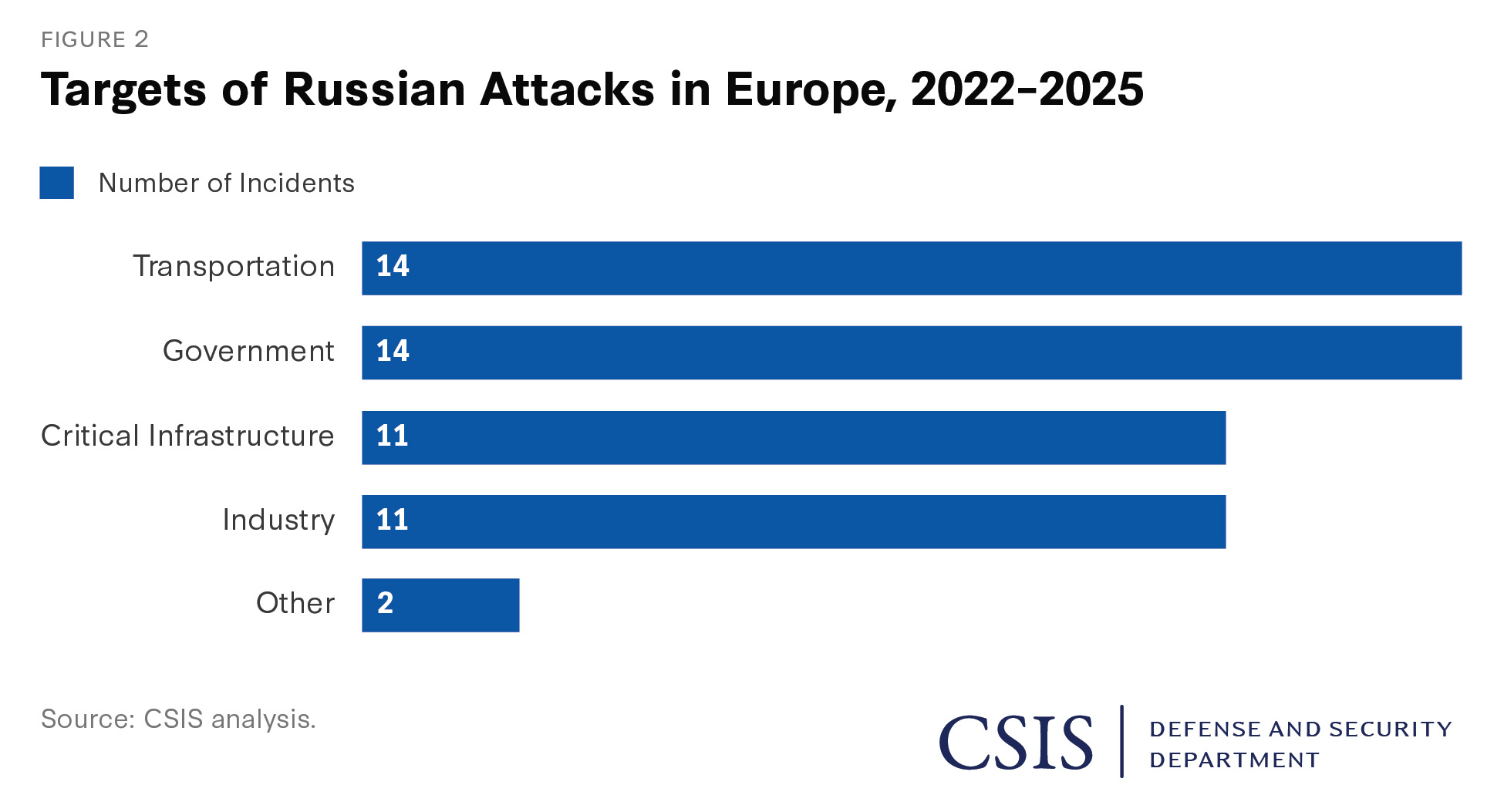
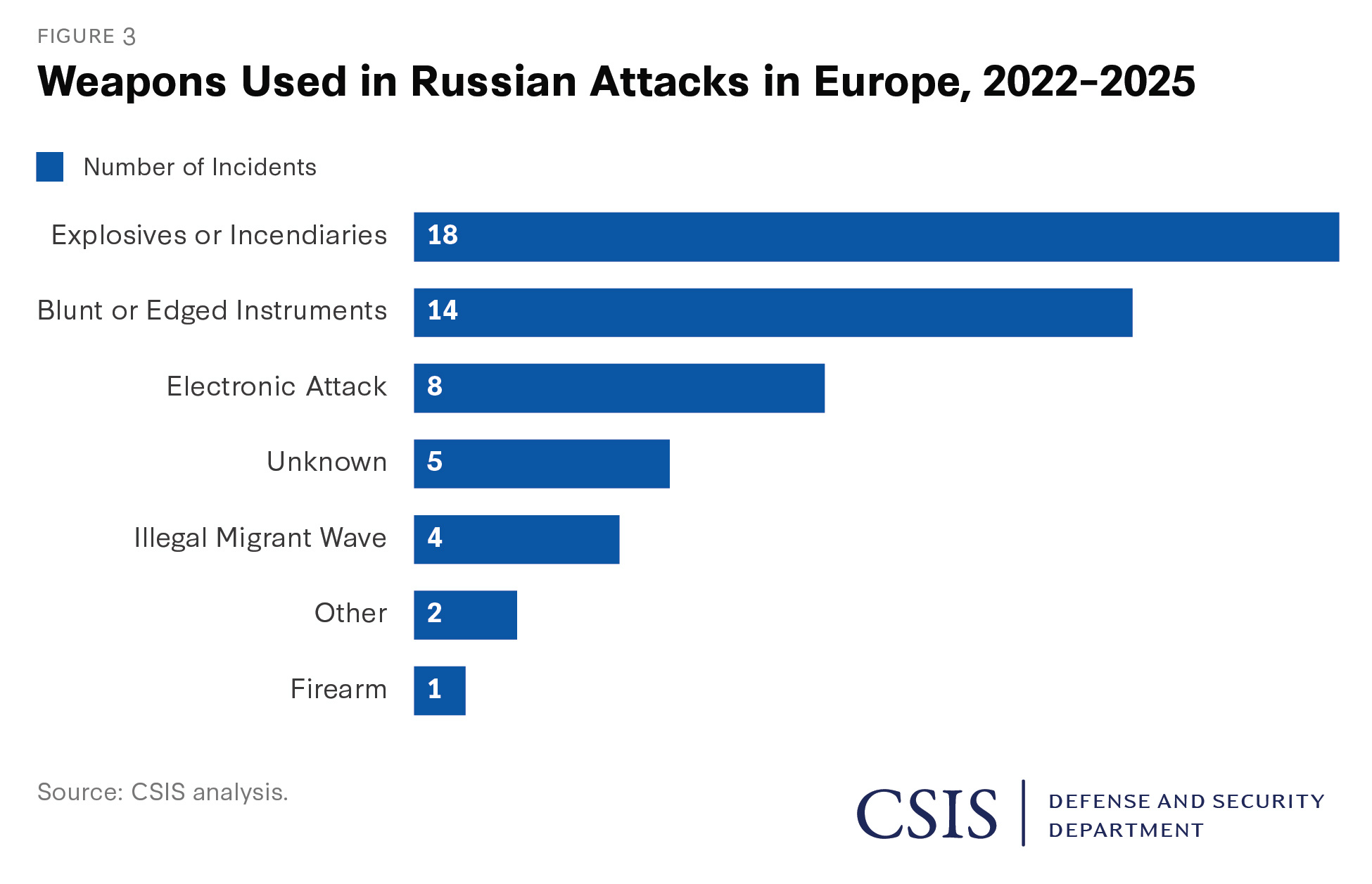
Russian sabotage attacks elsewhere in Europe nearly tripled between 2023 and 2024, rising from 12 to 34 incidents, according to CSIS.
The International Institute for Strategic Studies documented over 50 sabotage events from 2022 to mid-2025—with 25 incidents targeting NATO military infrastructure in the first five months of 2025 alone.
The targets aren't random. Burning a soldier's car while he defends the front line serves dual purposes: material damage and psychological warfare.
The message to Ukrainian defenders: even your homes aren't safe.
Russian sabotage keeps increasing
A decade of Russian sabotage inside Ukraine
Russia's sabotage campaign inside Ukraine predates the 2022 full-scale invasion. Since 2014, Russian intelligence has orchestrated car bombings, assassinations, and arson attacks on Ukrainian territory.
The full-scale invasion amped up Russia's sabotage operations, transforming occasional targeted killings into an onslaught of subterfuge operations.


