

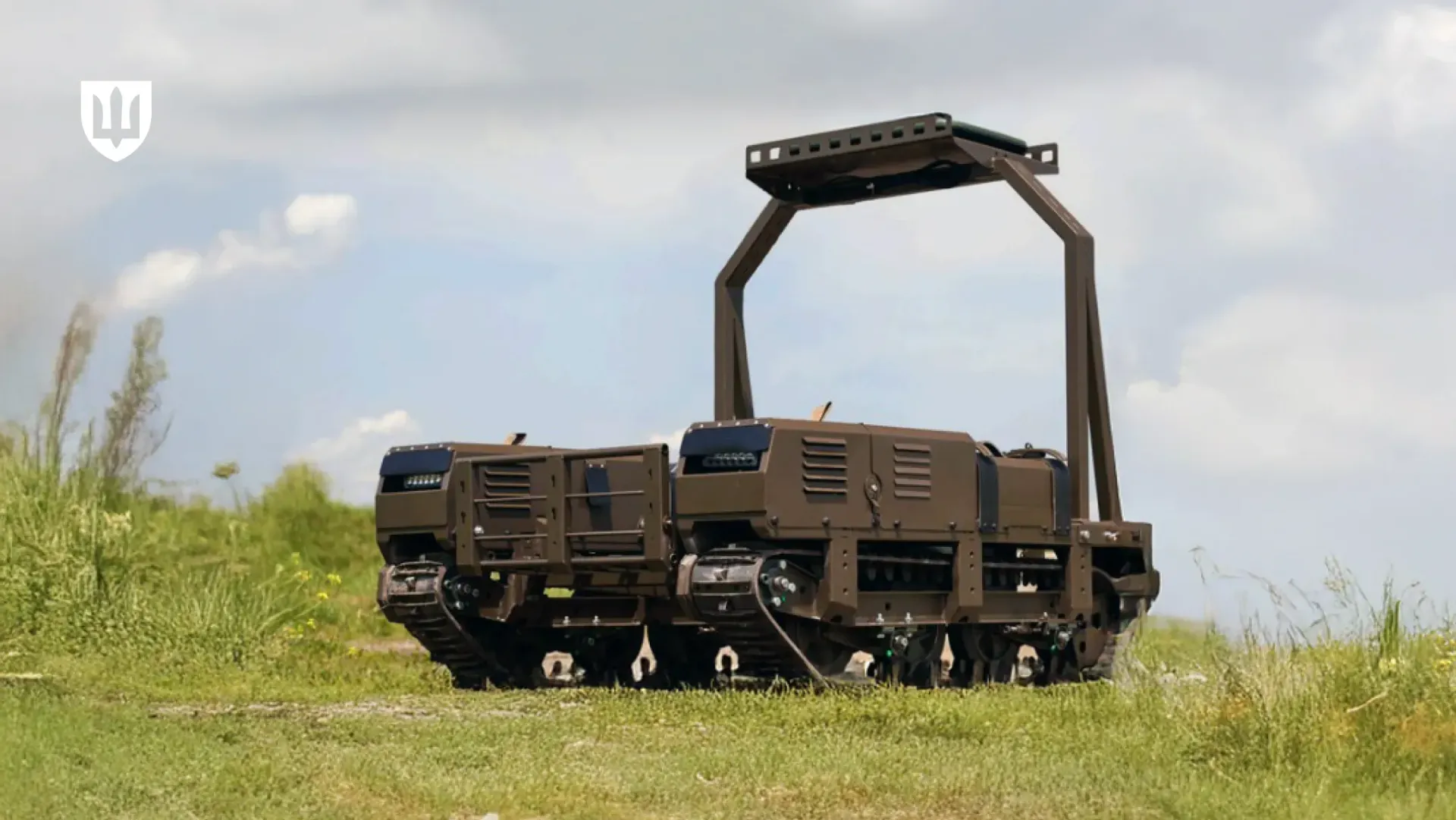
Ground robotic systems are widely described as part of the future of warfare, but a commander from Ukraine’s unmanned systems units says their performance in real combat is far less predictable than in testing environments.
Speaking to ArmyInform, Nazar, a commander of a ground robotics unit from the 108th Separate Assault Battalion, said many platforms struggle once they reach the front line, often failing during their first operational use.
Systems often work in testing but fail in combat
According to the commander, many platforms perform well in controlled trials but fail under battlefield conditions. He cited overheating electronics, weak components, and inconsistent reliability during real missions as common issues.
He said the difference between testing and combat is not minor, noting that real operations involve longer routes, unpredictable terrain, and sustained use under pressure.
Mud, terrain, and distance remain major obstacles
He said Ukraine’s terrain is one of the main challenges for ground systems, especially heavy black soil that becomes difficult to navigate after rain. In such conditions, soil can clog movement systems and leave vehicles stuck or disabled.
Operators also deal with long, slow missions where even short distances can take hours to complete, increasing exposure time and mechanical stress on the platforms.
Reliability and adaptation remain key challenges
The commander said around 150 different ground robot models are currently in use, but many are not suitable for frontline conditions. He added that most units still rely heavily on logistics-focused platforms rather than combat or engineering variants.
He said soldiers often modify systems themselves in the field, adjusting electronics and components to make them operational.
From “future tech” to practical battlefield tool
Despite limitations, ground robots are still seen as useful for specific tasks such as logistics, evacuation, and explosive payload delivery in certain scenarios.
The commander said their value depends on matching the right platform to the right mission, but stressed that battlefield reality remains the ultimate test of any system.
Broader push to scale ground robotics
Ukraine is expanding its use of unmanned ground systems as part of a wider shift toward automation on the battlefield. President Volodymyr Zelenskyy has said the country plans to contract at least 50,000 ground robots, describing them as a key next step after aerial drones.
The systems are already being used for logistics and medical evacuation in high-risk zones, reflecting efforts to reduce troop exposure in areas where drone activity dominates the front line.
Read also
-
Russia has found way to jam Starlink and take down Ukraine’s drones
-
Kyiv marked this basement official shelter. It didn’t save people inside — and authorities won’t say why no new ones are built
-
“Your flip-flops will melt along with gas pedal”: Ukraine’s drone chief warns Russian truckers off Crimea corridor


