


Russian president Vladimir Putin has signed a decree introducing a simplified procedure for residents of Transnistria, a breakaway region of Moldova, to obtain Russian citizenship, according to Russian state media RIA Novosti.
The move is framed by Moscow as a humanitarian step, but it comes in a long-running pattern where Russia expands citizenship access in territories outside the control of internationally recognized states. Such policies are often viewed as a tool for strengthening political leverage over contested areas.
Decree removes standard citizenship requirements and expands fast-track access
The decree applies to adult foreign citizens and stateless persons living in the territory and removes standard requirements such as residence in Russia, Russian language proficiency, and knowledge of Russian law and history. Moscow says the measure is aimed at “protecting rights and freedoms.”
Russia has repeatedly used the claim of “protecting its citizens” as a political justification for intervention in neighboring states. This framework has been cited in the lead-up to or during military actions, including in Ukraine, allowing Moscow to argue that it is acting to defend Russian nationals even in areas that are internationally recognized as part of other sovereign countries.
Transnistria remains outside Moldova’s control since early 1990s conflict
Transnistria is a narrow strip of land in eastern Moldova, along the border with Ukraine. It declared independence in 1990 during the collapse of the Soviet Union, but it is not recognized by any UN member state and is considered internationally to be part of Moldova.
A short war in the early 1990s left the region outside Chisinau’s control. The conflict involved separatist forces backed by Russian troops already stationed in the area, after which Moldova lost effective control over the territory.
Since then, Transnistria has functioned as a de facto separatist entity with its own authorities, security forces, and administrative structures. Its economy and political system remain closely tied to Russia, and Russian citizenship has been widely distributed among residents over the years.
Trending Now
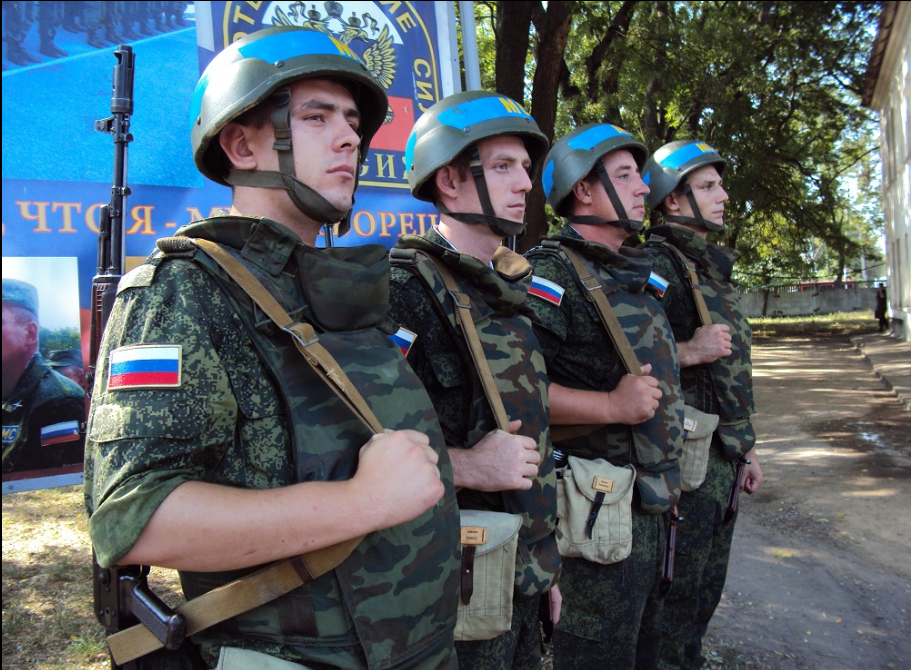
The region is often described as a frozen conflict zone, with Russian military personnel still present as part of a long-standing “peacekeeping” mission. The new decree further deepens Moscow’s legal and political links with the population living there.

Similar passportization policy used in Ukraine’s Donbas
Russia also introduced simplified citizenship procedures for residents of the occupied parts of Ukraine’s Donetsk and Luhansk oblasts prior to the full-scale invasion in 2022. This was expanded after the full-scale invasion, when Moscow accelerated mass passport distribution in occupied Ukrainian territories.
The policy allowed residents to obtain Russian citizenship without meeting standard requirements such as long-term residence in Russia or language exams. In practice, it created a large population of dual-status residents in areas not controlled by Kyiv, with Russian-issued documents used for administration, military mobilization, and political integration.
Internationally, these measures have been widely viewed as part of Russia’s broader strategy of embedding legal and political control in territories it occupies or influences, rather than as neutral citizenship policy.


