

Euromaidan Press is a media partner of Lviv Media Forum 2026. Over the coming days we will bring you selected thoughts and dispatches from speakers across journalism, security, and democratic resilience.
When Russia attacked Ukraine on 24 February 2022, the phones started ringing at Al Jazeera Balkans' office in Sarajevo. The callers were not asking about Kyiv. They were asking about bunkers.
What is the state of Sarajevo's underground bunkers and shelters, they wanted to know. Can they be used?
The fear underneath the question was specific: if Russia attacked Ukraine, what if the Serbs attack us again?
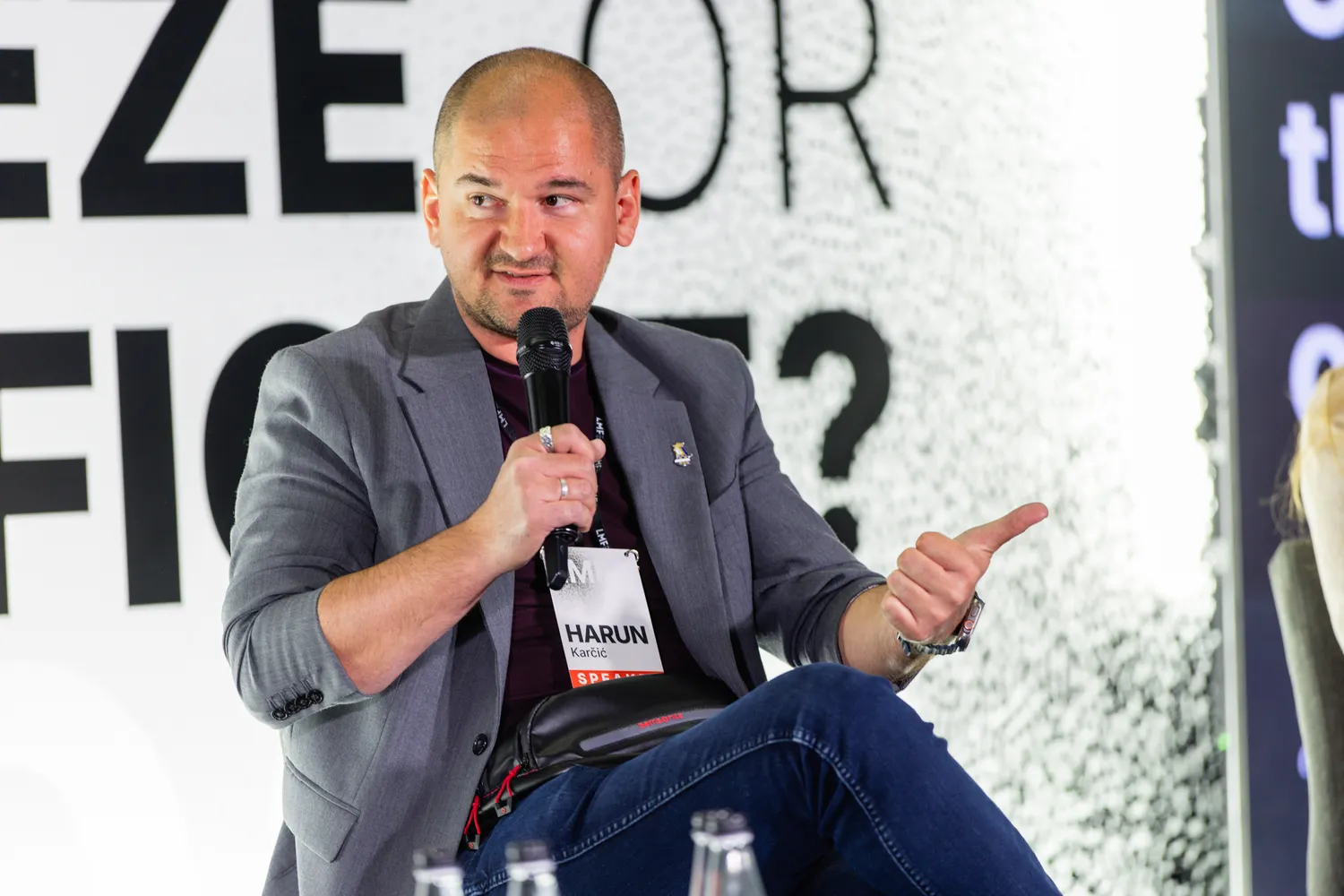
This is what 30 years of "peace" feels like from inside Bosnia and Herzegovina. The war ended in 1995, on paper. The fear of it never did. And the Bosnian journalist who fielded those calls—Harun Karčić, a longtime Al Jazeera Balkans correspondent who was eight years old and a refugee himself when his war began—was in Lviv this week to tell Ukrainians, with what he called "blunt" candor, exactly why.
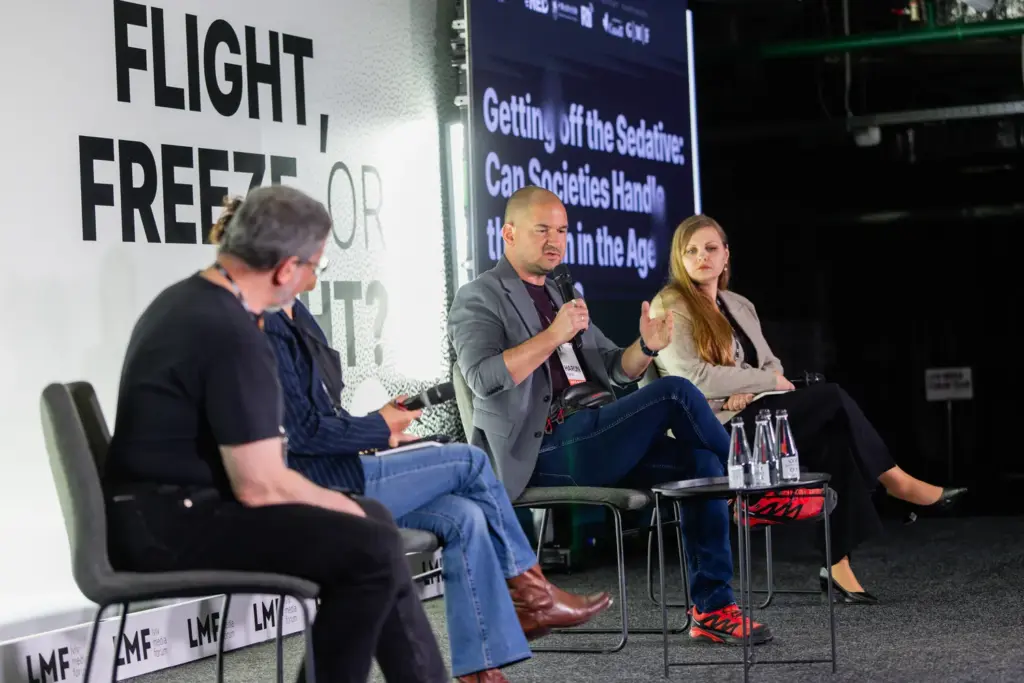
"The mistake we made was that we accepted a peace agreement in 1995 which gave Serb rebels 49% of our country," Karčić told the panel "Handle the Truth in the Age of Crises" at Lviv Media Forum 2026.
"This would be equivalent to you Ukrainians signing any peace agreement which would give Russian separatists in the east a say in your government. Whatever you do, don't accept such peace agreements—because they will continue blocking your country, obstructing your progress and, excuse my bluntness, screwing you for the next 30 to 40 years."
What Dayton was, and what it produced
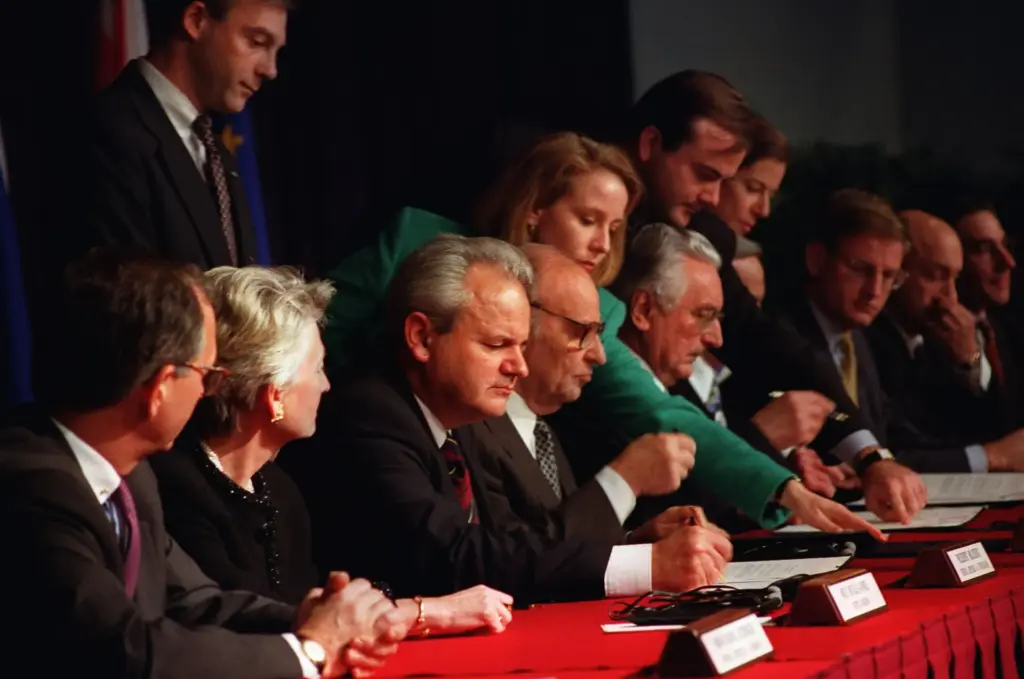
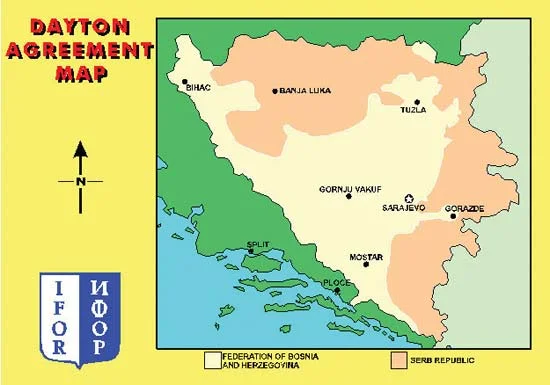
The deal Karčić is referring to—the Dayton Accords, signed under US pressure in November 1995—ended the Bosnian war by formally keeping Bosnia as one country while splitting it into two entities. The Bosniak-Croat Federation got 51% of the territory. Republika Srpska—the entity led by the Bosnian Serb forces who had spent three and a half years trying to destroy Bosnia, and whose army committed the Srebrenica genocide—got the remaining 49%, plus veto power over state-level decisions in Sarajevo.
In other words: the rebels who lost the war were given a permanent seat at the table they had tried to demolish. That seat has been used ever since to block every step Bosnia has tried to take toward Europe.
Thirty years later, the bill is in. Bosnia has no realistic path to NATO membership. Its EU accession is frozen. Its central government can be paralyzed by Republika Srpska whenever Belgrade or Moscow find it convenient. Corruption is endemic. Tens of thousands of young Bosnians emigrate every year.
Russia Today and Sputnik run offices and studios in Belgrade and Banja Luka—Republika Srpska's de facto capital—pumping out free Russian-language content that local outlets, starved for funding, copy-paste into Bosnia's information space. The two halves of the country now live in literally parallel realities. When Russia invaded Ukraine, Karčić noted, the headlines in Republika Srpska read: "Ukraine Attacks Russia." "NATO Places Biological Weapons on Ukraine's Border." "NATO Wants to Use Russia."
Children in Mostar are still educated in segregated schools—the so-called "two schools under one roof"—and many never cross the city's famous bridge to make a friend on the other side.
The trap, regardless of shape
Karčić's analogy—Russian separatists with a say in Ukraine's government—describes the Republika Srpska model literally. It also describes what Russia spent 2014–2022 trying to install in Ukraine through the Minsk agreements: a frozen Donbas held by Russian proxies with permanent veto rights over Ukrainian foreign policy, defense, and language law. Ukraine refused to implement those provisions, and the war went total.
The 28-point peace plan circulating since November 2025 has taken a different shape.
Not a Republika Srpska inside Ukraine, but the formal amputation of Ukraine's east and south. Recognition of Crimea, Luhansk and the entirety of Donetsk Oblast as de facto Russian—including the roughly 25% of Donetsk Oblast currently under Ukrainian control. A freeze of Kherson and Zaporizhzhia oblasts along the line of contact. Ukrainian withdrawal from the parts of Donetsk it still holds, with that withdrawal zone reclassified as an internationally recognized "demilitarized buffer zone" belonging to the Russian Federation. A cap on the Armed Forces of Ukraine at 600,000 personnel. No NATO, vague US security guarantees that would lapse if Ukraine were judged to have provoked renewed Russian aggression.
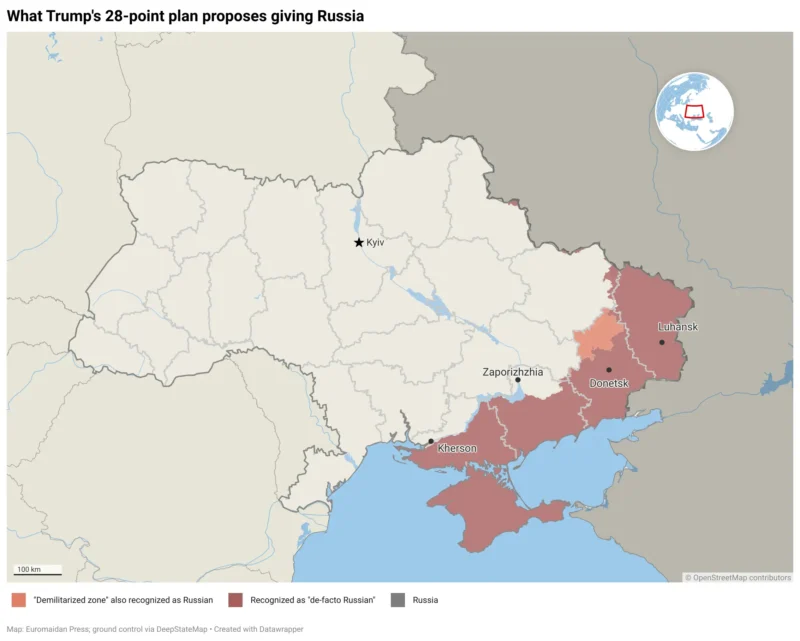
No internal Russian veto. Just Russia keeping what it took, plus binding limits on what Ukraine could do to defend itself afterwards.
The mechanism is different. The trap Bosnia describes is the same. Any peace deal that rewards the aggressor—whether with a seat at the domestic table or with a slice of stolen territory—and that constrains the victim's future capacity to integrate westward or defend itself, produces the same end state: a frozen conflict, blocked EU and NATO accession, ongoing destabilization, and a country that spends the next 30 years running interference against the power that tried to destroy it.
Trending Now
Bosnia got the entity-veto version. Ukraine is being offered the territorial-amputation version. The architecture differs. The frozen-conflict end-state is identical. And Bosnia's Russian-backed Serb leader Milorad Dodik is threatening secession right now—proof that 30 years of "peace" still ends with the same gun on the same table.
Karčić is not the first Bosnian voice to make this case. His compatriot Hamza Karčić, a political scientist at the University of Sarajevo, wrote in Al Jazeera in November 2022 that a Dayton-style settlement would render Ukraine, like Bosnia, "deeply dysfunctional"—exploited by Russia through a local client. Three and a half years on, with the 28-point plan in active negotiation, that warning has only sharpened.

"The 'international community' is a vague term, almost non-existent"
Karčić was equally pointed about the actors who would broker any such deal. "We placed too much trust in the international community thinking that they will solve our problems without us taking the initiative to do the same thing," he said. "Now, with the United States pulling out of Europe generally, the EU is lost. They have no common policy. They don't know where they're heading. They have no common approach to the Balkans at all, nor to Ukraine."
His verdict on the phrase itself was unsparing: "The 'international community' is a very vague term, almost non-existent."
For Ukrainians watching the same Western capitals that once promised "as long as it takes" pivot toward "a deal," that line lands differently than it does in Sarajevo. It lands as recognition.
What Bosnia did not have

There is one thing Bosnia did not have in 1995, however, that Ukraine still does.
"I'm fascinated by what Ukraine does, in the sense that it accepts support from the West, it knows exactly what it wants to achieve, but it has maintained its own agency in dealing with its enemy and the perpetrators of this war," Karčić told the room.
"It hasn't allowed international actors to direct or dictate where it wants to head, or [actors] who would have different competing agendas which may not always be in the best interests of this country."
In 1995, Bosnia did not have that latitude. Its capital had been under siege for nearly four years. Its army was outgunned. Srebrenica had fallen four months before Dayton, and more than 8,000 Bosniak men and boys had been murdered by forces that would, weeks later, sit across a negotiating table in Ohio and receive their entity as a reward.

The Bosnian government signed because US negotiator Richard Holbrooke offered it a choice between bad and worse.
Ukraine in 2026 is not in that position. It still controls its capital. Its army has held back—and in many places pushed back—the largest land army in Europe for four years. It still chooses its own ministers, sets its own war aims, and decides what it will and will not accept. Whatever pressure now comes from Washington or Brussels, that latitude is what makes Karčić's warning useful rather than retrospective.
Bosnia could not refuse. Ukraine still can.
Read Also
-
“A warning to companies that remain”: Russia takes control of Nestlé and Auchan’s assets – companies that stayed in Russia following the full-scale invasion of Ukraine
-
“I can travel back to Finland and be safe. That is a luxury”: Sanna Marin on the Russian strike that stopped her train from Kyiv
-
Ukraine put its own peace proposals on the table as two US envoys reached Kyiv for the first time
This material was produced as part of a project by the Institute of Mass Information with the support of the Ministry of Foreign Affairs of the Netherlands. The content of this publication does not reflect the official position of the IMI or the Kingdom of the Netherlands.


