

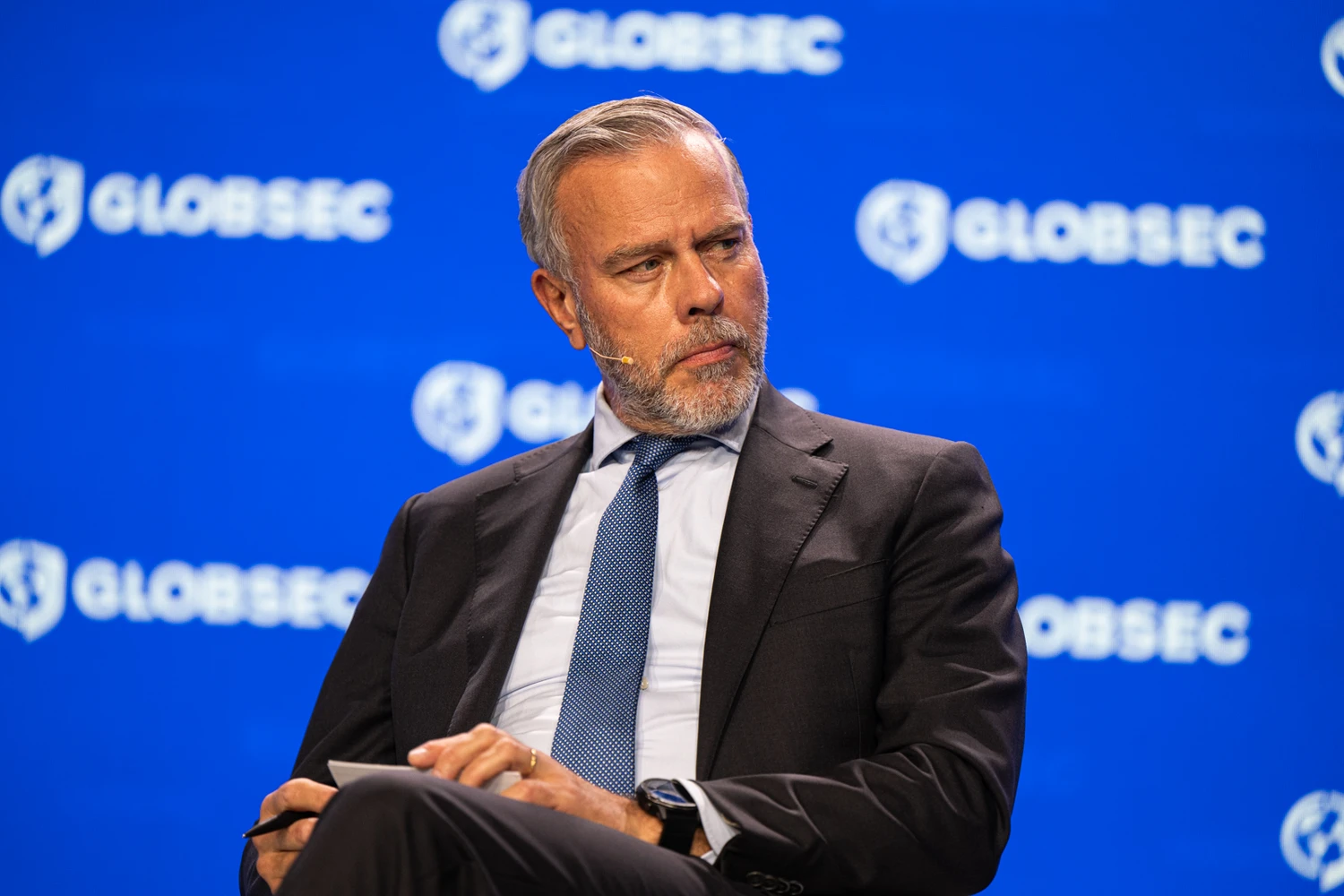
Ukraine could have won the war in 2022 had the West delivered the weapons it eventually sent much later, Admiral Rob Bauer, who chaired NATO's Military Committee from 2021 to 2025, told Euromaidan Press at the GLOBSEC 2026 forum in Prague.
"If we had done something else in 2022 with regard to the weapons that we gave, you might have won," Bauer said—the most direct concession yet from a senior NATO figure that the alliance's incremental approach to arming Ukraine was a strategic mistake.
It carries weight because it comes from the officer who oversaw NATO's military response during the war's opening phase. His account confirms what Kyiv has argued since 2022: that Western caution, not Ukrainian capacity, set the ceiling on what Ukraine could achieve.
No strategy to win
Bauer was blunt that victory was never the stated goal. "It was never formulated as, 'We're doing this so that Ukraine can win the war,'" he said. Nor was it framed around Russia losing. What emerged instead was a promise to support Ukraine "for as long as it takes"—endurance, not victory.
He traced the gap to how the alliance decides. "You need one nation that says 'no' and it's 'no,'" he said, explaining why NATO never deployed troops, never admitted Ukraine, and never did more than it did.

The cost of waiting
The delay had a price Ukrainians paid on the battlefield. Had the tanks, HIMARS, ATACMS, and F-16s arrived in the spring or summer of 2022, when Ukraine was retaking ground, Russia "would be in a much more difficult spot," Bauer said. Instead, the long Western debate gave Moscow time to build the defensive works that stalled Ukraine's 2023 counteroffensive.
He did not spare his own side: "I think we should have done more."
Bauer now argues Ukraine must be admitted to NATO, warning that excluding "the biggest nation with the latest experience in war with the Russians" would compound the original error. He made the remarks in a wide-ranging interview that also covered Russia's 2022 nuclear threats.

“It was never formulated as Ukraine winning”—NATO’s ex-military chief on the missing strategy
This material was produced as part of a project by the Institute of Mass Information with the support of the Ministry of Foreign Affairs of the Netherlands. The content of this publication does not reflect the official position of the IMI or the Kingdom of the Netherlands.
Read Also
-
300 Russian shadow fleet ships disabled in 11 weeks—the Azov Sea is at a standstill, Ukrainian drone force commander says
-
Danish defense startup guarding undersea cables runs on 15 Ukrainian suppliers. Ukrainian fund is putting in €2 million in it
-
Last September, Poland downed four of 19 Russian drones. This September, drone reached NATO’s missile shield in Redzikowo, and troops guarding it called 112


