


Russia's Security Council Secretary Sergei Shoigu threatened Moldova with intervention over its measures against Transnistria — a Russian-occupied breakaway strip of Moldovan territory — comparing Chișinău's actions to Ukraine's alleged treatment of Donbas after 2014, in an interview with Komsomolskaya Pravda cited by The Moscow Times.
Shoigu's threats and the Donbas comparison
Shoigu, Russia's former defense minister, claimed Moldova, "with Ukraine's participation," had imposed a "blockade" on Transnistria, creating "trade, banking, and transport barriers" and worsening conditions for residents.
"Movement restrictions, illegal customs duties, arbitrary deprivation of citizenship... the situation, frankly, is serious," he claimed. "Key enterprises are not functioning or are working intermittently, and there is a chronic shortage of energy resources."
He then invoked the language Russia used before its 2014 and 2022 invasions of Ukraine. Moldova's rhetoric toward Transnistria, Shoigu claimed, "increasingly resembles the statements of Ukrainian authorities toward the Donbas after 2014."

Russia’s buffer zone wishlist now includes Vinnytsia — via Moldova’s Transnistria, Ukrainian official says
The threat followed directly:
"More than 220,000 Russian citizens live in Transnistria, whose interests and security — due to the mindless and irresponsible actions of Kyiv and Chișinău — are now under threat. And if necessary, Russia will take all necessary steps and use all available methods to protect them."
Shoigu also accused Moldova of trying to "squeeze out" the Russian military contingent from Transnistria, noting that on 17 April Moldova declared the contingent's commanders persona non grata — effectively barring them from entering Moldovan-controlled territory. He claimed this "unambiguously confirms Chișinău's firm intention to further escalate the situation."
Trending Now
An empty threat Russia cannot easily deliver
What Shoigu did not address is that Russia has no land route to Transnistria. Ukraine lies between Russia and the breakaway region.
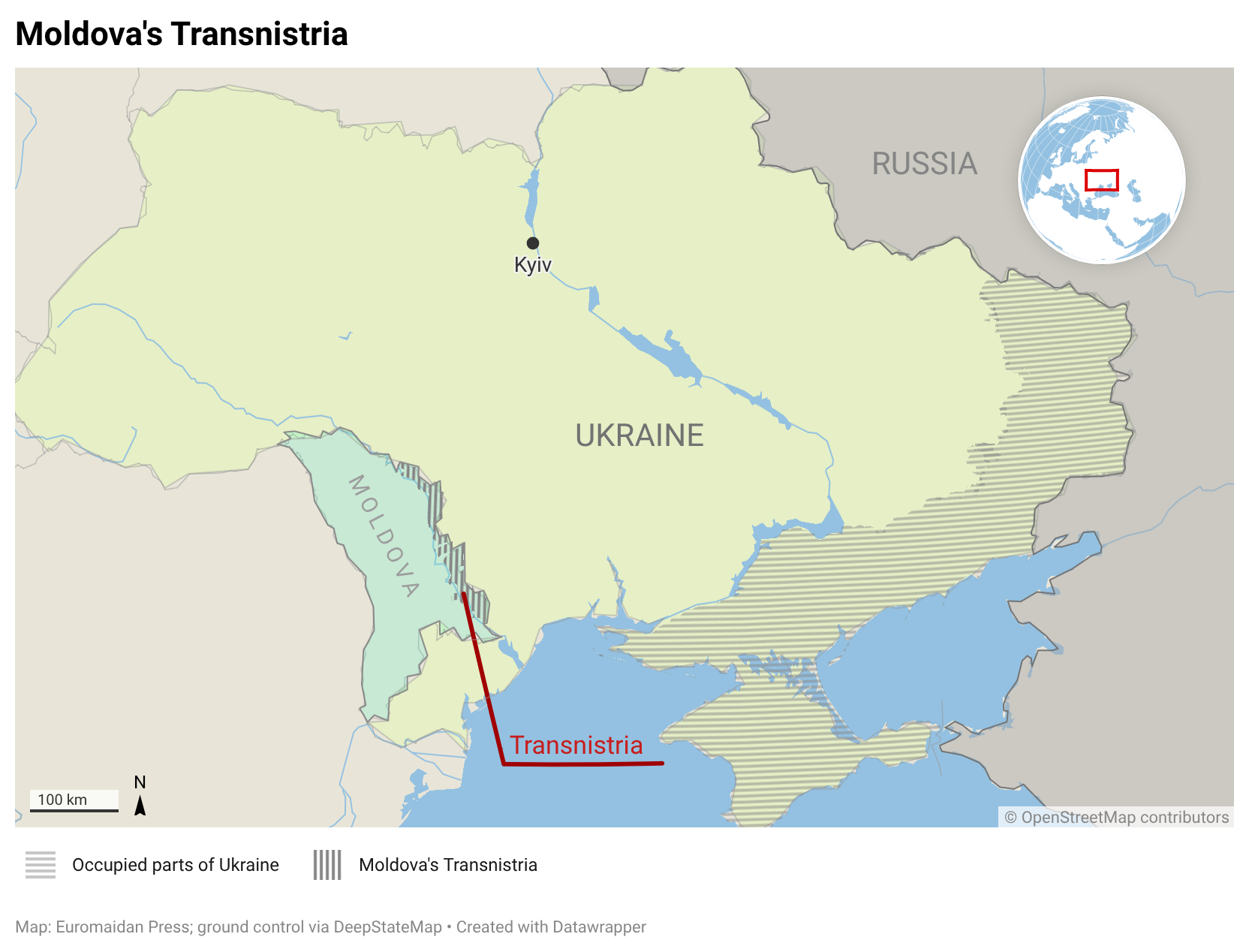
Russia's Operational Group of Russian Forces — around 1,500 of the so-called "peacekeeping" troops descended from the Soviet 14th Army, which supported separatist forces in the 1990s conflict — has been stationed in Transnistria since then, with no resupply land corridor and no mechanism for reinforcement or withdrawal. A Ukrainian defense official said in April that Russia lacked the forces to execute its intentions to create a buffer zone within Ukraine near Transnistria.
Shoigu added that Russia had "repeatedly warned at all levels" that any attempt to resolve Transnistria by military force, or to replace Russian troops with a "Western contingent," would "provoke negative consequences for Moldova and the entire region."
Read also
-
“A warning to companies that remain”: Russia takes control of Nestlé and Auchan’s assets – companies that stayed in Russia following the full-scale invasion of Ukraine
-
“I can travel back to Finland and be safe. That is a luxury”: Sanna Marin on the Russian strike that stopped her train from Kyiv
-
Ukraine put its own peace proposals on the table as two US envoys reached Kyiv for the first time


