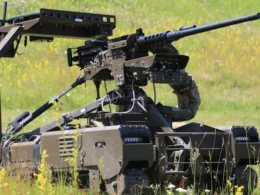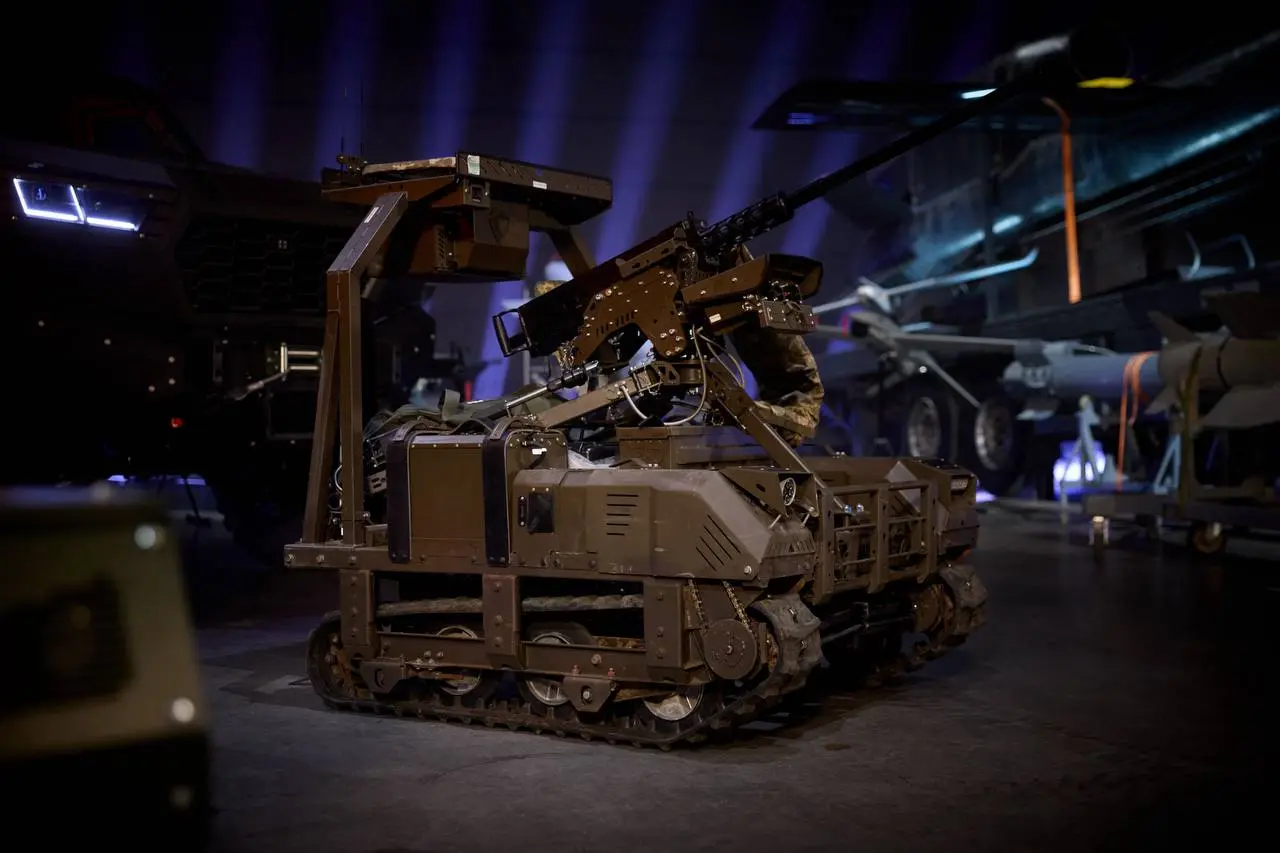
Ukrainian President Volodymyr Zelenskyy said Ukraine has set a target to contract at least 50,000 unmanned ground vehicles (UGVs), calling them “the next major step” in modern warfare after aerial drones.
The push reflects a broader shift in how Ukraine fights, as both sides rely heavily on unmanned systems. While aerial drones remain the primary strike tool, ground robots are taking over support roles that previously exposed troops to fire.
Zelenskyy: expansion needed to save lives
In his evening address on 27 April, Zelenskyy said UGVs are already reshaping frontline operations and will become as essential as aerial drones. “It is already impossible to imagine defense without drones, and the same applies to UGVs,” he said.
He added that contracted volumes of ground robots have already more than doubled compared to last year, and must increase further to meet battlefield demand.
Zelenskyy framed the expansion as directly tied to reducing casualties. UGVs are increasingly used for frontline logistics, evacuating wounded soldiers, and conducting combat tasks in high-risk zones.

Frontline units already rely on ground robots
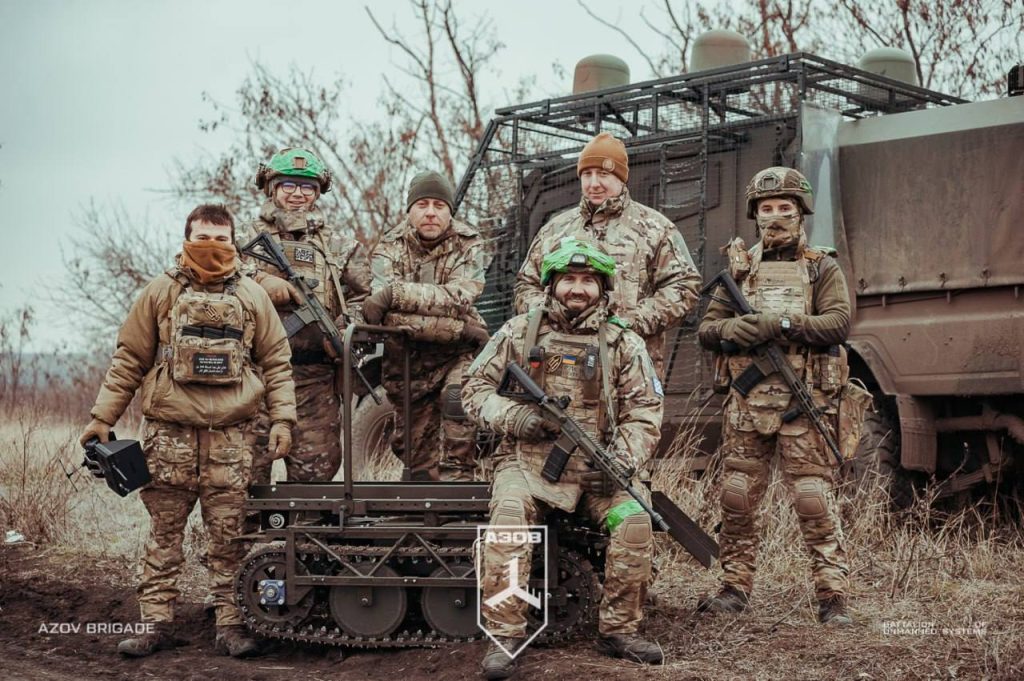
This shift is already visible on the battlefield. Ukrainian military outlet ArmyInform reports that units of the 42nd Mechanized Brigade near the Novopavlivka direction are using UGVs to resupply FPV drone teams operating close to the front line, where Russian drone activity and remote mining have made traditional logistics routes too dangerous.
Ground robots now deliver ammunition, fuel, and food to forward positions on a daily basis, replacing soldiers in exposed supply runs.
In one case described by ArmyInform, a routine logistics mission turned into a medical evacuation after two soldiers were wounded by a Russian FPV strike. A UGV transported them roughly 8 kilometers to safety, allowing further evacuation by vehicle.
From logistics to combat roles
Ukrainian troops say the systems are still evolving but already proving durable enough for repeated missions, with some units completing dozens of sorties.
Military personnel also see broader future uses, including combat roles, mine clearance, and even assault operations with mounted weapons systems.
Scaling production and long-term goals
Zelenskyy’s announcement suggests Ukraine is moving to scale these capabilities rapidly, integrating UGVs alongside its large drone fleet and expanding domestic defense production.
He stressed that the long-term goal remains deeper technological independence, including developing key systems domestically or jointly with partners.
As Russia continues to sustain its own military-industrial output, Ukraine is betting that automation – in the air and on the ground – can offset manpower risks and maintain operational tempo.
Read also
-
Ukraine finds US-made navigation sensor inside Russia’s new jet-powered drone
-
Ukraine cuts more than 4,000 vacant government posts and trims deputy ministers by about 20% in the first stage of civil service reform
-
Ukraine’s war leadership sets new electronic warfare tasks as Russia’s jet-powered drones slip past nearly half of its air defenses