
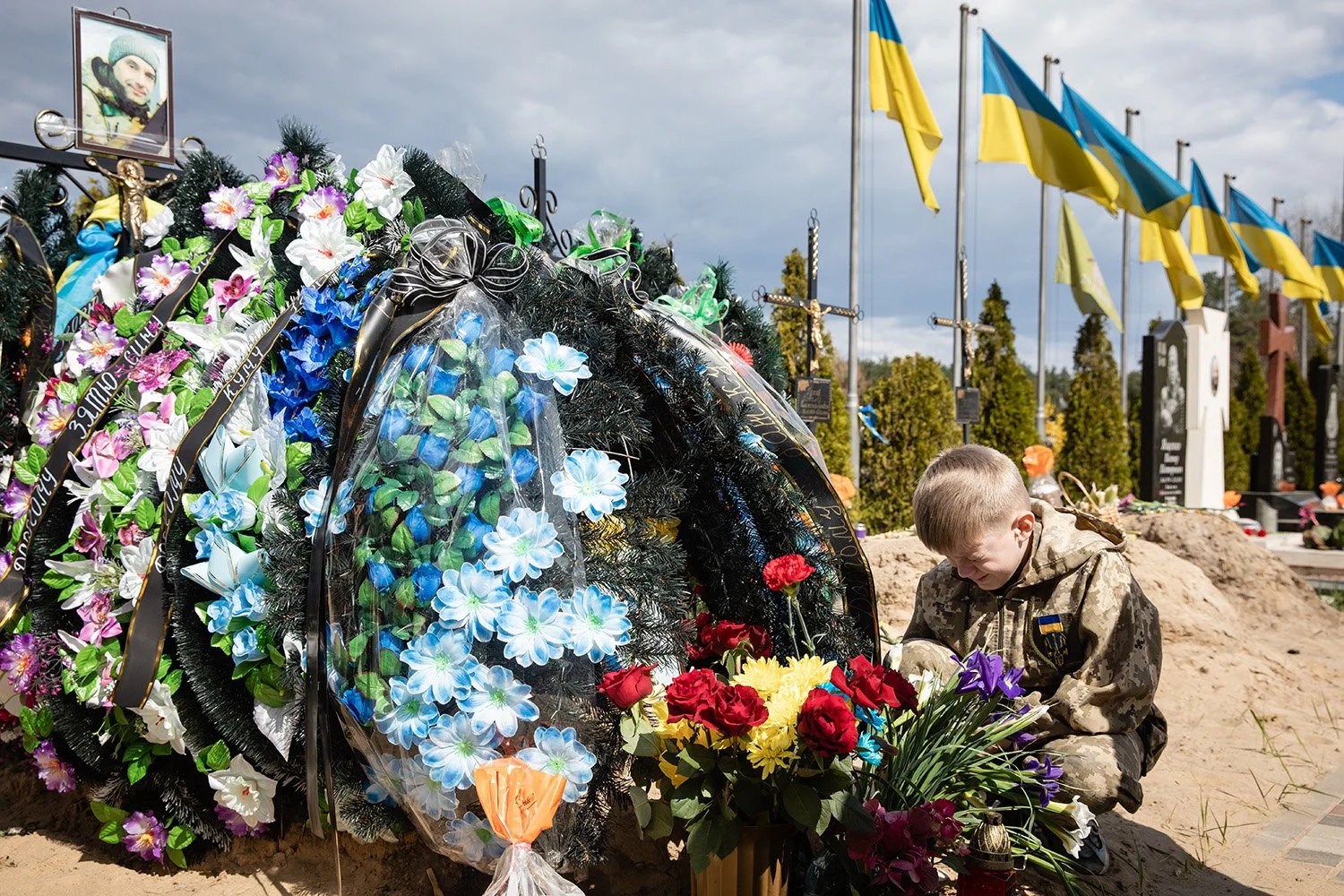

In 1991, Ukraine did not shed a drop of blood. It was a transition of power. We raised a flag, we declared ourselves independent, and we received our independence as a gift.
Now we are shedding rivers of blood for real independence.
That is the difference between this Independence Day and the ones before it, and I do not think we have absorbed it yet.
Colonial theory has a name for what happened to us thirty-five years ago. It is called flag independence. You raise the flag, you declare the state, and for a while you believe that was it—that this was the end, and now we simply continue as an independent nation.
In theory it was believed to be like that. In practice, every decolonized nation eventually discovered the same thing: it is not the end. It is the beginning.
The nations that gathered at Bandung in Indonesia in 1955 worked this out before us. They had their flags. They also had the former metropolis still holding the strings—to their economies, their cultures, their political classes. They named it: neocolonialism.
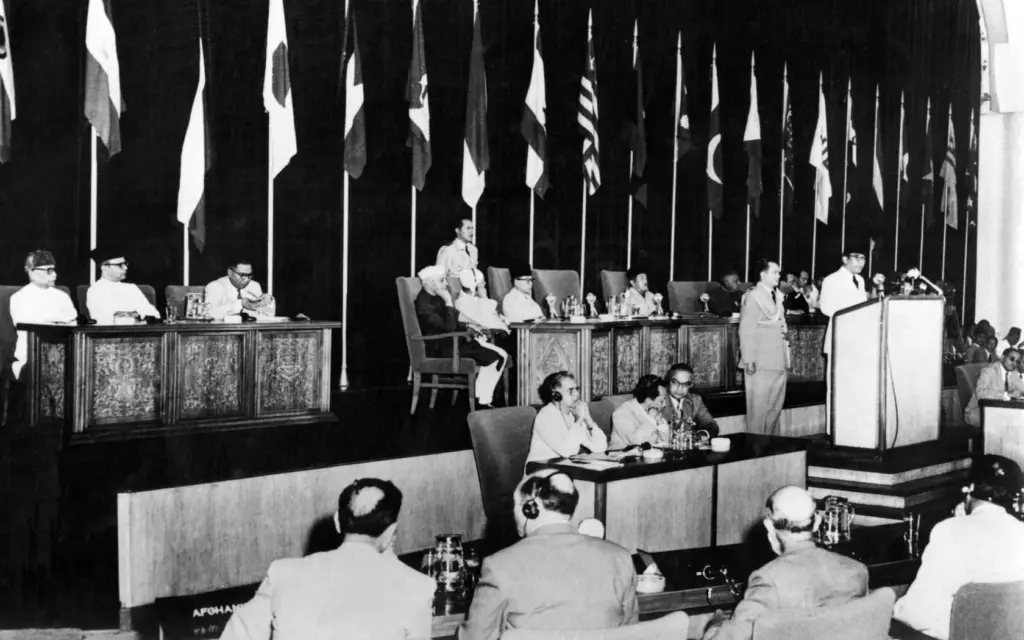
And they understood that real independence would take something longer and harder than a declaration. Not only liberation with arms, but liberation of the mind from the colonial legacy. Not erasing the colonial memory—reworking it, synthesizing it into something new.
So here is the shape of it. Before 1991, Ukrainians waged a struggle for independence without statehood. After 1991, we have been waging a struggle for independence within statehood. The struggle did not end. It changed its conditions.
In 1991 we did not shed a drop of blood. We received our independence as a gift.
What was gathered into the Act of Independence
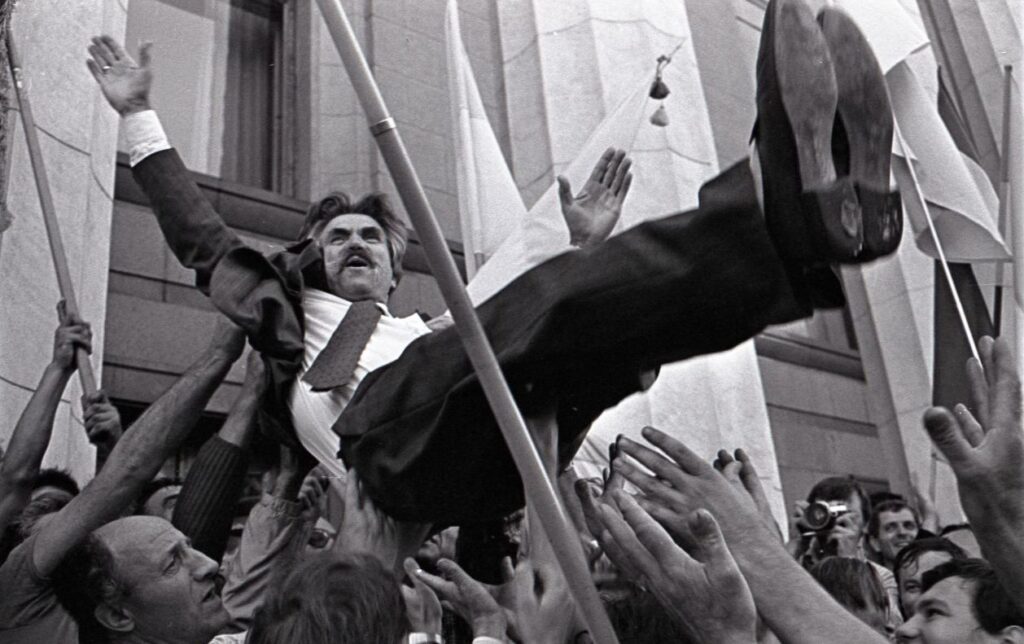
The declaration was a beginning, but it was also a result—of generations.
It begins in the nineteenth century, with people like Taras Shevchenko, who essentially invented a Ukrainian identity. It was a construction. It was not, as Putin claims, the invention of Vladimir Lenin. It was the invention of Ukrainian intellectuals, writers, and religious leaders, who constructed this nation on the basis of what came before—the Cossack Republic, Kyivan Rus, the long stretch from the Middle Ages through early modernity.
Then the dissidents of the Soviet period. Then the Ukrainian Insurgent Army, which fought on two fronts against three colonizers: the Germans, the Poles, and the Soviets. Their struggle was clearly anti-colonial. Brutal, but anti-colonial. I do not justify everything they did. I am applying postcolonial theory in order to make sense of what they did, or tried to do. They were defeated. Their ideas resurfaced in 1991 and were gathered into the Act of Independence.
And that Act, while it closed a long period of Ukrainian struggle without a state, opened a new one.
Today, more independence than colonialism
Before 2013, I would say, there was more neocolonialism than independence.
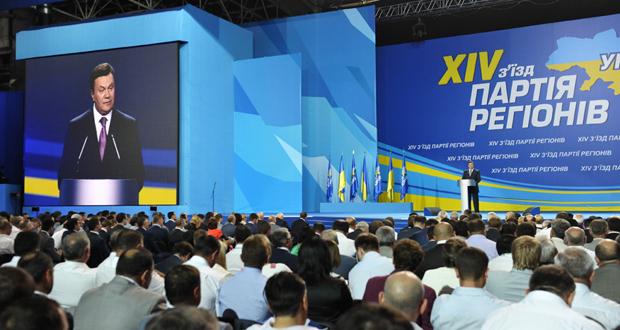
This is a description, not a figure of speech. The former metropolis re-established the strings. Russian capital came into the economy under the presidencies of Leonid Kuchma and Viktor Yanukovych, and Russian corruption came with it.
Proxy parties were planted—the Party of Regions and its various clones. Russian pop music was everywhere, which sounds like a small thing and is not: in postcolonial studies, literature and popular culture are considered among the most effective vehicles of neocolonial control.
Today it is the other way around. Neocolonialism has not evaporated, but the proportion has changed. There is now more independence than neocolonialism—and that itself is what thirty-five years of struggle have achieved.
And corruption was a neocolonial instrument. This is the part Ukrainians resist, so let me put it plainly: our fight against corruption is effectively an anti-colonial fight. In Ukraine people sometimes present this as a dilemma—either we fight corruption or we fight the Russians, we cannot do both. From the perspective of postcolonial studies the dilemma does not exist. Both are anti-colonial efforts. They go hand in hand.
Our fight against corruption is effectively an anti-colonial fight. Both go hand in hand.
Empires have always travelled with religion on their shoulders, and religion has always helped establish imperial rule in the colonies. In the Ukrainian case it was first the Greek Catholic Church, established in 1596 an instrument of Polish colonization, although this is not the case anymore. But that is how it began.
And presently Russia’s instrument of recolonization is the Moscow Patriarchate, still present in Ukraine as the Ukrainian Orthodox Church under the Moscow Patriarchate (UOC MP).

Anatomy of treason: how the Ukrainian Orthodox Church sold its soul to the “Russian world”
Here I have to say something uncomfortable for many Ukrainians.
Nations that decolonize very often produce new subalterns. In post-colonial language, these are parts of the population that are subdued, oppressed by the dominant power. But we may be producing such subalterns as an effect of pushing back against Russian colonization: groups of Ukrainians belonging to the UOC MP being marginalized, subalternized, by our own struggle. It is a very difficult dilemma how to deal with this subalternization, and I do not have a resolution for it.
We may be producing new subalterns: Ukrainians marginalized by our own struggle. I do not have a resolution for it.
Two revolutions against the ratio
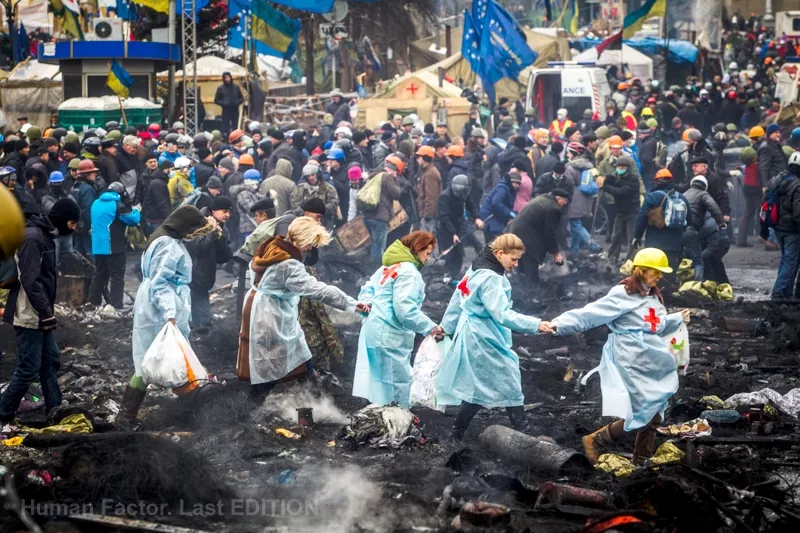
Both of Ukraine’s major “Maidan” protests were anti-neocolonial revolutions.
In the Orange Revolution of 2004 and again during the Euromaidan Revolution in 2013, Ukrainians protested because they had decided there was not enough independence—that what we had was more neocolonial than independent, more fake than real, and that the proportion had to be corrected. That is what a Maidan is. A public consensus that the ratio is wrong.
In February 2022, independence very nearly ended. People gave our statehood three days—and not only Russians. That was the opinion of most observers. It did not end. We survived it. But our statehood is still not secured, and it is being secured every day, including today.
What Ukraine contributed to the empire, and how
There is an argument against everything I have said so far, and Ukrainians make it as often as anyone. They object: look, we have contributed to the Russian Empire and to the Soviet one. We have basically built them.
Which is true.

Ukraine helped build the Russian empire. Now it stands in the way of its resurrection – Serhii Plokhii
But Ukrainians were never permitted to contribute as independent agents. They were allowed to contribute exactly as long as they lost their identity—as long as they denounced their own agency. They were contributors without their will and without their identity.
Corsica is my example. It had its own culture, its own identity, its own language, still spoken in pockets. Go into a good Corsican restaurant in Corsica and they may speak Corsican to you; I have had this experience. But it is not a language widely spoken anymore. It has been completely subsumed by French, and France holds Corsica tightly today. And what is France? To a great extent, it is the creature of a great Corsican named Napoleon Bonaparte, who built the French Empire. Nobody concludes from this that Corsica was not a colony.

It is remarkable to me that Putin still does this. He puts people with Ukrainian backgrounds into key positions—in the military, in propaganda, in negotiations.
- Vladimir Medinsky, one of his chief propagandists and now his negotiator, was born in Smila, in Cherkasy Oblast, my own small motherland.
- Valentina Matviyenko, third in the official hierarchy, comes from Shepetivka in Khmelnytskyi Oblast.
- Kirill Dmitriev, who negotiates with the Americans, was born in Kyiv to a family of Ukrainian biologists.

It was Medinsky, incidentally, who announced in a 2012 interview that the Russian people has one extra chromosome—his explanation for how Russia survived the catastrophes of the twentieth century when other nations, the Scythians and Sarmatians among them, broke and vanished. Russians mocked him for it, since an extra chromosome is the marker of Down syndrome.
As a claim, though, it is a race claim. Made by a man born in Cherkasy Oblast, about a people he was not born into.
They contribute to the Russian neo-empire. They contribute to it not as Ukrainians but as those who denounced Ukrainian identity. This is how empire functions. It absorbs the representatives of subaltern nations who willingly denounce their own will. It was so under the Romanovs. It was so in the Soviet empire. It is so in Putin's quasi-empire now.
Ukrainians were, and still are, a subaltern nation.
Ukrainians were allowed to contribute to the empire exactly as long as they lost their identity.
Papua, and Scotland
There are worse outcomes than ours and there are better ones.
The Papuans of West Papua tried. They fought for independence, failed, and many of them were killed. They are still oppressed. That is the bad end of the range, and it is not hypothetical.
The better scenario would be the Scots. They had statehood, and it was strong—kings and queens, pride, history, narratives, everything a full and self-sufficient nation possesses. Then they lost it. They are not being killed. They do not suffer the way the Papuans suffer. And yet many of them remain deeply dissatisfied with what they are. We support the United Kingdom, of course, but we are also mindful of the peoples who constitute it—Scots, Irish, Welsh. They have their pride, their nation, their language, their history, their self-consciousness, their identity.
They cannot fully live any of it without independence.
That would be a much better scenario for us than the Papuan one. From where we are now, I still do not think it would be enough.
Colonies taken by neighbors
Timor-Leste has stayed with me. One of the newest countries in the world, independent since 2002, and before that a genocide. Up to a third of its population died. Its capital, Dili, was destroyed in 1999.
Our own Baturyn, the capital of the Cossack Hetmanate, was destroyed by Peter I's army in 1708 in the same way.
And Timor is not an overseas colony. That is the other thing. There is the colonization conducted across an ocean—the Dutch in the Malay Archipelago, to which Timor belongs—and there is the colonization conducted by a neighbor. Indonesia, having been a Dutch colony itself, became independent, developed a colonial attitude within thirty years, and invaded Timor.
Ukraine was taken by neighbors too. First Poland, then the Russian Empire. Both committed atrocities here. We always resisted, and always with some violence—there has never been an anti-colonial struggle that was not violent, and ours is not an exception. I wish it were an exception. It was not.

The first colonization, and the first decolonization
The Polish colonization is the one Ukrainians forget, and it matters for a reason that has nothing to do with Poland.
It ended. And the decolonization from it was successful: we regained our ground, re-established Ukrainian identity on our territory, our own way of living. And there was a process of reconciliation that worked, at least to some extent. That is the first decolonization Ukrainians ever accomplished, and it is the paradigm I hold onto when I think about what happens with Russia.
Which does not mean it is finished. Some of the reactions coming from the Polish side now are, to me, surprising and incomprehensible, and I can explain them only through this lens: post-colonial phantom pain. They lost a limb and they still feel it. Russia feels the same phantom pain about what it calls the Russian World, and reacts far more violently, because Russia is historically far more violent. But the pain is the same kind of pain.
One white nation killing another
Much of the world does not accept that any of this is decolonization. In the Global South the response is: one white nation is killing another white nation, why should we care.
They should care, because our struggle is the same as theirs was. If ours is meaningless, then theirs was meaningless too.
They are working with a black and white colonial paradigm—sometimes literally—which skims over the surface. There is a name for what we are: a South within the North. Inside the Global North pockets of land and people exist whose experience and self-perception are closer to the peoples of the Global South than to their neighbors. Ukraine is one of those pockets. Our vision of ourselves may be nearer to the Global South than to Europe.
Race is the real difference, and I will not pretend otherwise. Though even there the resemblance is closer than people assume. When we were a Polish colony, the Poles developed the idea that we were an inferior people—chłopy—while they were Sarmatians, a superior nation. Not race as skin color. Race as ethnic origin, which does the same work.
By my own study, something like 90% of the criteria that apply to other colonies apply to Ukraine. Perhaps 10% do not.
But before the world can see this, we Ukrainians have to see it.
If our struggle is meaningless, then theirs was meaningless too.
Why the blood
Fanon believed that violence is embedded in colonialism—that it is intrinsic, that you cannot be a colonial power without being violent, without being prepared to kill the subalterns. He also believed that anticolonial struggle is inevitably violent. Sartre, who wrote the preface to him, believed it too. Maybe that is right, and it would be a good and easy explanation.
But our struggle is particularly bloody for a particular reason, and it is Russian. Russia has adopted most of its ideas from the West, and has almost always put them into practice through violence exceeding anything done in the place the idea came from. Marxist ideas about the counter-revolutionary nature of the peasantry produced the Holodomor; American culture wars are producing this one.

Our resistance is violent because their aggression is. It is a reaction, and it does not exceed the action. If anything it is disproportionate in the other direction. They kill our civilians in daylight and destroy hospitals and residential buildings. We destroy their oil plants and the warehouses of their online marketplaces.
From the standpoint of genocide studies, what is being done to us is a classical genocide. Not a rhetorical trope—a scientifically provable case. What is unprecedented is not the death toll but the intensity: the quantity of weaponry and ammunition involved in this anti-colonial war has no precedent among anti-colonial wars.
Agency
This is what Ukraine has to contribute to postcolonial theory, and I think it is the important thing.
The victims are not powerless and they are not will-less. They have their own volition. They have their own agency. And the purpose of an anti-colonial struggle is to regain agency—not merely independence, not merely economic freedom, not merely the cutting of ties with international capital or with the old and new empires. Agency.
Our struggle is a struggle for and through our agency. And it is a path that other peoples still living with the residues of colonialism could follow.
The neocolonialism that is not Russian
The Russian form is the most obvious available to us. It is not the only one.
The newest arrived with the Trump administration, which tried to exchange support for our resources—rare earth elements and so forth—essentially requiring us to give them up in return for help. This is a classical neocolonial attitude. It is what happens when a neocolonial power is being established.
I want to be careful here, because this is the policy of the White House and not of Americans. Most Americans who come to Ukraine come as volunteers, prepared to sacrifice their lives, because they understand that global democracy depends on what happens here. The neocolonial attitude belongs to a minority. Unfortunately, that minority currently holds power.
It is a new situation for us, but it is not unique for the world. Still, we can survive it if we understand what it is.

Russia is the last European colonial empire, but the West looks away. Expert explains why
Whether it is worth it
It is not for us to answer that.
Our generation has decided that it is worth it. But we should remember that we have also decided for the next generation. The Ukrainian Sich Riflemen, a volunteer legion of students and intelligentsia raised in Lviv in 1914, decided in their time that it was worth sacrificing themselves for Ukrainian independence, and we now judge that they were right. The UPA, fighting into the 1950s, decided the same. They were defeated.
We do not know how the next generation will judge us. Because there will be millions of Ukrainians who will not have been born as a result of this war. They will not decide whether we were right or wrong. They will not exist.
Those who do exist will make the judgment.
Edited by Alya Shandra
Editor's note. The opinions expressed in our Opinion section belong to their authors. Euromaidan Press' editorial team may or may not share them.
Submit an opinion to Euromaidan Press


