


Donald Trump made it sound as though he had just solved Ukraine’s Patriot shortage.
At the NATO summit in Ankara on 8 July 2026, he told Ukrainian President Volodymyr Zelenskyy that the United States would grant Kyiv something it had sought for months.
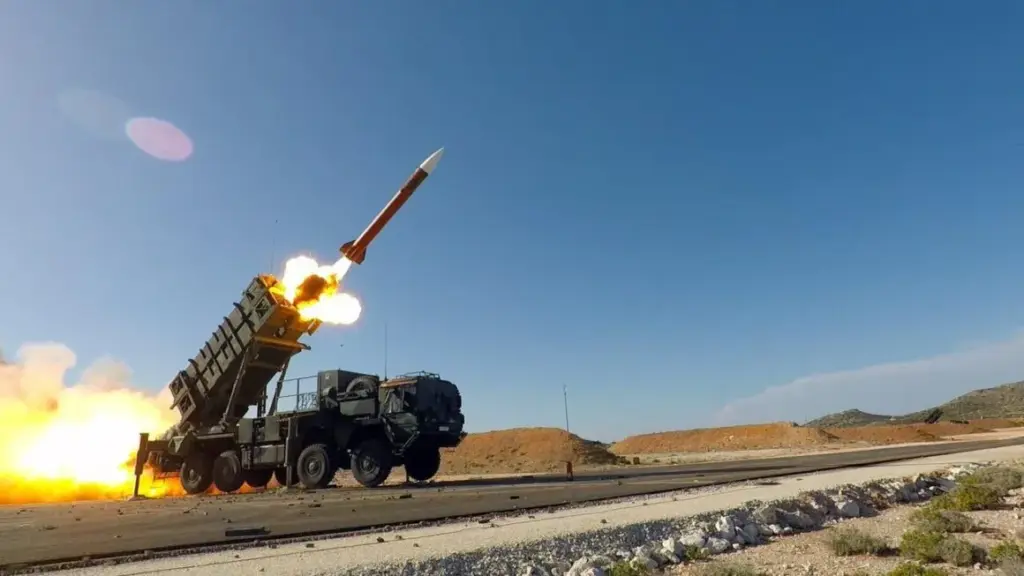
“We’re going to give a license to you to make Patriots,” Trump told Zelenskyy. “This way, you can’t complain that we’re not giving ’em enough.”
But Trump did not actually grant the license in Ankara. CBS News reported that Lockheed Martin and RTX—which help produce the Patriot missile—had not been informed. Defense News said key terms, including which interceptor Ukraine could build, still had to be negotiated with the contractors.
Zelenskyy left with a promise, not the right to begin producing Patriot missiles.
Even a finalized license would not deliver a single interceptor soon, two defense specialists told Euromaidan Press.
The Patriot is the Western system that most reliably stops Russia's ballistic missiles, and Ukraine depends on the US almost exclusively for it. Russia, meanwhile, wages its most intense aerial campaign of the war. In the strikes on 6 July, Ukrainian air defenses downed none of nearly 30 ballistic missiles fired at Ukraine, according to the Ukrainian Air Force.
A Ukrainian production line could be up and running by the end of next year at the earliest. Kyiv needs Patriots today.
Worse, the specialists warned Euromaidan Press, Washington could use the license as an excuse to stop or delay deliveries. The summit also offered no strategy to defend Ukraine’s skies until production begins, let alone help Kyiv break the battlefield deadlock.
What Ankara delivered
Beyond the Patriot license, the summit’s headline item was money. Allies committed roughly €140 billion ($160 billion) in military aid to Ukraine across 2026 and 2027. Zelenskyy worked the room in an advocacy blitz and met Trump one-on-one.
The Ankara summit’s communiqué restated the alliance’s support for Ukraine but set no path to NATO membership and named no strategy for the war.

Ukraine's ambassador to NATO, Alyona Getmanchuk, struck a more upbeat note, welcoming what allies brought to Ankara. She pointed to the two-year aid commitment, the Patriot license, and fresh funding for the Czech ammunition initiative, long-range weapons, and Ukrainian drone and missile production.
On much of the summit's ledger, she has a case. But not one item on it closes the gap the specialists keep returning to—interceptors for the Russian ballistic missiles that Ukraine can no longer reliably stop, especially because the Iran War has drained the supply.
The license might be an alibi, not a fix
Zelenskyy has pushed for a Patriot license for months. In late May he wrote to the White House and Congress asking for both more Patriots and a license to build them, and pressed the same case at the G7 in June. His letter was blunt about the dependence underneath it: on stopping ballistic missiles, "we rely almost exclusively on the United States."
Marc DeVore, a defense-industry scholar at the University of St Andrews, believes Trump’s promised license will matter—eventually. His worry is what it buys Washington now.
"The Americans can check off a box and say, 'We've solved the problem.' They may be willing to do a victory lap without actually having resolved the problem."—DeVore
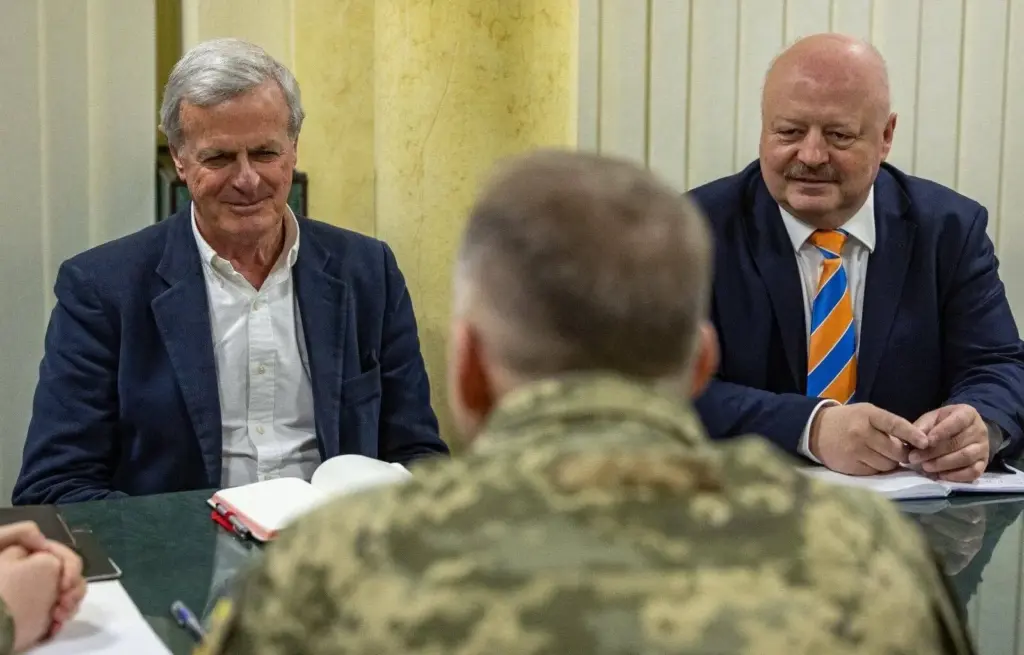
UK General Richard Shirreff, NATO's former deputy supreme allied commander Europe, now chief foreign military adviser to Ukraine's commander-in-chief, echoed DeVore, saying that the Patriot pledge "lets America off the hook concerning all the complaints about not supporting Ukraine."
Shirreff sees a second motive that runs counter to the pure-alibi reading: Washington may simply not have the interceptors to hand over.
After the US-Israeli war on Iran drained much of the world's stockpile, Shirreff said, America "doesn't have the means to provide Ukraine with Patriot now"—so the license defers deliveries partly because it can't do otherwise.
Other analysts echo DeVore and Shirreff’s assessment.
Strategic-studies professor Phillips O'Brien argues that the license substitutes for the deliveries Ukraine needs now, and could hand Trump a reason to withhold Patriots until a Ukrainian line exists—late 2027 or 2028 at the earliest.
DeVore shares the concern, though he stops short of calling Trump's move deliberate—a calculated deferral or just an announcement to look responsive—the result for Ukraine's skies may be the same: fewer interceptors at the most critical moment.
Why a Ukrainian Patriot is years away
But even a signed, finalized license would run into a harder limit. The Patriot is a punishingly complex machine to build, and Ukraine would start close to scratch.
Speaking to Euromaidan Press, DeVore pointed to hold-ups that are physical, not bureaucratic:
Trending Now
"The two big challenges in producing missiles are the engines and the guidance systems."—DeVore
The guidance is a closely-held secret, DeVore said. Even long-licensed foreign producers still rely on US subcontractors for it, so a license can leave dependence on American manufacturing intact.
Fabian Hoffmann of the Norwegian Institute for Defence Studies made the same point to the Irish Times: final assembly of the Patriot is not the bottleneck. Rather, localizing the missile’s supply chain is.
Engines are an even harder obstacle, DeVore said, and Ukraine starts at a serious disadvantage. Russia struck key parts of Ukraine’s missile industry early in the war, he noted, and engine shortages have since constrained efforts to scale Ukrainian missiles such as the Neptune to mass production. Kyiv could convert an existing engine line to Patriot production, in his reading, but only by creating a shortfall in the deep-strike weapons now hitting Russian refineries and Crimea.
In early July, DeVore asked two outside expert groups he chairs, both of which advise the UK Defence Ministry, whether Ukraine could realistically begin producing Patriots within a year. They reached the same conclusion he had: probably not.
A year is the optimistic floor, not a timetable anyone should count on.
No strategy and a proposal that went nowhere
The €140 billion in military aid pledged to Ukraine for 2026 and 2027, meanwhile, came without a clear strategy for what it would buy or how it would help Ukraine survive the war.
While speaking with Euromaidan Press, Shirreff noted some gains in Ankara, including the renewed Article 5 pledge and the Patriot license—though the latter would take time Ukraine may not have and would do nothing to strengthen its offensive capabilities.
Yet he was more blunt about what the summit amounted to:
“It was an exercise in papering over the cracks in the increasing chasm between Europe and the United States.”—General Shirreff
The summit, Shirreff said, preserved the appearance of transatlantic unity without resolving Washington’s unreliability or Europe’s failure to develop its own strategy for defeating Russia. The failure, in his telling, is one of political will, not military capability. NATO’s leaders would rather keep Trump on side than tell him plainly what Ukraine needs.
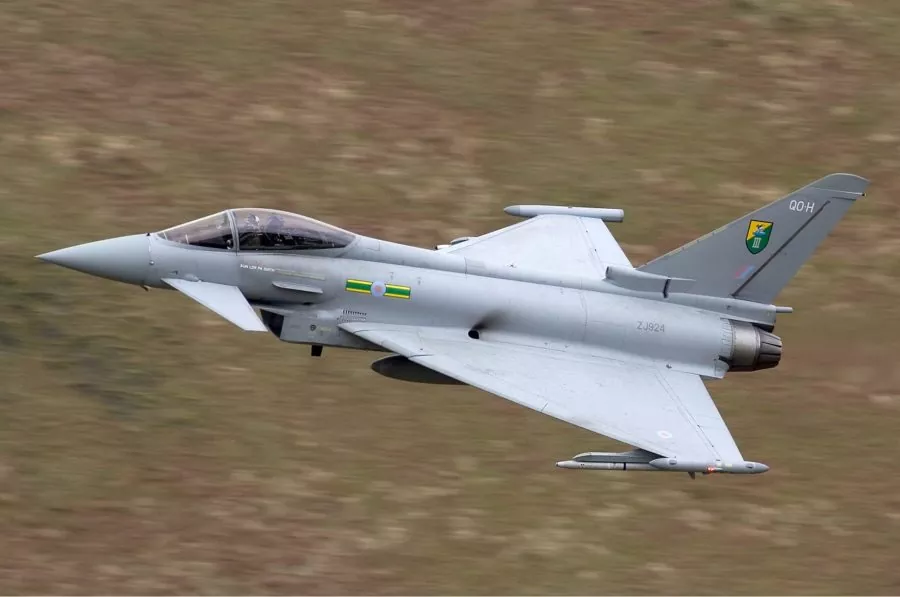
Shirreff has long championed a concrete proposal to ease the interceptor shortage: Sky Shield. Under the plan, European NATO aircraft would patrol western and central Ukraine and shoot down Russian drones and cruise missiles where possible.
DeVore further noted that every target destroyed by a European jet is one fewer threat for Ukraine’s limited air defense systems to intercept. That would allow Kyiv to concentrate more of its scarce Patriot batteries around the capital and closer to the front, while reserving their interceptors for the ballistic missiles they are uniquely equipped to stop.
Shirreff presents Sky Shield as one defensive component of a broader strategy, not a war-winner on its own. However, Ankara, he said, did nothing to advance it. “I just don’t think it’s changed the dial whatsoever.”
The problem the summit didn't touch
Strip away the public announcement, and the missile-interception arithmetic is unforgiving for Ukraine. Only five or six countries can build interceptors capable of stopping ballistic missiles, and all of them are running short. Ukraine’s best salvation might lie in the Freya missile system it is co-developing with Germany—but even that system is not guaranteed to deliver.

Patriots are ordered years in advance. Meanwhile Russia builds ballistic missiles faster than America builds the interceptors to stop them—roughly 800 a year against about 600—and a single Iskander can take two or three Patriot interceptors to bring down.
As Trump spoke in Ankara, another overnight barrage hit Kyiv, and Ukraine again downed none of its five ballistic missiles.
DeVore's answer is broader than ballistics. Since no defense stops every missile, part of the fix is getting more interceptors and part is making Ukraine need fewer of them—and survive the ones that land.
More interceptors could mean moving Ukraine ahead in the US delivery queue, or buying Japanese, South Korean, or European alternatives. European jets patrolling Western Ukraine could take the drones and cruise missiles off Kyiv's plate. Strikes on Russian missile plants could reduce what Ukraine has to stop at all. A hardened electrical grid survives what gets through anyway.
"A good strategy would have to rely on combinations of all of them," DeVore said.
The fastest option is already underway. Ukraine has asked nearly 40 partner countries to loan interceptors from their stockpiles now, in exchange for missiles already scheduled for Ukraine later. Those borrowed interceptors could arrive long before Ukraine begins producing Patriots itself.
This material was produced as part of a project by the Institute of Mass Information with the support of the Ministry of Foreign Affairs of the Netherlands. The content of this publication does not reflect the official position of the IMI or the Kingdom of the Netherlands.
Read also
-
Ukraine's Patriot systems are on a "starvation ration," Air Force spox says
-
Year ago, Russia fired 28 ballistic missiles in month at Ukraine. Now it's firing three times that
-
Defense expert: Ukraine’s interceptor shortage has no quick fix
-
Ukraine can win the battles. Without the word “victory,” it loses the war.


