


More than half of the world's fleet of sanctioned oil tankers is corroding and could cause a major environmental disaster, the head of the world's largest ship-recycling company warned the Financial Times. These are the ships that keep sanctioned oil flowing despite Western restrictions. This week, US authorities cleared the first four such ships for recycling.
The FT frames the sanctions as what keeps these aging vessels at sea, since they block any legal route to scrap them. Yet the owners never wanted to scrap a fleet built to dodge sanctions in the first place. Recycling only becomes a question once a ship finally drops out of the trade.
Luck is running out
Anil Sharma, chief executive of GMS Partnership, said the danger keeps growing. He told the FT that "luck was running out" to avoid a major slick. He pointed to the 1979 collision of the Atlantic Empress, which spilled more than 2 million barrels of oil. At least one-third of the fleet should be scrapped, he said, and probably more than half.

Russia’s 1,392-vessel shadow fleet is now hybrid-warfare tool. It will continue as long as its export capacity remains unharmed
Mostly Russia's tankers
The shadow fleet is the sanctions-dodging network that Russia, and to a much lesser extent Iran and Venezuela, use to sell oil abroad. Russia runs by far the largest share. S&P Global counted a total of 978 as of September 2025, including 561 tankers carrying Russian oil, 170 carrying Iranian oil, and 54 carrying Venezuelan oil.
Ukraine, which has tracked the Russian shadow fleet network for 2 years, puts the numbers even higher. Its military intelligence agency, HUR, now lists 854 tankers in the shadow oil fleet, updated 7 May 2026. Together, they carry 88.5 million deadweight tons. A broader register of ships tied to weapons, stolen Ukrainian goods, and sanctioned oil reaches 1,404.

A significant part of Russia's fleet is operated by its sanctioned state carrier, Sovcomflot, yet many ships fly the flags of Liberia, Barbados, and other countries.
Old, rusting, and uninsured
The shipbroker Clarksons puts the world's shadow fleet at around 1,800 ships, about 1,500 of them oil or product tankers. Many are well past 20 years, the age when cargo ships are usually scrapped. Corrosion and outdated systems then erode their seaworthiness. Alexander Saverys, who runs the shipping group CMB Tech, called the situation "a ticking time bomb." The vessels are uninsured, badly maintained, and poorly crewed, he said, an accident waiting to happen.
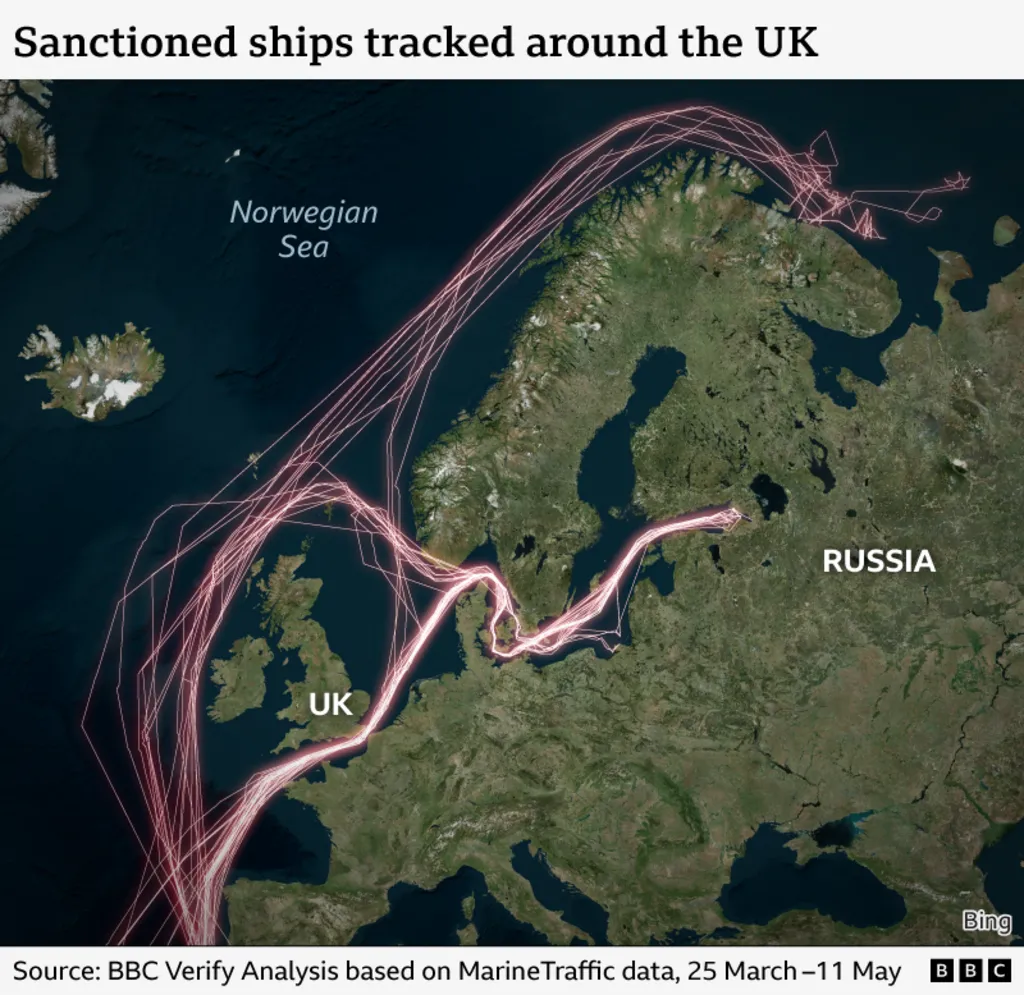
BBC: 184 sanctioned Russian tankers made 238 journeys through UK waters since the PM’s March intercept threat
- GMS won its first license this week from the US Office of Foreign Assets Control (OFAC), the sanctions authority, to recycle four vessels. Washington had sanctioned more than 50 such ships last year over ties to Iran.
- The EU is readying its 21st package of sanctions, due in late June or early July, aimed at the shadow fleet, now that Orbán's ouster has freed up measures Hungary had long vetoed.
- Ukraine has paired the blacklists with what it calls "kinetic sanctions," naval-drone strikes that hit two shadow fleet tankers off Novorossiysk in early May and have reached as far as the Mediterranean.
Read Also
-
“We are staying”: EU embassies remain in Kyiv after Russia warns diplomats to leave or risk their lives
-
“Mr Putin, put an end to this senseless war”: Merz in Kyiv, with €1 billion in military aid
-
Russia’s drones keep targeting the bridges Kyiv can’t easily replace—now the Northern crossing is cratered


