

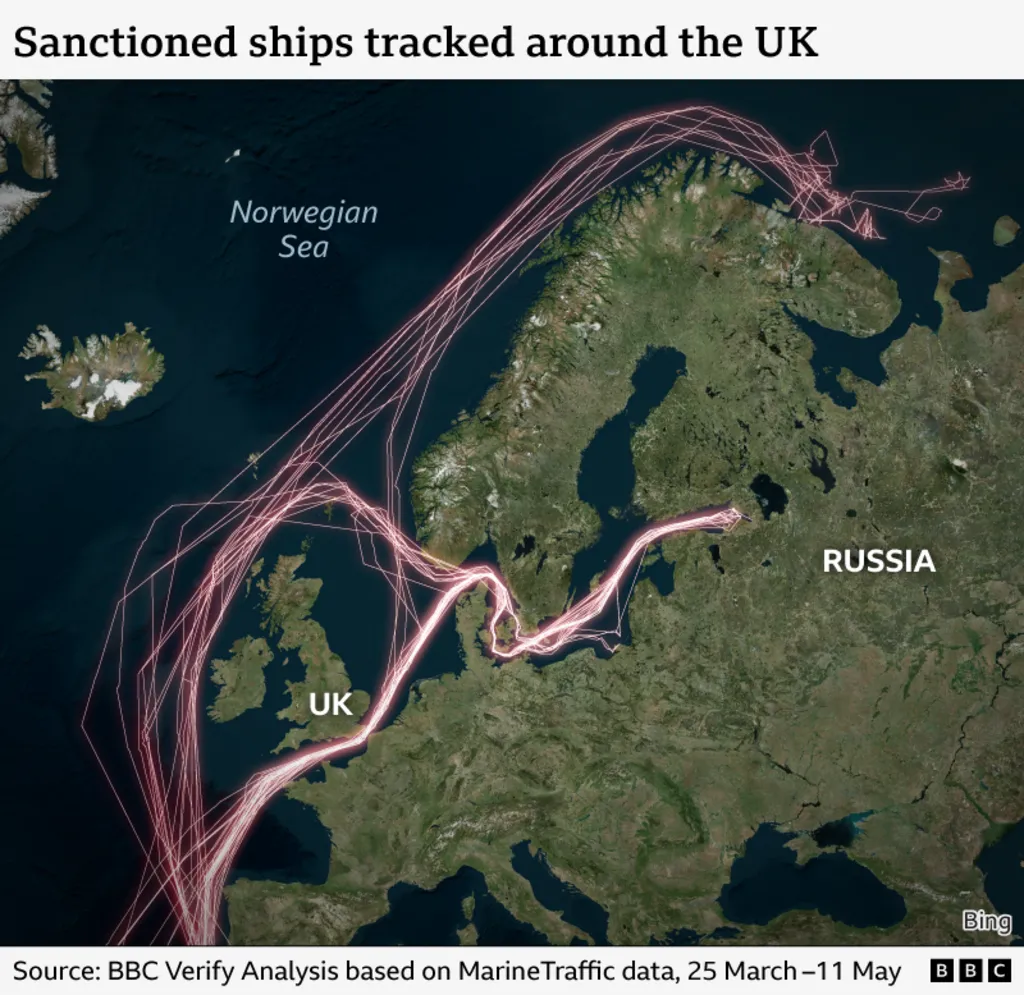
Sanctioned Russian shadow tankers continue transiting UK waters despite Britain's March threat to intercept them, BBC Verify found. No boardings have been publicly confirmed by British forces. A former Royal Navy commander described the inaction as "pathetic."
184 vessels, 238 journeys, 94 crossings into territorial waters
BBC Verify tracked all 184 vessels using MarineTraffic data between 25 March and 11 May. In at least 94 instances, ships briefly crossed into UK territorial waters within 12 nautical miles of the coast. All 238 journeys took place inside the UK's Exclusive Economic Zone (EEZ), which extends up to 200 nautical miles. The vessels included 173 oil tankers, 10 liquified natural gas (LNG) tankers, and one multipurpose offshore vessel. Most journeys passed through the English Channel.
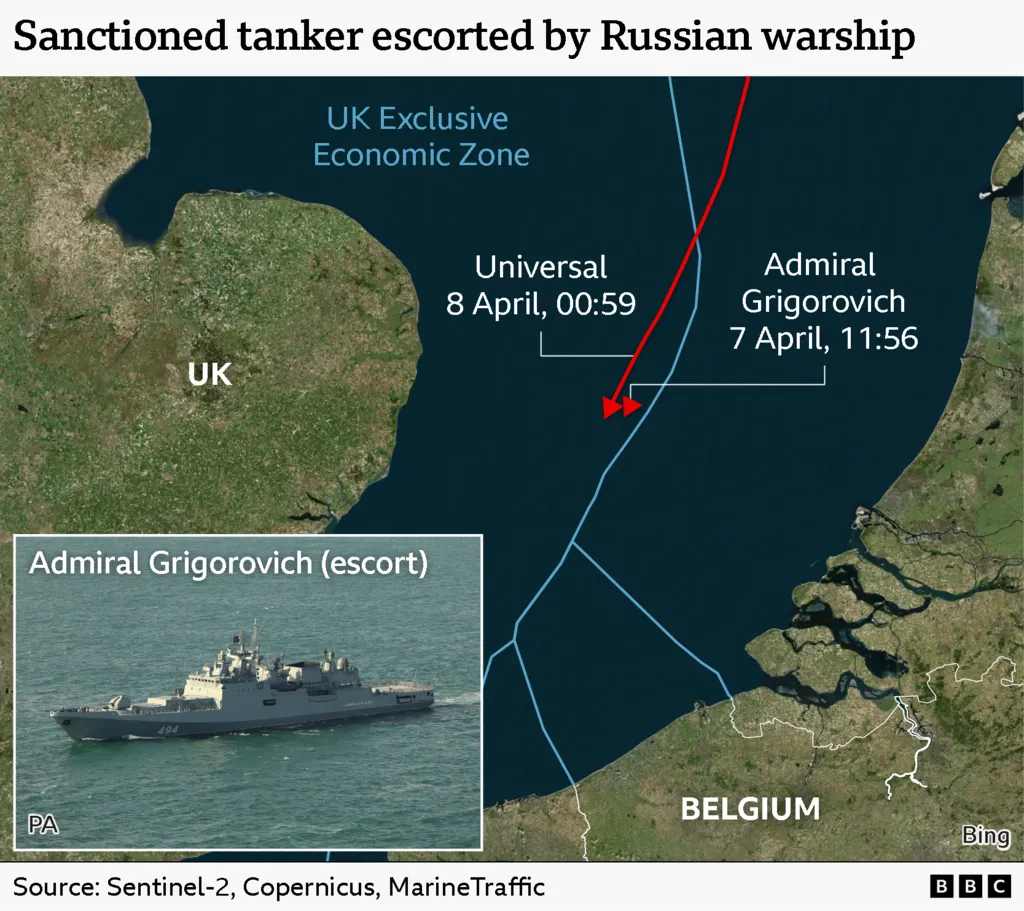
A Russian warship appears to have escorted the sanctioned oil tanker Universal through UK waters, satellite imagery shows. Intelligence firm MAIAR identified the warship as highly likely the Russian frigate Admiral Grigorovich. The tanker entered UK waters in the early hours of 8 April before transiting the Channel.
MoD says it is "disrupting and deterring"
BBC Verify asked the Ministry of Defence (MoD) whether British forces had intercepted any sanctioned vessels since 25 March. The MoD did not directly answer. It said it was "disrupting and deterring" shadow fleet vessels. It had also "challenged" more than 700 suspected ships since October 2024. The MoD declined to specify what "challenging" means or to comment on specific operations.

EU’s 21st Russia sanctions package will target the shadow fleet, banks, and firms selling stolen Ukrainian grain—Politico
Trending Now
Former Royal Navy warship commander Tom Sharpe called the lack of boardings "utterly confusing" and "pathetic." "We have the military capability, whether that's warships, boarding teams, Customs and Excise," Sharpe said. "We've got no maritime spine in us."
Shadow fleet
Russia gathered the shadow fleet after the 2022 full-scale invasion to bypass G7 oil price caps and other Western sanctions. The fleet now exceeds 1,100 tankers, according to Ukrainian data. Most vessels are aging tankers operating under flags of convenience, with hidden ownership chains and frequent AIS tracking shutdowns. Russia uses them to move over 60% of its seaborne oil exports, Kyiv assessed.

“Kinetic sanctions” in action: Two more Russian shadow fleet tankers hit at Novorossiysk — the second naval drone strike in five days
International sanctions have tried to keep pace. The EU's 20th package, adopted in April, added 46 vessels to its blacklist, bringing the total to 632 ships. The EU's 21st package, expected in June or July, will further target the fleet. Ukraine itself sanctioned 656 vessels in a single December 2025 decree, the largest single package on record.
Ukraine has also resorted to direct action. Naval and aerial drones have struck shadow fleet tankers in the Black Sea, the Mediterranean, and off the Senegal coast. Kyiv calls these "kinetic sanctions." War-risk insurance for shadow fleet vessels has tripled following the strikes.
Read also
-
“Now it’s your turn”: US envoys planned to show Moscow a refinery pause and a diesel deal, then ask for something back, a source tells Reuters
-
“A warning to companies that remain”: Russia takes control of Nestlé and Auchan’s assets – companies that stayed in Russia following the full-scale invasion of Ukraine
-
“I can travel back to Finland and be safe. That is a luxury”: Sanna Marin on the Russian strike that stopped her train from Kyiv


