


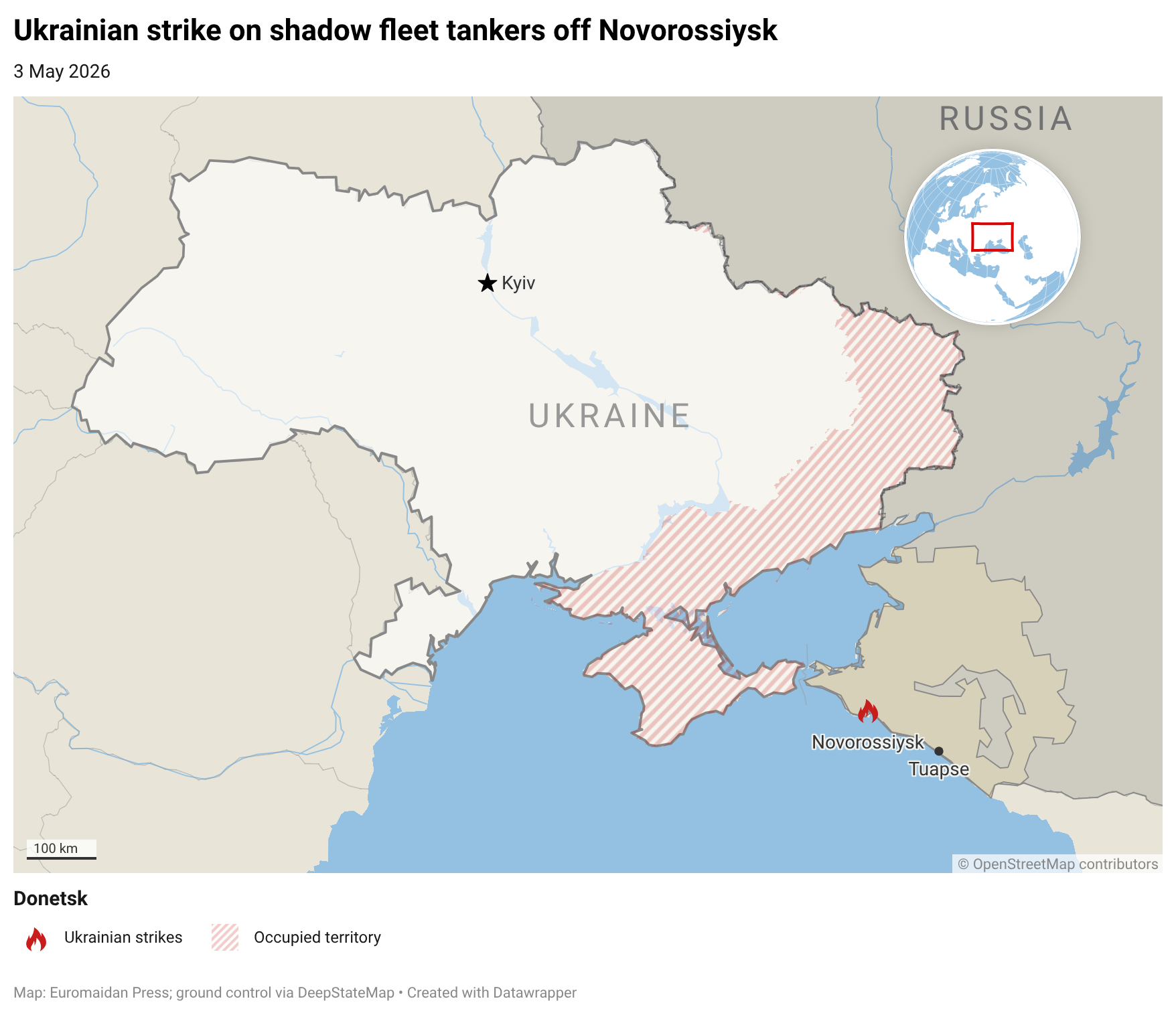
Ukrainian Navy and Security Service forces struck two Russian shadow fleet tankers at the entrance to Novorossiysk port on Russia's Black Sea coast, Ukrainian President Volodymyr Zelenskyy announced on Telegram on 3 May. He published thermal-imaging footage from a naval drone showing one of the strikes — a sea drone closing on a tanker from behind and hitting its stern — and said the ships had been "actively used to transport oil." It is the second Ukrainian naval drone operation against the shadow fleet in days, following the 29 April strike on a tanker off Tuapse.
Zelenskyy's announcement comes the same day Ukrainian aerial drones struck Russia's Primorsk oil export terminal near Finland on the Baltic Sea, and just days after the fourth Ukrainian drone strike on the Tuapse Rosneft complex on the Black Sea coast.
What Zelenskyy says
Zelenskyy named the Ukrainian Navy and SBU counterintelligence as the units behind the operation, and credited General Staff chief Andrii Hnatov with leading it.
"Our warriors continue applying sanctions against Russia's shadow oil fleet — they hit two such vessels in the waters at the entrance to Novorossiysk port. These tankers were actively used to transport oil. Now they won't be," Zelenskyy said.
The naval drone's thermal footage he posted shows one of the strikes from a sea drone's perspective: a moving tanker is approached from astern, with the drone closing in and striking the rear section of the hull.
The president did not give the names of the struck tankers, the date of the strikes, or the extent of the damage. VesselFinder ship-tracking data shows dozens of vessels currently in and near Novorossiysk port — oil tankers, bulkers, and container carriers among them.
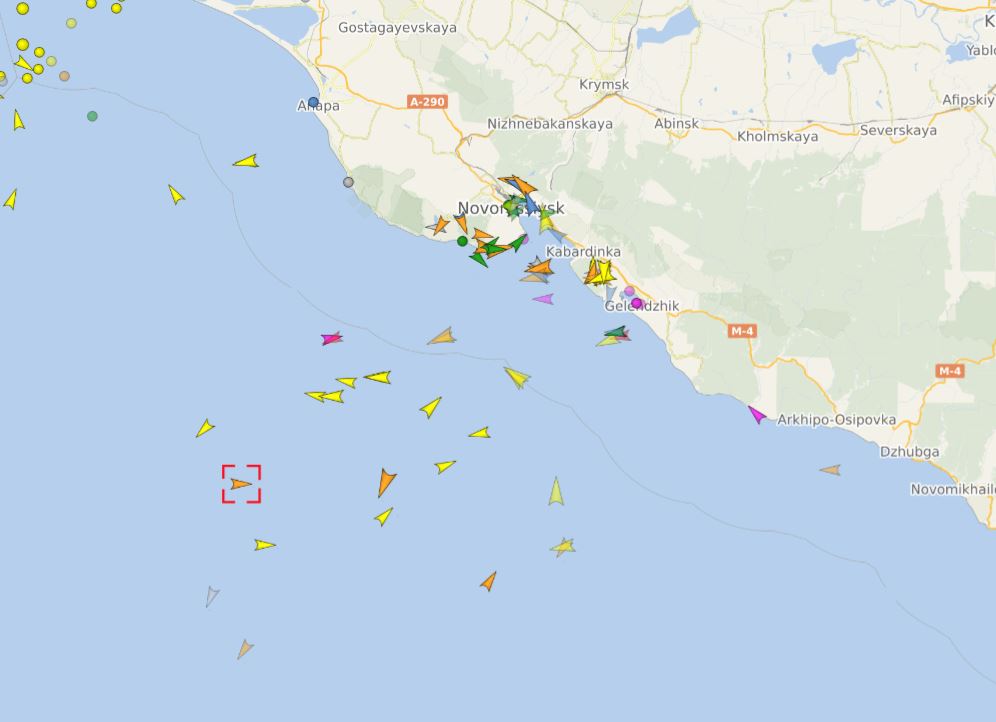
- VesselFinder tracker's data showing the marine traffic at Novorossiysk. 3 May 2026.
Sea Baby drones, tripled insurance, and a Black Sea Russia can no longer treat as safe
Ukraine's surface naval drones have rewritten the cost-benefit math of Russia's Black Sea oil shipping. The SBU's single Sea Baby drone costs about $240,000, while tanker hulls are valued in the tens of millions of dollars. Black Sea war-risk insurance for tankers has tripled since late 2025.
- The 29 April Marquise tanker strike off Tuapse used two kamikaze sea drones against the ship's stern, leaving the tanker drifting empty with its AIS transponder off, presumably waiting for an at-sea oil rendezvous.
- The 10 December 2025 strike on the Dashan tanker — a 276-meter Comoros-flagged vessel approaching Novorossiysk — followed the same playbook, with the ship moving at high speed and its transponder off.
- In December 2025, the SBU's Alpha unit reached the QENDIL tanker more than 2,000 km from Ukrainian territory in the Mediterranean — the most remote confirmed Ukrainian drone strike on a shadow fleet tanker, carried out with aerial rather than naval drones.

Primorsk takes the torch from Tuapse: NASA satellites confirm fresh fires at Russia’s largest Baltic oil export terminal
Novorossiysk: Russia's Black Sea oil and naval hub under sustained pressure
Novorossiysk has become Russia's main Black Sea Fleet base after Ukrainian strikes on occupied Crimea forced the fleet's relocation east. The city is also Russia's largest Black Sea oil export port, with its terminals handling about a quarter of Russia's total seaborne crude and refined product flows.
Ukrainian aerial drones struck the Sheskharis oil terminal complex on 5-6 April 2026, and Russia's monthly oil export volumes subsequently dropped to an eight-month low. In December 2025, the SBU and Navy struck a Russian submarine docked at Novorossiysk using an underwater Sub Sea Baby drone — the first confirmed underwater drone strike of the war.
Read also
-
Russia’s number two online retailer reports drone attacks on logistics hubs in two regions
-
Ukraine to get 90% of drones under planned Finnish production deal, Finland’s president says
-
Norway’s Air Force put its first anti-drone system into service at the fighter base—and wants its own drones doing the same job


