

Olena Yakovleva, a 54-year-old Ukrainian sniper and widow, counted 36 direct hits on her bunker before the Russians ran out of ammunition. The barrage cost her the eyesight that made her a marksman — but not the will that made her a soldier. She now serves as a drone operator. She still outshoots everyone at the range.
"My hands itch to fight Russians," Yakovleva told NV from a rehabilitation center in Kyiv Oblast, where she now undergoes treatment twice yearly. She signed her first military contract nine years ago, when she was already 45. Her husband, a military reconnaissance officer, had begged her not to become a sniper. She took a cook's position to ease his worry.
He died of Covid just before the full-scale invasion. Within weeks, she was back at the recruitment office, demanding the sniper role she'd always wanted.
She learned to shoot at age four
Yakovleva had trained with firearms since childhood. When military instructors watched her at the firing range in 2017, they immediately offered her a shooter position. Her husband intervened. "No, you'll be a cook," he insisted. He wanted her safe.
But staying home while he fought in Ilovaisk and Debaltseve nearly broke her. "When his phone went silent for three weeks, you don't know where he is, what's happened to him," she said. She enlisted to be near him.
After his death, she faced the recruitment board with old injuries — skull trauma, spinal damage, knee problems from airborne service. The examining officer looked at her file, then at the 30-year-old man beside her claiming flat feet made him unfit. "And you're suitable?" the officer asked Yakovleva incredulously. Her friend had just been killed. "You can't imagine how much my hands itch to fight them," she replied. She passed in three days.
The tank that wouldn't stop
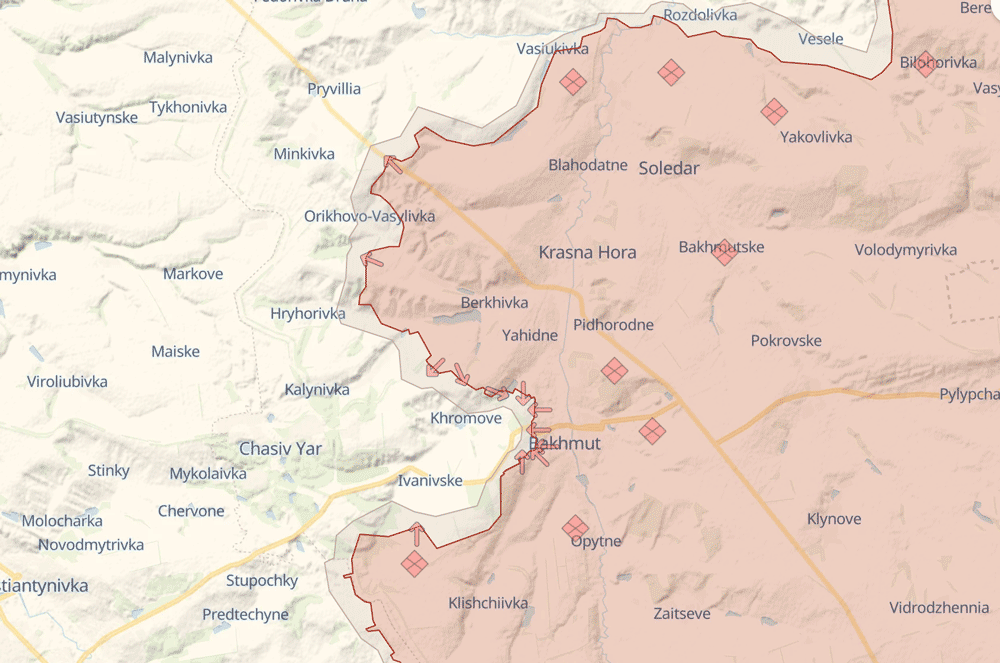
On 1 April 2023, Yakovleva was stationed near Bakhmut with the Presidential Brigade when Russians launched an assault on Ukrainian positions. A lieutenant gave her two minutes to gear up. "Machine's at the gate."
Her 10-kilogram UAR-10 sniper rifle made her easy to spot. Russian forces zeroed in. First a tank, then a self-propelled artillery gun opened fire — not walking their shots across the area as gunners typically do, but hitting the same spot over and over.
"Usually after one or two hits on your bunker, they move to the next position," Yakovleva explained. "After about ten hits, I understood — he's locked onto me. He's not moving anywhere else. He's going to take apart my position."
Each impact felt like a sledgehammer to her skull. She looked up at the bright blue sky between barrages. "God, if my time has come, receive me in peace. Let me meet death calmly," she prayed. She felt something release — a kind of acceptance. She has not felt fully alive since.
Living "like a robot"
The tank crew finally exhausted their ammunition. Yakovleva had 34 seconds between the last shots — just enough time to crawl to another position twenty meters away. Moments after she reached it, Russian forces fired an anti-tank grenade at where she'd been.
The damage was already done. The concussions destroyed her left optic nerve. Her vision now "floats." She can no longer work as a sniper. She has constant headaches, hearing loss in her left ear, nightmares.
"From that moment, I live and don't live," she said. "I force myself to embroider, to do something. I have no desire to live. I walk around like a robot. Like a person just waiting to die."
She tried to return to service, rushing her recovery. Then she began losing consciousness from stress when her daughter fell ill. The consequences of head trauma caught up with her.
Still serving, still outshooting everyone
Yakovleva could have gone home. Instead, after her wounding, she served in Kyiv guarding the government quarter. Now she continues in a different unit as a drone operator.
"Even with my damaged vision, I still shoot better than everyone at the range," she said.
The sniper rifle is gone. The precision remains.
Ukraine now has over 70,000 women serving in its armed forces — a 40 percent increase since 2021, with roughly 5,500 in combat roles. They serve as snipers, drone operators, tank commanders, medics. Some join all-female units conducting lethal strike missions. Many, like Yakovleva, chose to fight when they could have stayed home.
In her rehabilitation center room, she embroiders traditional Ukrainian shirts. "It's a kind of meditation," she said. "It calms me." Outside her window, pine forest. Inside, the hands that once steadied a rifle now guide thread through fabric — therapy for a woman who gave her sight to hold the line.