

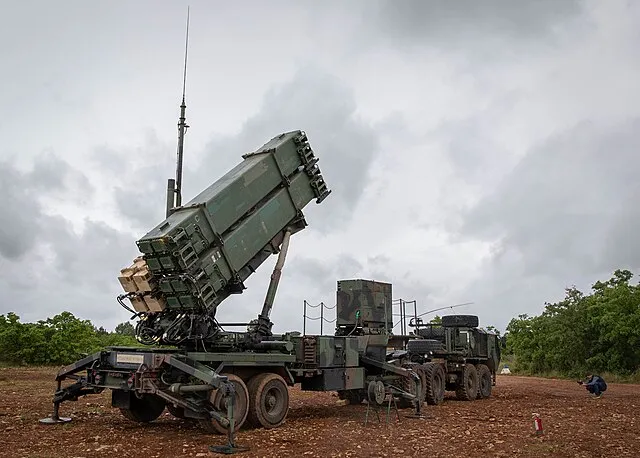
An unnamed Republican official in Washington said fears of Ukrainian competition may be obstructing a Patriot license, The Atlantic reported on 9 August. RTX’s Raytheon and Lockheed Martin may worry Ukraine would improve Patriot interceptors and make them faster and cheaper than US production lines, he said.
The official said the manufacturers would frame their concerns around intellectual-property theft and technology transfer. Their deeper concern, he claimed, is that Ukraine could eventually outcompete them. Neither company has publicly confirmed that motive.
Meanwhile, Russia’s missile threat is growing. July was Ukraine’s deadliest month for civilians since 2022, while Moscow can reportedly launch 77 ballistic and cruise missiles at once and aims to raise that capacity to 200. Ukrainian intelligence separately said Russian plants reached 110–120% of their July missile-production targets and are unlikely to pause their attacks.
Why the Patriot license remains unfinished
US President Donald Trump promised the license at NATO’s 8 July summit. Yet Lockheed Martin and RTX had not been informed, and by 23 July, both described the process as only beginning.
On 8 August, Ukrainian President Volodymyr Zelenskyy said Trump had agreed to grant Ukraine Patriot production licenses, but paperwork was delaying their issuance.
Current interceptor supplies are also failing to keep pace with Russian attacks. After a 5 August strike killed 17 people, Zelenskyy said Ukraine had received three times fewer anti-ballistic missiles since the beginning of 2026. He suggested the reduction might partly be intended to make Kyiv more compliant.
At their 28 July White House meeting, Zelenskyy asked Trump for 300 Patriot interceptors before winter, Axios reported. Trump declined, citing depleted US stocks and demand for interceptors in the Middle East.
Why Ukraine might look like a competitor—and why it is also part of the solution
Ukraine’s expanding defense industry is testing Western allies’ willingness to strengthen a potential competitor.
In January, French President Emmanuel Macron warned that French arms manufacturers faced “fierce competition” from Ukrainian and other European rivals. By July, Le Monde reported that many European allies remained torn between helping Ukraine and creating a new continental competitor.
Yet Kyiv has also proven willing to cooperate with its partners on mutual defense. Ukrainian military specialists have already helped the US counter Iranian-designed Shahed drones and protect American bases in the Middle East. After Washington requested assistance in March, Kyiv sent interceptor drones and military specialists to Jordan the following day.
Kyiv has also spearheaded the ten-country FREYJA initiative, combining Ukrainian launchers and interceptors with European radars and sensors to counter Russian ballistic missiles. Zelenskyy said the system could eventually protect countries across Europe.
Industrial cooperation extends to the Pentagon’s Drone Dominance Program. Kyiv approved its first export of finished combat drones after F-Drones’ F10 placed sixth among 25 competitors. The company won a prototype order for 2,000 drones and plans to open a factory in Ohio.
Read also
-
Two companies that actually build Patriots describe Ukrainian production as “just started,” while Russia is firing ballistic missiles every night
-
South Korea sells weapons to NATO members — now NATO wants Seoul to help buy weapons for Ukraine
-
Zelenskyy says US will send Patriot interceptors monthly – but not enough to protect from Russian attacks


