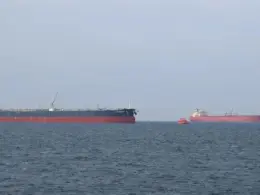
Ukraine says its drones have hit 201 Russian ships in three weeks. Robert "Madiar" Brovdi, commander of Ukraine's Unmanned Systems Forces (SBS), reported that Ukrainian drones have struck the vessels of Russia's shadow fleet in three weeks of the SBS operation "MoLoChKa," which began on 6 July.
The tally splits between the two seas: 129 vessels in the Sea of Azov from 6 to 28 July, and 72 in the Black Sea from 15 to 28 July, per Brovdi, figures that do not include ships hunted in the same period by the Security Service of Ukraine (SBU) and other Defense Forces.
Euromaidan Press cannot independently verify the count, which is the SBS commander's own running tally, though it is consistent with the day-by-day progression EP has tracked since the operation began, from 21 ships by 8 July to 159 by 17 July.
Brovdi said Russia's fleet in the area is essentially gone.
"They'll have to strain themselves, because there's simply nothing left there except cripples turned into non-self-propelled barges. The Kerch Strait is blocked for an indefinite period," he said.
The campaign burns the small ships that feed the big ones
The operation, codenamed MoLoChKa, a Ukrainian word for dairy products, targets the courier fleet that keeps Russian oil moving under sanctions. Ukraine's drones strike the small tankers and support vessels that ferry crude to the large export tankers and haul fuel to occupied Crimea, rather than the export giants themselves.
One big export tanker needs 12 to 15 small courier vessels to fill it, Brovdi has said, so burning the small ones paralyzes the whole chain.
His operators strike the ships without sinking them, turning them into what he called ghosts drifting across the sea, damaged hulks that can no longer carry cargo.
"The shadow fleet is wasting away, but it must disappear as a species," Brovdi wrote earlier in the campaign.
The blockade is choking Russia's oil revenue and Crimea's supply
The ship-hunting is one half of a squeeze on two things Russia needs: oil money and a supplied Crimea. Oil exports are the biggest source of cash for Russia's war, and Ukraine has spent 2026 attacking that revenue, where Western sanctions left the money moving, hitting both the refineries that produce the fuel and the tankers that carry it.
The blockage of the Kerch Strait is the sharp end. The strait is the gateway between the Azov and Black seas and the supply artery for occupied Crimea, and, if it holds, Brovdi's claim that it is blocked indefinitely means Russia's fuel run to the peninsula and its Azov oil exports both run through waters that Ukraine now controls with drones.
Read also
-
Drones now cause about 96% of Russia’s battlefield losses. Ukraine’s drone force says it has hit more than 100,000 Russian troops this year alone
-
Fears that Ukraine will lose Starlink are back after Musk backed Trump against Zelenskyy. Adviser says profit makes cutoff unlikely
-
Russia is building jet drones that fly 800 kilometers per hour, and Ukraine says it is already working on how to stop next generation