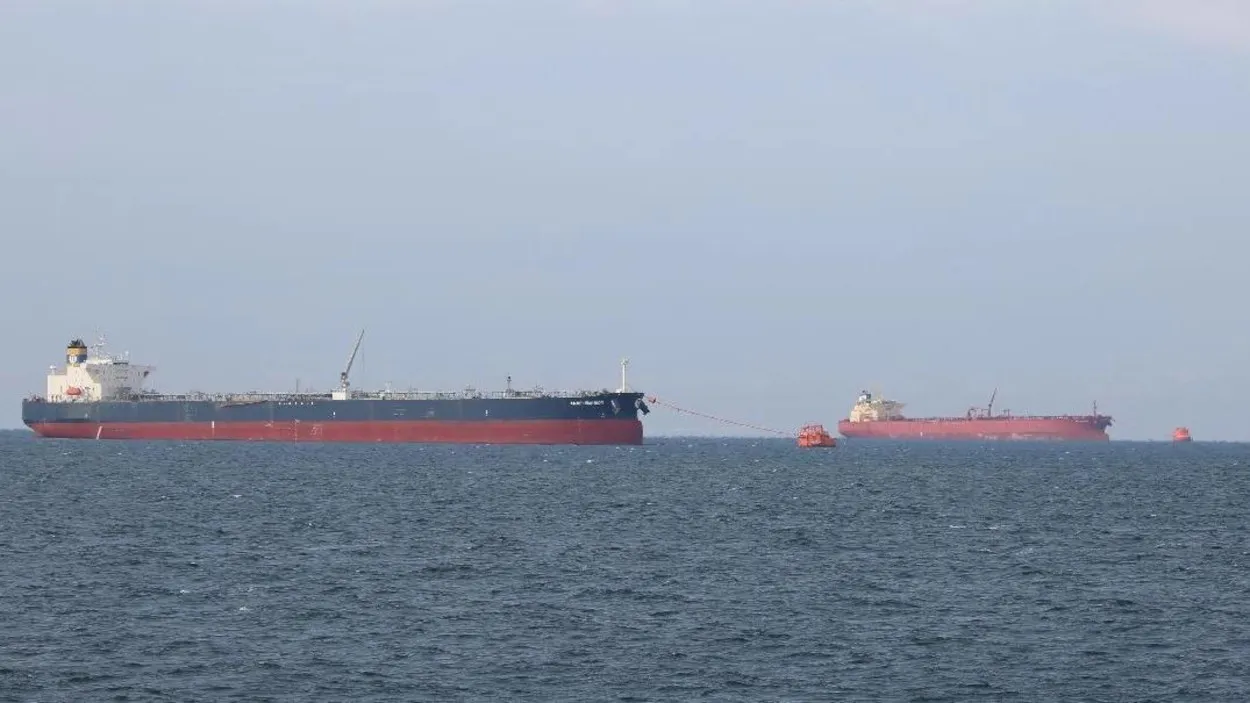
The Greek-run oil tanker Skiros was attacked near Novorossiysk on 16 August 2026 after loading Russian crude at the Caspian Pipeline Consortium (CPC) terminal, Bloomberg reported.
The Suezmax-class vessel can carry about 1 million barrels. Bloomberg identified no attacker and provided no information about damage. Skiros’s Athens-based manager told the outlet that no one was injured and no pollution occurred.
CPC primarily exports Kazakh oil and carries more than two-thirds of Kazakhstan’s oil exports. Its shipments recently accounted for almost 2% of the global oil supply. Russian crude typically makes up only 5% to 10% of CPC exports.
Earlier in August, Ukraine agreed not to attack CPC infrastructure or non-Russian ships bound for the terminal if they were not under Ukrainian sanctions and did not carry Russian cargo. Because Skiros carried Russian crude, the protection did not apply to it under the terms Bloomberg described.
Following the July attacks, CPC considered suspending operations due to environmental and safety risks but decided to continue operations, Bloomberg reported.
The Skiros attack ended an almost three-week lull in attacks on ships using the terminal. Bloomberg did not say whether it disrupted oil loading, and CPC declined to comment.
Earlier attacks cut Kazakhstan’s oil production
Earlier attacks suspended loading at the terminal. Kazakhstan’s Energy Ministry confirmed a temporary reduction in oil production to prevent storage facilities from reaching capacity, while Reuters reported CPC loadings fell by a fifth in July.
The disruption also increased shipping and war-risk insurance costs as some operators became reluctant to call at the terminal, The Financial Times reported.

Paralysis of the logistics
Ukraine has not claimed responsibility for the Skiros attack, and Bloomberg did not identify an attacker. In a separate operation in July, the SBU and Navy acknowledged striking sanctioned Russian oil tankers Louise 1 and Banda with Mamai sea drones.
Robert “Madyar” Brovdi, commander of Ukraine’s Unmanned Systems Forces, later described the wider objective as the “paralysis of the logistics” of oil, fuel, and cargo that bypasses sanctions.
Read also
-
Watch first naval battle in history fought entirely by drones: Ukrainian uncrewed boat spots, fires on, and sinks Russian one in Black Sea
-
“There is real hunger there”: Oleshky, occupied town in Ukraine’s Kherson Oblast, turned 942 this week. Behind Russian blockade, its people eat roadside grass
-
EU has never sanctioned Russia’s nuclear sector. Activists say that gap just let Rosatom into German plant, and they’re suing to close It