


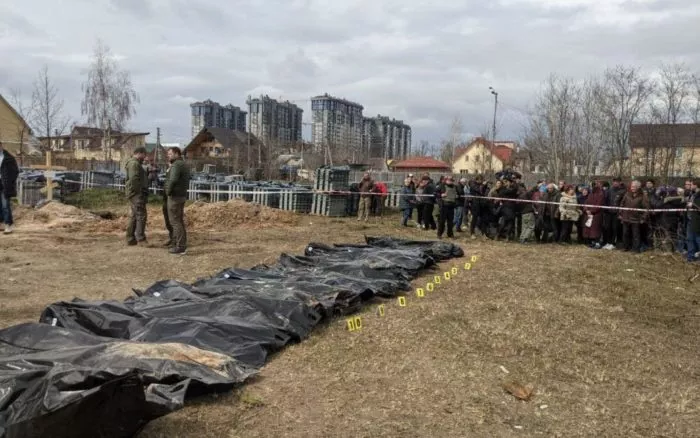
Most audiences outside Ukraine know Russia's war crimes through their most visible horrors: the mass graves at Bucha, the maternity hospital strike in Mariupol, and the more than 19,000 Ukrainian children deported to Russia. But beyond these high-profile crimes are the everyday abuses Ukrainians face under occupation.
"There is no phone connection, so many people cannot access mobile banking," a 41-year-old woman told Euromaidan Press from occupied Kherson in July 2022. Russian forces had severed Ukrainian telecom networks and cut residents off from their life savings. "Without the message with your personal code, you do not have banking." The pension she had earned over forty years was held hostage.
LexCollective, a global coalition of lawyers and investigators, believes this constitutes a war crime. In July 2025, it filed a formal complaint with the International Criminal Court against the head of the Russian Central Bank, Russia's minister of finance, and three Russian bank executives operating in occupied Ukraine.
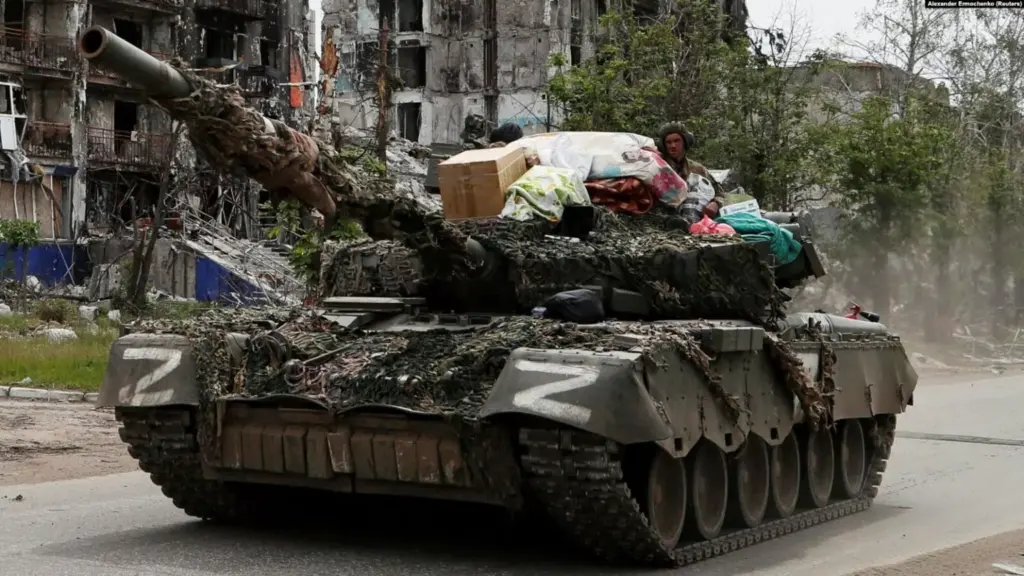
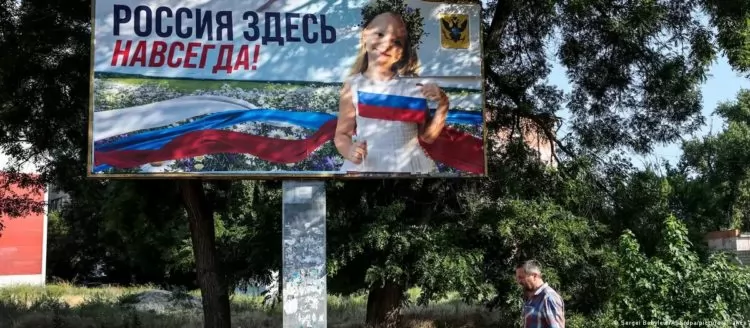
The case targets a pattern Russia tested in Crimea and repeated in Kherson and Zaporizhzhia: Russian forces seize territory, Russian banks follow, the hryvnia is banned, and basic services like pensions and medical care become tied to Russian passports. Finance becomes a tool of annexation.
In an interview with Euromaidan Press, Kristin Rosella and Dmytro Kovalchuk explain why Russia's central bankers belong in the dock alongside its soldiers — and what their case may unlock for Ukrainian reparations.
Key takeaways:
- LexCollective (LexCo) has filed a formal complaint with the International Criminal Court (ICC) accusing Russia’s central bank chief, finance minister, and three bank executives of using financial control to help entrench Russia’s occupation of Ukrainian territory.
- Russia's banking takeover follows a clear pattern: cut Ukrainians off from their own banks, install Russian banks, ban the hryvnia, and make people get Russian passports to access pensions and medical care.
- Financial war crimes have barely been prosecuted since World War II — the last major case was against Nazi Germany's central bank president at Nuremberg in 1946.
- If LexCo's case succeeds, it could unlock billions in Russian assets currently frozen by Western sanctions and redirect that money toward rebuilding Ukraine and compensating victims of the war.
Interview edited for length and clarity.
The case the ICC has never seen
Daniel Thomas: How has LexCollective held Russia accountable?
Kristin Rosella: Our main work on Ukraine has focused on the financial architecture and the role of financial institutions in Russia's large-scale invasion and related international crimes.
You may not see them on the battlefield, but the bankers provide the financial infrastructure, tactics, and resources that fuel Russia’s large-scale criminality and aggression on the ground in Ukraine.
Our complaint sets out the allegations the head of the Russian central bank, the minister of finance, and officers and directors of three Russian-controlled banks operating in illegally occupied areas of Ukraine were complicit in war crimes and the crime against humanity of persecution.
Why did we allege that? After February 2022, Russia captured territories, and within months Russian banks moved in and seized control of the Ukrainian financial system.
We documented this pattern particularly in the occupied areas of Kherson.
They eliminated Ukrainian currency and forced civilians to use the Russian ruble. Russia's central bank licensed other banks to operate there, bringing in bankers experienced in annexing financial systems from other occupied regions.
Russian occupation authorities also imposed coercive regulations that made it almost impossible to access basic necessities — education, medical services, pensions — without a Russian passport. So the financial sector played a major role in imposing Russification on the illegally occupied territories.
You might not be able to see them, but the bankers are the financial infrastructure — they provide the tactics and financial resources that fuel the large-scale criminality and aggression taking place on the ground, on the battlefield in Ukraine. — Kristin Rosella, Executive Director of LexCollective
How Russia's passportization actually works
Thomas: Passportization comes up often in discussions of Russia’s occupation. What makes passportization part of Russia's financial war crimes?
Dmytro Kovalchuk: Authorities forced people to get Russian passports through this. They gave small cash payments to local citizens, but because there was no work, people couldn't buy food or other goods. To get more money, you had to open a bank account with these newly installed Russian banks — and that required a Russian passport.
If you didn't have a passport, you wouldn't receive money and wouldn't survive the occupation.
Second, medical services were only for people with a passport and social insurance number. When you called an ambulance, the first question was: What's your social insurance number? If you had nothing, then you were on your own.
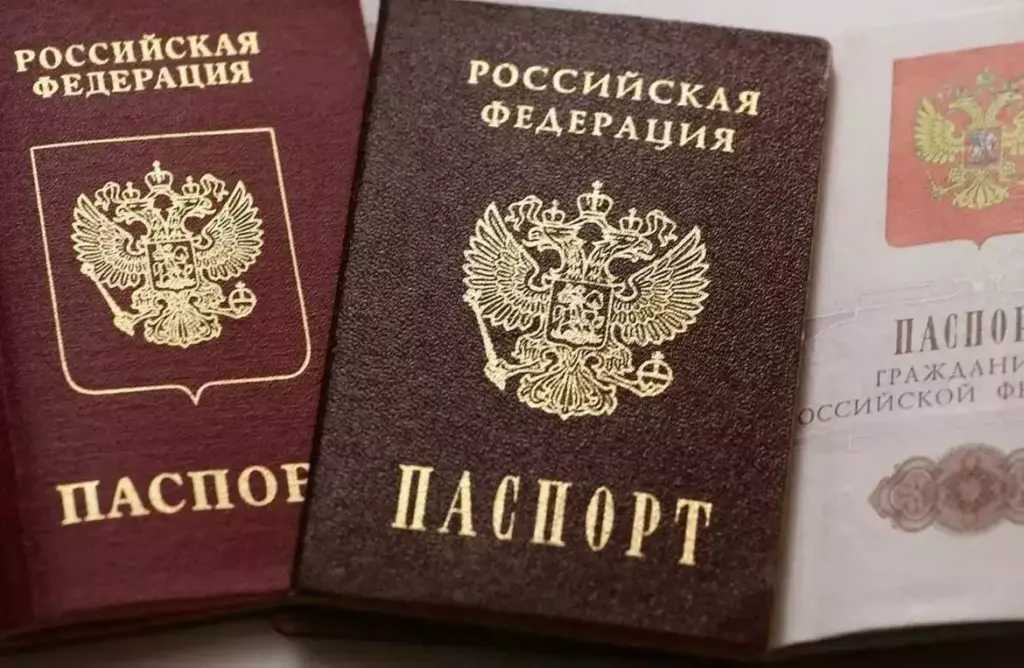
Thomas: So basically isolating them at every opportunity, and providing incentives that are really like bribes — is that an accurate way to describe it?
Kovalchuk: Yes, it's to force them to take Russian passports. If more people get Russian passports, then they can claim, "we occupied these territories, but people took their passports voluntarily." In reality, it wasn't voluntary. It was by coercion.
"In reality, it wasn't voluntary. It was by coercion." — Dmytro Kovalchuk, Investigator at LexCollective
Annexation by bureaucracy
Thomas: You've used the terms "annexation" and "pillaging" — words people don't typically associate with banks. Could you expand on that?
Rosella: I think the easiest way to understand it is that Russia weaponized the financial system. As Dima explained, they conditioned access to banking and essential services — medical care, social benefits, pensions — on Ukrainian civilians obtaining Russian passports and promising allegiance to Russia.
That violates international law. This isn't Russia providing access to financial services. They're isolating Ukrainians from their own finances and forcing them to participate in the very system that's invading their country — even registering as taxpayers in it.
Russia, as an occupying power, is bound by the rules of war. It's supposed to act as a temporary custodian, administering territory for the benefit of the local population. Instead, it's trying to permanently annex the territory and prevent Ukrainians from remaining part of the Ukrainian state.
Thomas: Beyond the usual Russian financial actors, what other specific entities were involved?
Kovalchuk: In 2022, during Kherson's occupation, there were three banks outside Russia's main financial cluster. The first came from South Ossetia, the Georgian region occupied by Russia. The other two were linked to Russia's defense sector.
But when we compare this with Zaporizhzhia and later years — 2023, 2024, 2025 — we see major Russian state and private banks entering those markets. After 2022 sanctions, Russia initially sent only proxy banks and defense-linked institutions to avoid risk. But after two or three years, they adapted and started bringing in bigger players.
Rosella: The pattern that Dima described shows how Russia refined its approach over time. We started our investigation in occupied Kherson and saw the same systematic approach in Zaporizhzhia — Russia building upon its playbook.
Authorities brought in institutions new to these areas — testing with smaller, defense-linked banks first, then expanding to major players. We also documented commonalities with what happened in Crimea and the LNR and DNR regions, where Russia imposed its financial system and currency using the same systematic approach.
"Russia, as occupying power, is bound by the rules of war, and this violates the rules of war. It's not acting as a temporary custodian of occupied territories." — Kristin Rosella, Executive Director of LexCollective
Nuremberg's lesson, eighty years later
Trending Now
Thomas: How does LexCollective use past legal precedents?
Rosella: Any legal case must be grounded in existing jurisprudence. We research previous cases to develop legal theory and investigative strategies.
After World War II, in the Nuremberg Tribunals, they [the prosecutors] made some progress, I would say, in the context of looking at the financiers or the financial dimensions of the atrocity crimes that occurred during World War II.
There was a case against Reichsbank — Nazi Germany's central bank — particularly against its head, Walther Funk, who was also minister of the economy. It exposed Reichsbank's role in financing concentration camps, slave labor, and storing victims' looted gold and jewelry. That case provides a strong foundation.
There was a huge gap between World War II and now, but we've seen progress in the last decade. LexCollective leads another case against a major French bank, alleging complicity in the Darfur genocide from 2002 to 2009.
Although financial actors aren't on the front lines, they're the backbone of conflict. We hope to leverage this emerging case law and develop precedents that can help other victims seeking accountability — whether in Ukraine, Sudan, DRC, or Myanmar.
"Although financial actors aren't on the front lines, they're the backbone of conflict." — Kristin Rosella, Executive Director of LexCollective
The investigation
Thomas: How do you get evidence on the financial actors complicit in these crimes?
Rosella: You have to understand the criminal infrastructure behind the crimes — not just look at individual acts in isolation, but unravel the financial networks and banking systems involved.
We use OSINT and field investigation, but honestly, the best way we understood what was happening — especially Russia's coercive measures forcing people to take Russian passports to access their own finances — was by talking to people. Understanding the human impact of Russia's financial warfare.
Thomas: Who did you interview and how were they impacted?
Rosella: I won't divulge too much there, just for security purposes... but essentially we had to talk to people who had lived through what happened, who had lived in occupied areas under Russian occupation. People with businesses, pensions, or family members — parents and grandparents — trapped in the occupied areas.
We learned how they became financially isolated, unable to access essential services because of coercive policies. Crucially, it wasn't just occupation authorities implementing these policies — financial actors were actively assisting in these persecutory measures.
Faceless technocrats no more
Thomas: How do you get the public to pay attention to these financial war crimes occurring in occupied territory?
Kovalchuk: It's simple — you bring it to the public, you talk about it. Before, we didn't know how this occupation works in the financial dimension. But when we started talking with witnesses, with people who went through this, it became so obvious.
For example, Russian occupation authorities cut Ukrainians trapped under occupation off from the Ukrainian banking system by turning off mobile towers. People could no longer access their mobile bank accounts. Ukrainian banks also stopped bringing cash to ATMs, so people couldn't withdraw money from their accounts either. This became part of the occupation — part of forcing people to start using rubles instead of hryvnias.
"For example, Russian occupation authorities cut Ukrainians trapped under occupation off from the Ukrainian banking system by turning off mobile towers. People could no longer access their mobile bank accounts." — Dmytro Kovalchuk, Investigator at LexCollective
Thomas: I think there's a tendency to use softer language when describing people in the Russian financial system — treating them as faceless bureaucrats. Commentators praise the Russian central bank's prowess at maintaining the war machine and keeping the economy stable, but they don't discuss what you've documented in occupied territory.
Rosella: No, absolutely. That's really come to light at this conference. Individuals in central banks and financial institutions see themselves as technocrats disconnected from the crimes, when in fact their actions determine policies that coerce Ukrainian civilians, or they run institutions implementing these coercive policies.
Bringing this connection to light is crucial — not just for the public, but for other financial sector professionals. We hope this case sends a clear message: bankers and central banks have a role in preventing mass crimes, and if they're complicit, they will be held accountable. That's what makes this case novel, and to our knowledge, the only type of case like this.
"Individuals in central banks and financial institutions see themselves as technocrats disconnected from the crimes, when in fact their actions are potentially determining policies that are coercing Ukrainian civilians into becoming Russian." — Kristin Rosella, Executive Director of LexCollective
What accountability looks like
Thomas: What do you hope comes out of Lex Collective's case?
Rosella: I hope we can hold the financial actors accountable for their role in Russia's atrocity crimes and bring to light the suffering of Ukrainian civilians in occupied territories — the different types of harm they've endured. This financial warfare really needs accountability.
Kovalchuk: When we bring these people to justice, others will think twice. If Russia's central bank offers private banks, "hey, come do business in occupied territories," they won't just think about profit — they'll consider the damage they could face afterward, to themselves, their families, and their institutions. They'll think carefully before doing what Russia's doing in occupied territory.
Rosella: The other thing that we hope is really that by more tightly connecting the financial actors' role in the crimes, it might unlock assets that are connected to those actors that could be used in future reparations and future reconstruction. Because profits from crime are illegal and can be confiscated and returned to those harmed, we hope to strengthen the link between financial actors and the crimes they commit, supporting advocates for reparations and restorative justice for victims.
"By more tightly connecting the financial actors' role in the crimes, it might unlock assets that are connected to those actors that could be used in future reparations and future reconstruction." — Kristin Rosella, Executive Director of LexCollective
Kovalchuk: To understand why we focus on this financial dimension, everyone worldwide now understands that the current war isn't from a Erich Maria Remarque book, like All Quiet on the Western Front. It's not just trench-to-trench fighting on the front lines. We all accept that war can be a hybrid — propaganda war, through sports, music, and so on. We're showing that this financial dimension is also a major part of this complex system of war, occupation, and war crimes.
Rosella: This is really important — the multi-dimensionality of war nowadays is crucial.
Rosella is the Executive Director of LexCollective, a global coalition of lawyers, analysts, and investigators working on interconnected mass crimes and human rights violations. Kovalchuk is an investigator with LexCollective.
This material was produced as part of a project by the Institute of Mass Information with the support of the Ministry of Foreign Affairs of the Netherlands. The content of this publication does not reflect the official position of the IMI or the Kingdom of the Netherlands.


