

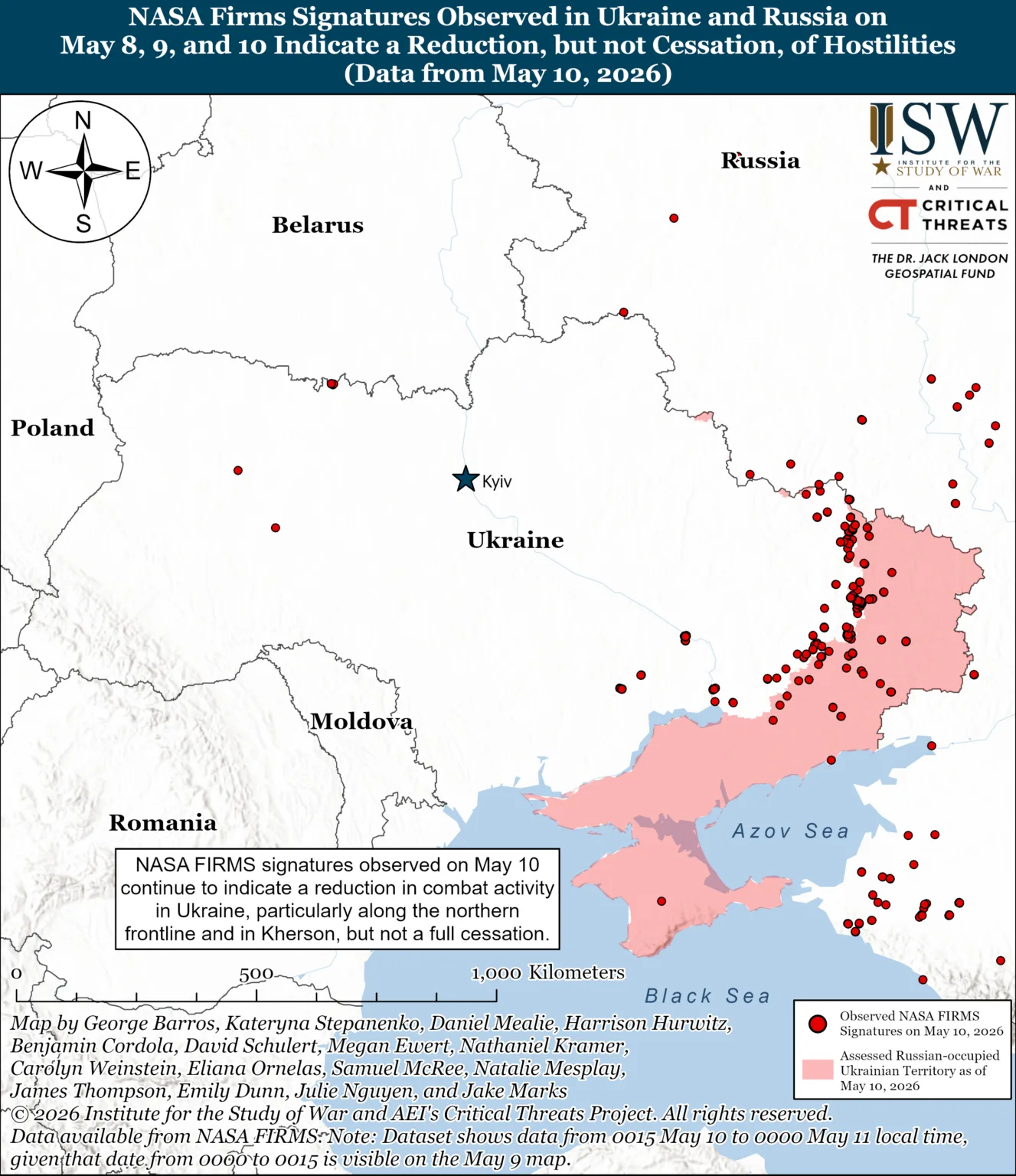
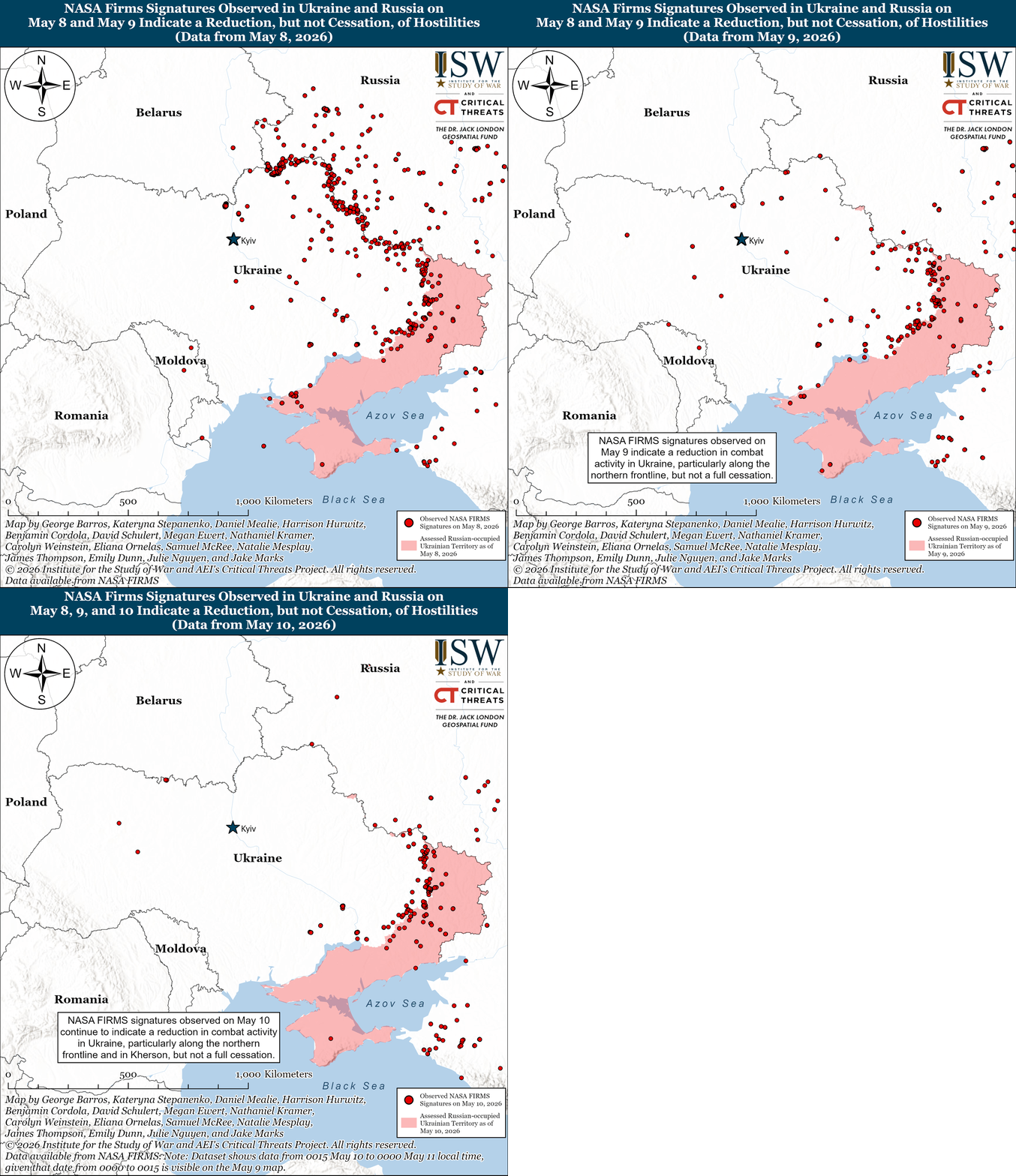
Russia kept attacking through its self-declared 9-11 May ceasefire, the Institute for the Study of War (ISW) assessed. NASA satellite data confirms combat dropped but did not cease. Russian drones, artillery, and ground assaults continued reaching Ukrainian positions and civilians across multiple oblasts on day 2. ISW concluded that ceasefires without explicit enforcement, credible monitoring, and defined dispute resolution processes are unlikely to hold.
NASA satellites confirm Russian combat dropped but never stopped
NASA's Fire Information for Resource Management System (FIRMS) detected fire signatures across the front on 10 May, per ISW. Hostilities decreased but did not cease. The Ukrainian Air Force reported only 27 Russian long-range drones in the first 8 hours of 10 May. The drones were Shahed, Gerbera, Italmas, and Parodiya types. Ukrainian forces downed all of them.
President Volodymyr Zelenskyy reported Russian forces conducted 150+ ground assaults and 100+ artillery strikes on 9 and 10 May. Russia launched almost 10,000 drone strikes during those two days. Russia did not conduct any massed missile attacks, and Ukraine had refrained from long-range strikes in response, he noted.
The Russian Ministry of Defense claimed Ukraine violated the ceasefire on 10 May. Moscow listed eight ground assaults, 676 artillery MLRS, and mortar strikes, and 6,331 drone strikes from Ukraine. The figures came without independent verification.

Ukrainian officer: Russian frontline assaults now rare as 60-70% of infiltrators die before reaching Ukrainian lines
Russian strikes on civilians continued through the truce
Russian attacks killed two civilians in Kherson Oblast between the mornings of 10 and 11 May, oblast head Oleksandr Prokudin reported. Russian strikes wounded five civilians in Kharkiv Oblast over the past 24 hours, regional administration head Oleh Synehubov said on the morning of 11 May.
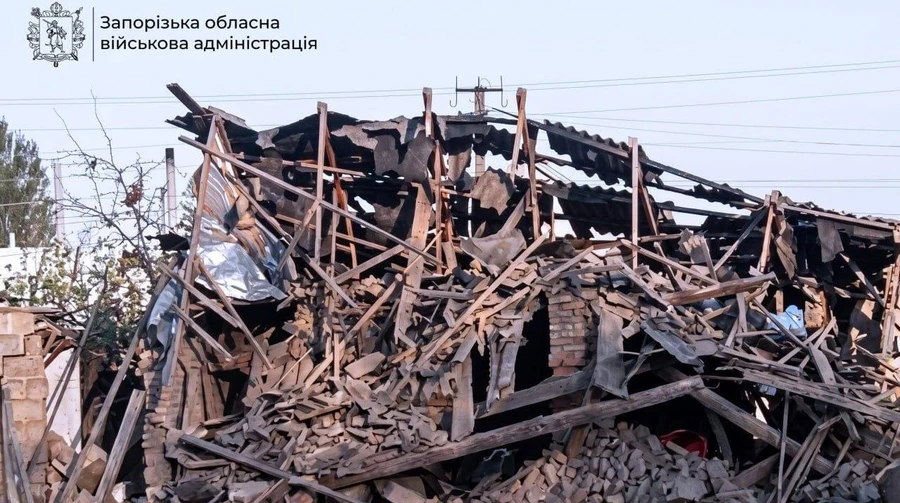
A Russian drone hit a detached home yard in Kharkiv on 11 May, Mayor Ihor Terekhov wrote. The drone landed in the Osnovianskyi district without detonating. A Russianstrike on a park in Kherson's Korabelnyi district around 10:40 the same morning wounded a 14-year-old boy with shrapnel injuries to his face and neck. About 10:00, a Russian drone hit a shop in the same Kherson district, injuring four civilians aged 49 to 56.
Overnight, Russian drones struck Nikopol district in Dnipropetrovsk Oblast, burning a summer kitchen without casualties. Russian attacks cut power in some areas of Kherson, Dnipropetrovsk, Kharkiv, and Sumy oblasts on the morning of 11 May.
Frontline combat continued through the truce
Ukrainian forces logged 180 combat clashes across the front on 10 May, the General Staff reported. Russian forces used 8,037 kamikaze drones and conducted 6,380 shellings during the day, including 25 multiple-launch rocket system strikes. The Pokrovsk axis absorbed 37 Russian assault attempts, the heaviest concentration of the day.
66th Mechanized Brigade spokesperson Vasyl Denysiuk said Russian forces are using the lull along the Lyman axis to move fresh infantry forward. The buildup prepares for assaults after the truce ends, he noted. Russian forces used "Molniya" drones and ground robotic complexes in resupply roles.
11th Army Corps spokesperson Dmytro Zaporozhets told Suspilne that Russian forces flew ZALA reconnaissance drones over central Kramatorsk as the truce began.
Truce mechanics: no monitor, no enforcement, no dispute resolution
ISW assessed that the 9-11 May ceasefire lacked the mechanisms a working truce needs.
Read also
-
Ukraine frees 270 from Russian captivity in “historic” prisoner swap, including 5 Olenivka survivors and American teacher Stephen Hubbard
-
45 seconds of voting in the Lviv Oblast Council sparked a new dispute with Poland: Warsaw says Kyiv promised the UPA year decision will not take effect
-
Russia may stage sabotage in Eastern Europe, but wants Kyiv blamed, Ukraine’s Intelligence warns


