

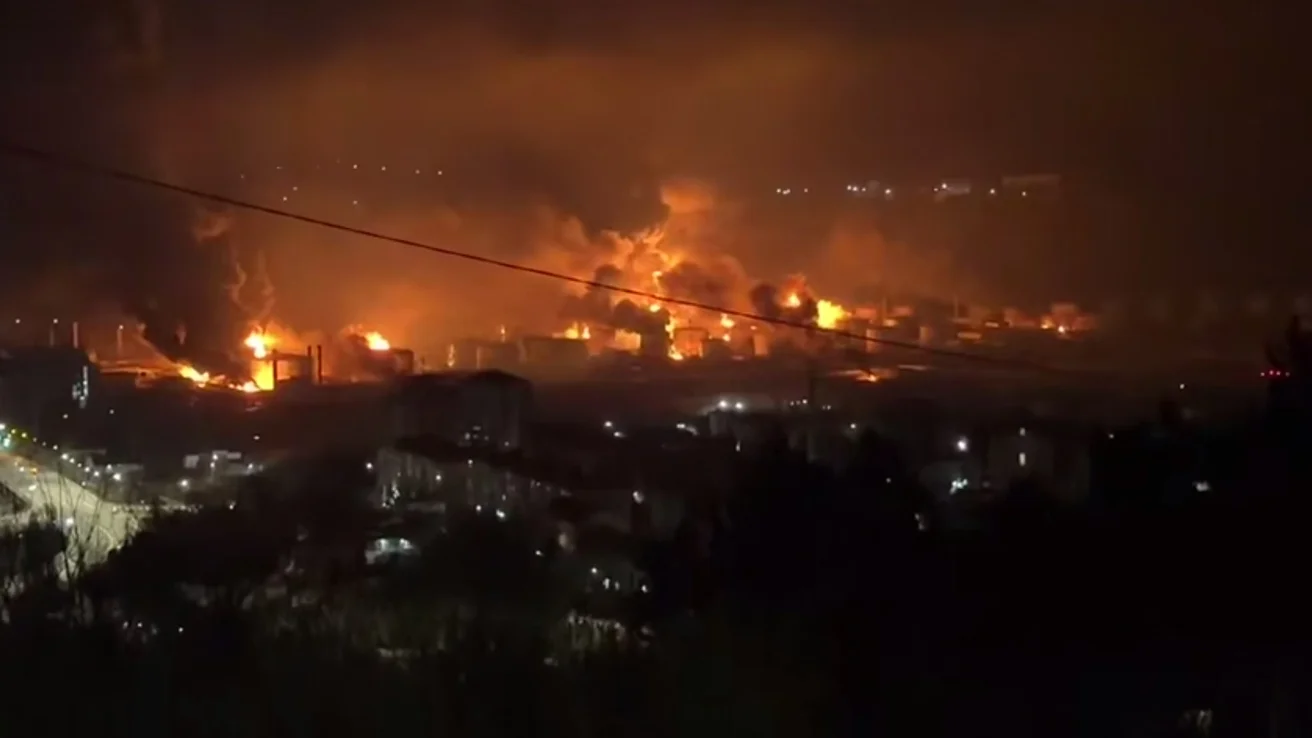
Ukraine's strikes on the Russian port infrastructure in Tuapse in Krasnodar Krai have caused losses totaling hundreds of millions of dollars, according to the General Staff of the Armed Forces of Ukraine. The Tuapse oil refinery, owned by Rosneft, is the only facility of its kind on the Black Sea coast.
During the month, Ukrainian strike drones attacked Tuapse four times, causing systematic damage to critical infrastructure.
Tuapse engulfed in repeated waves of drone destruction
Ukrainian drones struck the Tuapse port again and again, inflicting massive losses on Russia’s strategic energy hub. Combined strikes in April and on 1 May are estimated to have caused more than $300 million in damage to port infrastructure and the refinery.
Strikes occurred on 16 April, 20 April, 28 April (the third strike in April), and 1 May, with each deepening the damage to the facility.
Putin forced into rare response as Black Sea refinery bleeds damage
The escalation triggered a rare personal reaction from Russian President Vladimir Putin, with ISW noting the Kremlin typically avoids acknowledging strikes on oil infrastructure. Putin admitted possible environmental consequences but labeled the attacks “terrorism.”
The head of the Center for Energy and Climate Studies at the Kyiv School of Economics, Borys Dodonov, said that attacks on the Rosneft plant in Tuapse caused such extensive damage that Russia may have to completely rebuild the refinery, a process that could cost $5 billion.
Despite rising losses, revenues from Russian oil exports still increased due to a price surge triggered by the war with Iran. In March, they reached $19 billion, compared to $9.8 billion in February, Dodonov noted.
Russia’s Black Sea energy artery under sustained assault
According to him, Russian oil revenues almost doubled due to the closure of the Strait of Hormuz and the conflict with Iran. However, Ukrainian strikes still reduced them, the Washington Post reports.
Since the beginning of the year, Ukraine has conducted more than 20 strikes on Russian oil infrastructure, including refineries, pipelines, and export terminals, inflicting over $7 billion in estimated losses.
Read also
-
A report says US intelligence warned France of Russian ship-launched drones. France denies it
-
Seventeen makers head to Michigan to test bomber drones for the Pentagon, and Ukrainian firms are back in field, some under US partners
-
Ukraine’s new military AI does more than watch the battlefield—it helps commanders plan what comes next


