

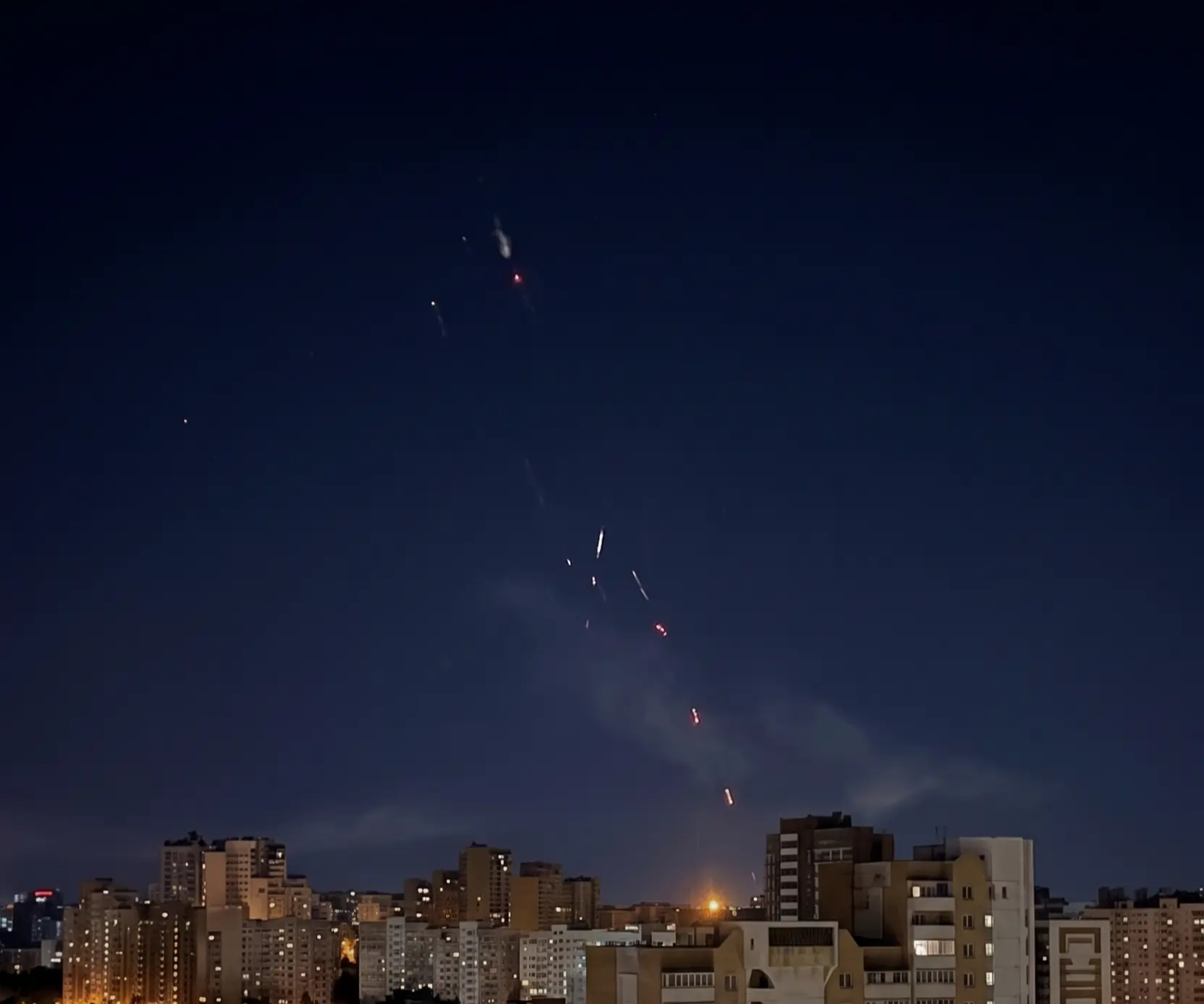
Russia again threatens Kyiv with new strikes. Serhii "Flash" Beskrestnov, Ukrainian defense adviser, says the threats are partly psychological pressure, as Russia is failing on the front lines, according to UNIAN.
Russia's Foreign Ministry announced the planned strikes on 25 May, warning foreign diplomats to leave Kyiv. The announcement followed Russia's overnight strike on 24 May, in which Russia used the Oreshnik intermediate-range ballistic missile against Bila Tserkva in Kyiv Oblast as part of a 690-weapon combined attack.
Russia framed the Oreshnik launch as retaliation for a 22 May Ukrainian drone strike that Russia called an attack on a college dormitory in occupied Starobilsk, a strike that Ukraine's General Staff said had hit a headquarters of Russia's "Rubicon" drone-warfare unit in the same area.
What's behind Russia's threat against Kyiv
Beskrestnov framed the announced strike campaign as the consequence of Russian operational failures rather than a coordinated military plan.
"It is a reaction of our enemy to the fact that they have problems on the fronts: they have no dynamics, they cannot do anything, but they need a result," he said.
The Ukrainian deep-strike campaign against Russian oil refineries and the Moscow region factors in as well: "They understand they cannot do anything to us, so they are trying to create resonance in Russia, to make some kind of victory," Flash explained.
Russia's Iskander production has hard limits
Russia's capacity to produce ballistic missiles, including the Iskander, is finite — Beskrestnov estimated roughly 60 missiles per month, with demand spanning the entire front rather than concentrating on Kyiv.
Russia retains a strategic missile reserve and could deploy 10 to 15 Iskanders for a targeted Kyiv operation, but the broader operational demand limits how often such reserves can be used for psychological-pressure strikes.
Russia knows Ukraine's defense-industry facilities from the Soviet era, but most production has since relocated, Beskrestnov added.
Ukraine's ballistic-interception gap depends on partners
Ukraine has effective options against Shahed drones, such as combat-iterated electronic warfare systems, mobile air-defense fire groups, and interceptor drones, but ballistic-missile defense remains the structural gap, Beskrestnov said.
"Right now we need Patriot missiles, and we are looking for them around the world," he added.
The Russian announcement of strikes, in his view, has a paradoxical benefit: by publicly declaring intentions, Russia gives Ukraine documented grounds to request additional Western air-defense support.
The Ukrainian deep-strike operations that drove Russia's threat in the first place continued without pause.
Read also
-
EU fast-tracks merger of three European firms into one SpaceX rival. It wants to end reliance on US satellites that failed Ukraine this week
-
White House ordered limits on Ukraine’s military satellite service, Reuters reports. Who made the decision remains unclear
-
Trump calls Ukraine’s renewed refinery strikes “a disgrace” after Russia’s 39-missile strike on its energy sites


