Most Western readers know Crimea as the place Russia took in 2014, with little green men and a referendum almost nobody outside Moscow recognized. Fewer people know who lived there first. This is their story, and it did not end in 1944.
Eighty-two years ago this week, the Soviet state deported an entire people from their homeland in the space of three days — one of the fastest mass deportations ever carried out. Ukraine marks 18 May as the Day of Remembrance of the Victims of the Genocide of the Crimean Tatar People. The reason it still matters in 2026, and not only as a date on a calendar, is that the people in these stories, or their children, are being uprooted and jailed again right now.
Osman Kadyraliyev
The soldiers told Osman Kadyraliyev's family to bring food for three days. "Then you'll come back," they said. It was four in the morning on 18 May 1944, in a mountain village above Alushta, in Crimea. The family had time to get dressed and grab a little of whatever food a just-liberated village still had, which was almost none. They were marched to the square, held there all day, loaded standing into trucks, then packed into a freight car. Osman's mother had hit her head badly during the journey. She died a week after they arrived in Uzbekistan. She was 35. His father gave his share of food to the children and died of starvation half a year later.
They did not come back. Not in three days, not in three years. Most who survived would not see Crimea again for half a century, and a great many never saw it again at all.
The people who were there first
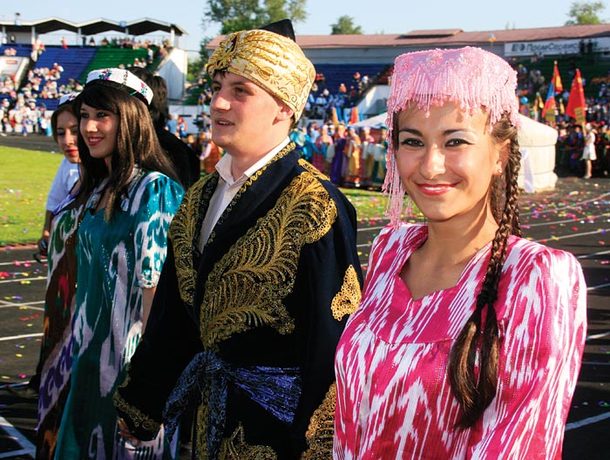
The Crimean Tatars are the indigenous people of the Crimean peninsula, where they have lived for over a thousand years. They had their own state, the Crimean Khanate, centered on Bakhchysarai, with its own court, language, and architecture. On the eve of Russia's 2014 occupation they numbered roughly 300,000 — about a tenth of Crimea's population.

Ten things about the Crimean Tatar deportation you always wanted to know, but were afraid to ask
Russia's interest in the peninsula is not new. Catherine II's generals finally took Crimea in 1771 not by burning it — earlier scorched-earth campaigns had failed for lack of anyone left to feed the army — but by buying off factions inside the Khanate and dividing it from within. Formal annexation by the Russian Empire followed in 1783. Within a few years a third of the Crimean Tatar population had fled across the Black Sea. That is the first of what Crimean Tatars count as their three black dates: 1783, 1944, 2014.
Sürgünlik — the exile

The Crimean Tatars have a word for what happened in 1944: Sürgünlik — the exile. Crimea was retaken from the Germans in mid-May 1944. Within days, the NKVD chief Lavrentiy Beria recommended to Stalin that the whole nation be removed for "treason," and Stalin signed GKO Order No. 5859ss, banishing the Crimean Tatars from their homeland "permanently as special settlers." The charge of mass collaboration was a pretext: Crimean Tatar men were at that moment fighting in the Red Army, and when the war ended they were demobilized straight from the front into exile alongside their families.
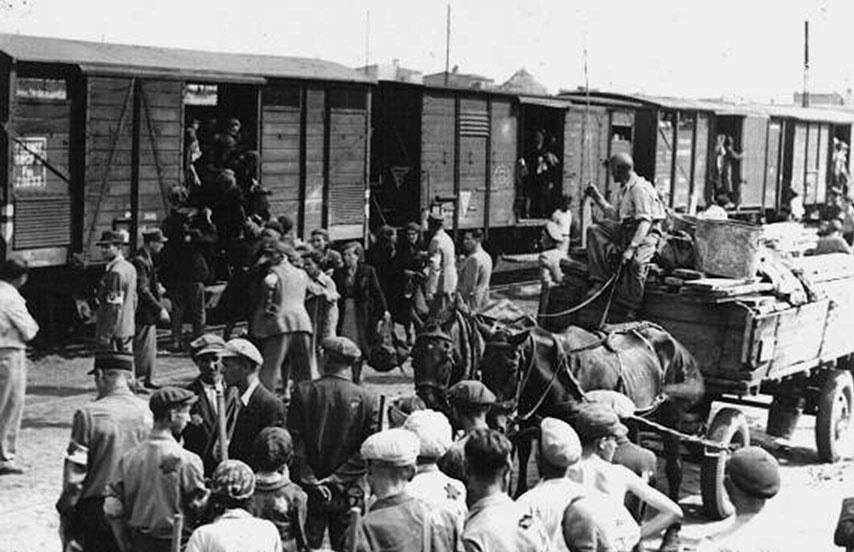
Some 32,000 NKVD personnel ran the operation. Families were given between 15 and 30 minutes, woken at gunpoint, marched to collection points, then loaded onto cattle trains at the stations of Bakhchysarai, Dzhankoi, and Simferopol and sent some 4,000 kilometers east, to Uzbekistan, Kazakhstan, and Siberia. Soviet figures put the number deported at over 190,000; other estimates run to 200,000 and beyond. Surveys later conducted by Crimean Tatar activists found that 109,956 of 238,500 deportees — 46.2 percent — died of starvation and disease within the first two and a half years. In one episode on the Arabat Spit, the inhabitants of remote fishing villages were herded onto a barge, towed into the Sea of Azov, and scuttled, with a machine-gun boat standing by to make sure no one swam.
The survivors describe the journey in the same flat detail, as if the horror had worn the adjectives off. No water. No toilet. No medical help. The dead left on the railway sleepers under a rag. Seitmemet Ibragimov, eleven years old, in a car of 41 people, found a stub of candle in his pocket and lit it so the families could find each other in the dark. He worked nineteen-hour days for nine years on a collective farm in Uzbekistan.
"We worked like slaves," he said. "And we were slaves, on someone else's land."
Ediye
Ediye Karaieva was two years old, still in a cradle, when Soviet soldiers came to her family's house in the Bakhchysarai hills and asked her father for vodka. There was none in the house. He brought them apples instead. Angry that he had not produced vodka, the soldiers shot him on the doorstep and walked away. A neighbor's boy saw it and told the family what had happened. When her mother came back from the trenches with the other children, the father was lying dead across the threshold.
The night before the deportation — 17 May — her eight-year-old brother Yakub had been too tired to walk the six kilometers home from the fields, so their mother had left him to sleep at his aunt's. At dawn the soldiers gave the family 15 minutes. The mother gathered five daughters and ran. Yakub was not there.
At the station the boy went from freight car to freight car looking for his family and could not find them. The aunt, on a different train, took him; she said everyone was being taken to the same place anyway. The trains went in different directions. The aunt ended up in Kostroma Oblast in Russia. The family ended up in the Mari ASSR, deep in the forest, where the locals had been told that one-eyed savages who had sold their homeland were coming, and where the first word the children heard from a neighbor's boy was "traitors." They did not understand it. They did not speak Russian.
They did not see Yakub for ten years.
In 1954, after Stalin's death, the mother and the eldest daughter were allowed to travel to Kostroma. The boy was eighteen now. They met on a riverbank. The mother recognized her son, standing there, crying. Those were the first tears of joy since the deportation.
The signature

Exile was not a single act but a regime. Every month, the deportees had to report to a Soviet commandant's office and sign that they had not left their assigned settlement. Children signed too, once they turned sixteen. Stepping outside the zone could mean twenty years. This is the part the anniversaries tend to compress — that the erasure had a paperwork rhythm, a monthly signature, kept up for more than a decade. It was not until the late 1980s, under Gorbachev, that surviving families could begin returning to Crimea in real numbers. They came back to find their houses occupied and their villages renamed.
For about two decades, they lived at home. In 2013, the year before the second uprooting, more than 40,000 people gathered in central Simferopol to mark the anniversary of the deportation. It was the last time they could do so freely.
The third date
Then 2014. Russia occupied Crimea, and the people who had spent fifty years getting home began, again, to be pushed out of it. The occupation authorities banned the Mejlis, the Crimean Tatars' elected self-governing body, branding it extremist; shut the Crimean Tatar television channel ATR; and barred Crimean Tatar leaders from returning to the peninsula. Tens of thousands left. Crimean Tatars themselves call it a "hybrid deportation" — the same outcome as 1944, achieved with courts and entry bans instead of cattle trains.

The courts are the engine now. Russia outlawed the Islamic movement Hizb ut-Tahrir as terrorist in 2003 — it is legal in Ukraine and most countries, and not one of its members has ever been convicted of a terrorist act — and uses membership accusations as a template for mass prosecutions. By August 2025, the Crimean Tatar Resource Center counted 122 people prosecuted in these cases, 119 of them Crimean Tatars; 83 were serving sentences in Russian prisons. Those cases have left 252 children without fathers. By December 2025, across all categories of political prosecution, the Crimean Resource Center recorded 486 political prisoners over the occupation, 272 of them Crimean Tatars — roughly two-thirds of the human-rights violations it documented fell on this one people.
Some of the prisoners are sick enough that Russian courts have ordered them released, and then re-arrested them. Oleksandr Sizikov, a blind activist from Bakhchysarai serving 17 years on a Hizb ut-Tahrir charge, was freed on health grounds in May 2025 and seized again in October. His mother had described how she guided her blind son around the house by touch and sound. Lenur Khalilov, who has cancer, was let out in August and sent back to prison within months.
Server Mustafayev, who co-founded the grassroots Crimean Solidarity network to support persecuted families and is now serving fourteen years himself, wrote from prison that Russia had destroyed all dissent, journalism, and justice in Crimea, and that thousands had been forced out of "homes they returned to after the genocide and deportation of 1944."
That sentence is the whole story, said by someone living inside it.

What the world is doing about it
Ukraine's parliament recognized the 1944 deportation as genocide on 12 November 2015. The Parliamentary Assembly of the Council of Europe has called on others to do the same. By mid-2025, the Netherlands had become the seventh state to formally recognize it as genocide, after Ukraine, Latvia, Lithuania, and others including Poland. Historians describe a deliberate attempt to make the people disappear from the record — even, for years, to strike the words "Crimean Tatar" from official documents.
At the same time, a US-backed peace proposal — reported to have been shaped with Russian input — would have Crimea recognized as Russian. The Crimean Resource Center warned that such a settlement would legitimize the occupation and the prosecutions running under it. So the position, stated plainly, is this: seven parliaments have now named what was done to the Crimean Tatars in 1944, while a deal is being negotiated that would formally place the survivors' grandchildren, and the men in those prison cells, back under the state that put them there.
The activist Luftiye Zudiyeva, who coordinates Crimean Solidarity, has made the point that the people who actually remember 1944 are dying, and that there are fewer of them every year. The accounts in this piece were given by people who were children in 1944 — eleven, eight, two years old. They are among the last who can say what the knock on the door sounded like.
Ediye Karaieva's mother stood on that riverbank in 1954 and recognized the boy she had not seen in ten years. He was crying. It was the first good thing that had happened to the family since the soldiers came. The grandchildren of that family are now Crimean Tatars again under Russian rule, signing their names not at a commandant's window but in the cages of military courtrooms in Rostov-on-Don, while governments far away decide what Crimea is called.
Read also
-
Ukraine’s drone forces say they hit 58,465 Russian targets in August, nearly 1,900 a day. Three named campaigns did the strategic damage
-
“If you’re gonna f*ck, f*ck a queen, if you’re gonna steal, steal a million”: Ukraine’s anti-corruption bureau says senior official ran criminal ring inside Prosecutor General’s Office
-
Ukraine’s Lasar’s Group says its bomber drones destroyed rare Russian Zhitel jammer 55 km behind front