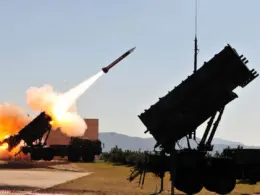
- Russian air defenses are collapsing under relentless Ukrainian drone strikes
- That's clearing the airspace behind the gray zone for more Ukrainian drone attacks on Russian supply lines
- More new types of Ukrainian mid-range drones are joining the fray
Ukraine is surging more explosive drones into Russia's vulnerable logistical zone, aiming to weaken Russian regiments before the regiments can attack.
At least two Ukrainian units, the 12th Azov Brigade and the 20th Unmanned Systems Brigade, are deploying the new SETH mid-range drone for these raids in the logistical zone, which stretches from around 10 km to around 200 km behind the disputed gray zone where most of the direct ground combat takes place.
Recent video montages from the two Ukrainian units depict SETH strikes on Russian trucks, vans and motorcycles. "We cut off the enemy's logistics, we destroy them before they even reach the front line," the 20th Unmanned Systems Brigade stated.
mini-shahed strikes in the russian rear around Lysychansk-Siverskodonetskhttps://t.co/68zrIXuMLc pic.twitter.com/NTl8h2gHI5
— imi (m) (@moklasen) April 19, 2026
The SETH is a "pusher" design with a rear-mounted propeller and 1.5-meter wingspan. It hauls a 3-kg warhead as far as 40 km under satellite navigation. The drone spots targets such as trucks or trains using an AI-assisted camera. A remote operator approves the target before the drone barrels in.
A single SETH reportedly cost several hundred thousand dollars as recently as a year ago, potentially making it much more expensive than the other Ukrainian attack drones in its class. The Fire Point FP-2, which Ukrainian drone forces have used to hit Russian air bases in Crimea, reportedly costs around $50,000 per unit. The Swift Beat Hornet, built by a US company owned by former Google CEO Eric Schmidt, is supplied to Ukraine at cost price under a 2025 memorandum.
Drones tend to come down in cost as the production rate increases, however. And Ukrainian production of mid- and long-range drones is increasing a lot, to a new high of 7,000 copies in March 2026. Robert Brovdi, call sign "Magyar," the commander of Ukraine's Unmanned Systems Forces, recently announced four more USF brigades would re-equip with mid- and long-range drones.

Fast drone expansion
The fast expansion of Ukraine's mid-range strike campaign represents a profound reversal. Just a few months ago, Ryan O'Leary, an American who once led a volunteer company fighting for Ukraine, worried that Ukrainian leaders were effectively handing Russia the drone advantage in the logistical zone—by focusing too much on the shortest- and longest-range drones while neglecting the mid-range ones.
Short-range first-person-view drones, patrolling the gray zone, can inflict heavy casualties on Russian infantry. But heavy infantry losses may not mean much to the Kremlin, which continues to recruit enough fresh troops to replace combat losses.
"Ukrainian drones are still optimized for destroying infantry, not for changing sectors," O'Leary wrote in a since-deleted post. "This creates cool videos, but delivers weak strategic effect."
Trending Now
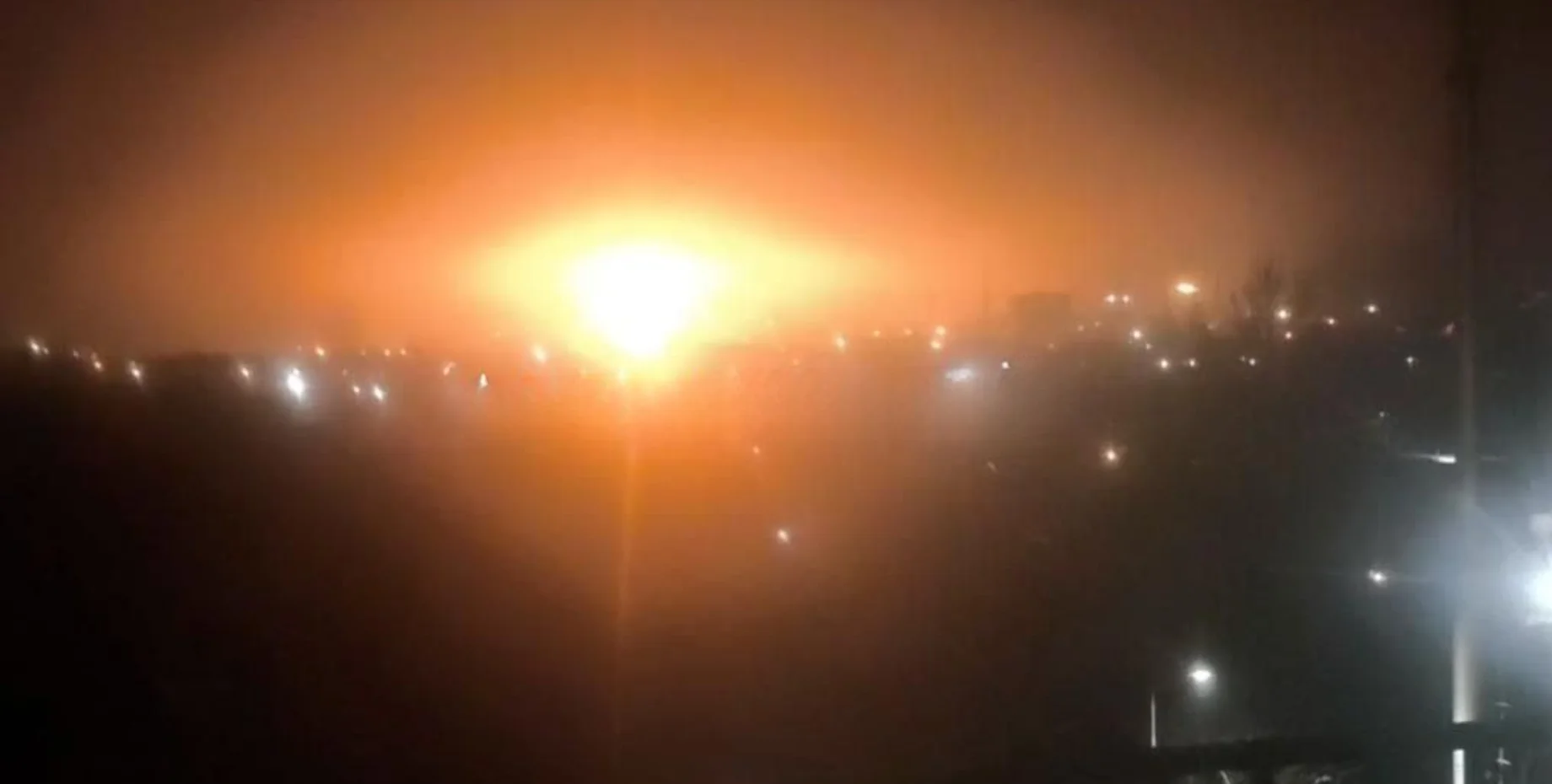
"The drone war is not about the number of killed today," O'Leary added. "It is about controlling the space tomorrow. Ownership of the depth means control of movement, logistics, [surveillance], communication and decisions in the sector, not just in the trench."
Ukrainian commanders clearly shared O'Leary's concern. Efforts were already underway to pivot drone units to mid-range strikes.
By this spring, these efforts were explosively evident as more FP-2s, Hornets and SETHs surged into the logistical zone—and more Russian trucks, trains, headquarters and air defenses went up in flames. A mid-March Institute for the Study of War assessment found monthly Ukrainian mid-range strikes had quadrupled since November 2025.
The mid-range strikes on logistical targets are only as effective as Russia's air defenses are ineffective. A mid-range drone might spend several minutes in the air at an altitude that could make it an easy target for an intact air defense network.
But Russia's air defense is not intact. Relentless Ukrainian drone strikes on radars, surface-to-air missile launchers and mobile guns—at least 492 of them between June 2025 and early March—are "facilitating strikes on more critical targets deep within Russian territory," Tochnyi.info explained in a recent report.
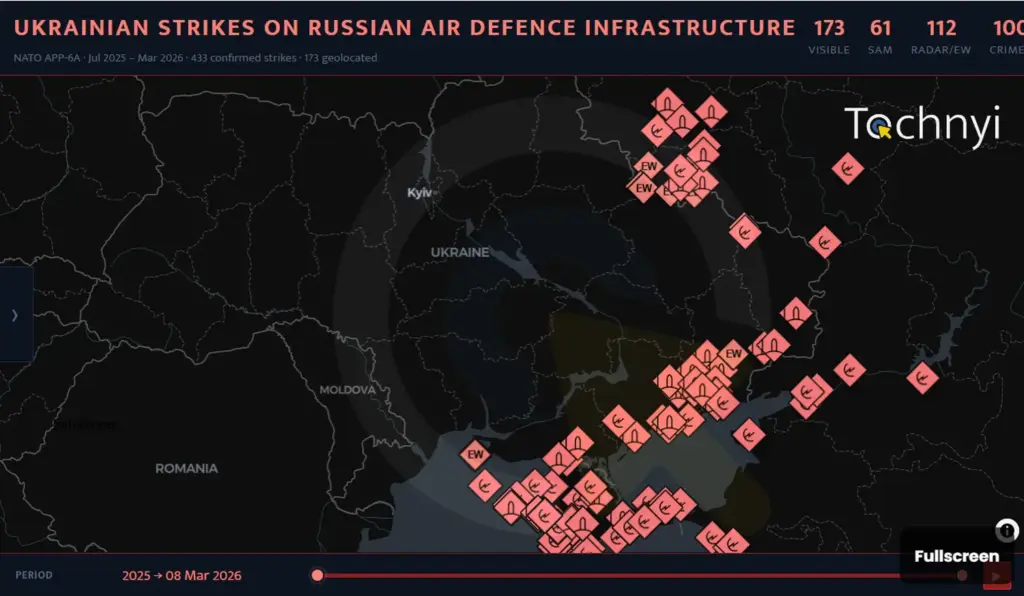
The Ukrainian strikes on Russian air defenses continue in parallel with the expansion of the mid-range strikes on logistical targets. Just how much damage FP-2s, Hornets and SETHs can inflict on Russian logistics may depend on how many more Russian air defenses the Ukrainians can knock out.
The impact on Russia's spring offensive, which is just starting in some sectors, may be hard to measure. But if the offensive falters without the Russians capturing much new ground, it may be thanks to the mid-range drone strikes that sapped the Russians' combat power before they could bring that combat power to bear in the gray zone.

Read Also
-
Ukraine’s 3rd Army Corps took the lessons of the failed 2023 counteroffensive into Operation Vivaldi. It fought small, and won.
-
“Supplying Crimea is turning into a nightmare”: Ukrainian drones hit Russian trucks 770 times in September, and winter will make it worse, analyst says
-
Armored assaults aren’t dead. Robots got the credit, but it was Ukrainian infantry in armored trucks that reversed a year of Russian gains near Lyman
mini-shahed strikes in the russian rear around Lysychansk-Siverskodonetskhttps://t.co/68zrIXuMLc pic.twitter.com/NTl8h2gHI5
— imi (m) (@moklasen) April 19, 2026