


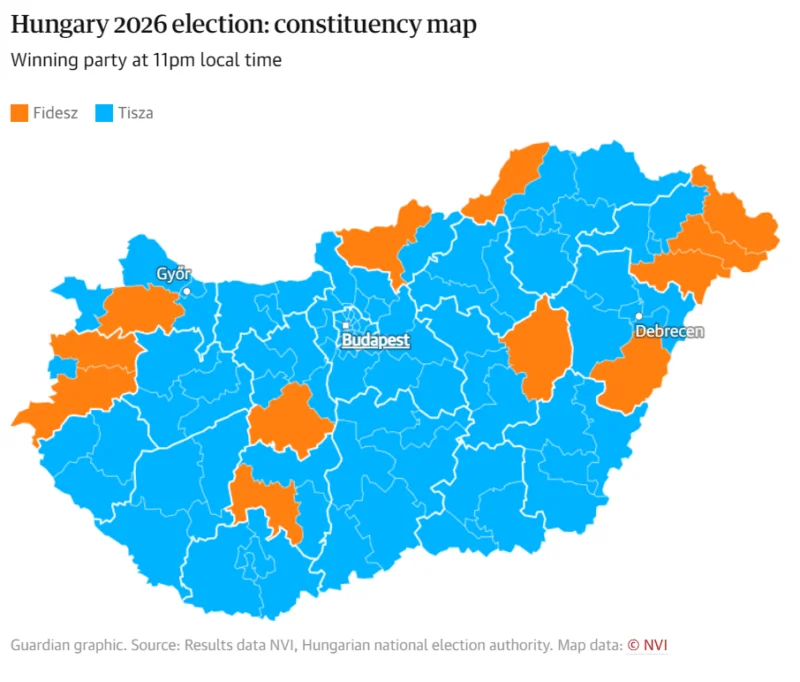
Péter Magyar's Tisza party won 138 of 199 seats in Hungary's parliamentary election on 12 April, taking 53.6% of the vote to Fidesz's 37.8%. It was Orbán's worst result since he returned to power in 2010.
The margin hands Tisza a two-thirds supermajority—the constitutional tools to dismantle what Orbán spent 16 years building.
The election result ends 16 years of Kremlin-friendly obstruction. Péter Szijjártó—the foreign minister who briefed Moscow on closed EU Council sessions—is gone.
What Magyar's win means beyond those immediate unlocks is far less clear. He ran on domestic grievances: corruption, collapsing wages, frozen EU funds. His 240-page manifesto is, in the words of the European Policy Centre, "notably thin" on foreign policy.
Here is where Magyar's victory lands, theme by theme.
The insider who unseated the insider
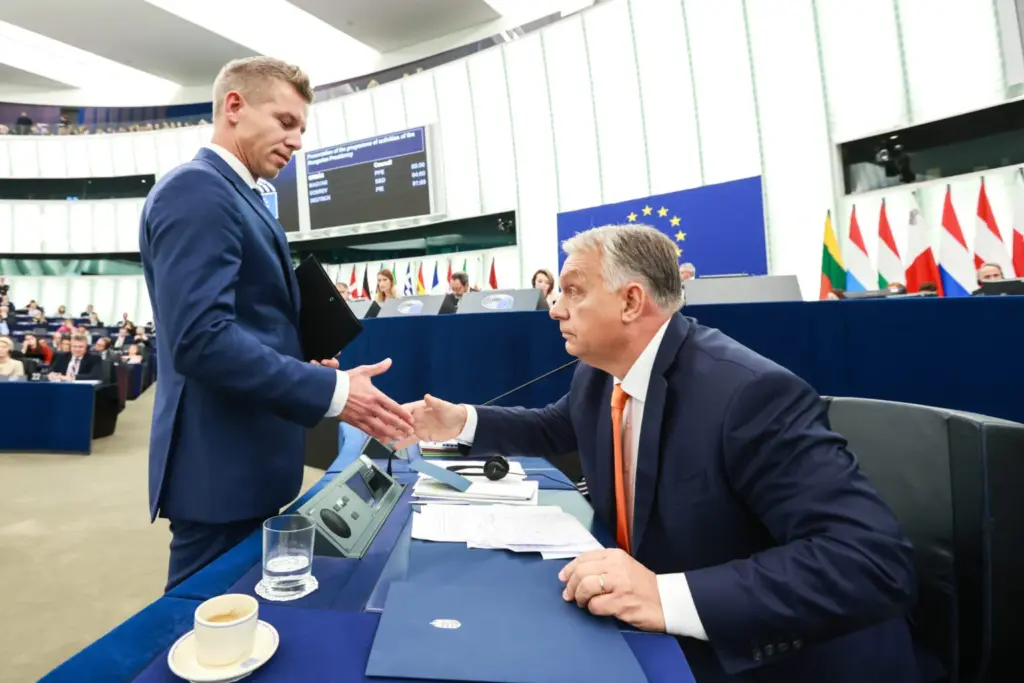
Magyar’s path to power ran through the system he now seeks to dismantle. As the Guardian notes, much of Magyar’s life unfolded within Fidesz’s inner circles—from student membership to a diplomatic post in Brussels and senior state roles.
Magyar's break came with the February 2024 pardon scandal, which ended Varga’s career and drove him onto Facebook with a blistering critique of the party. Thus, Magyar went from a Fidesz insider to a dissident.
Insider knowledge may have played a significant role in Tisza's electoral victory and in its defense against Fidesz's attacks. Scholar of politics Péter Krekó told CNN that Magyar, "aware of how Orbán's system works," managed to "pre-empt" the blows Fidesz threw at him.
Even in “competitive authoritarian” systems—where the electoral field is uneven—challengers can still drive change, especially when they are defectors from within the ruling elite. Steven Levitsky and Lucan Way identify such defections as a recurring pathway out of these regimes, while cautioning that removing autocratic elites “creates an important opportunity” without guaranteeing democratization.
Magyar inherits the networks, loyalties, and habits of the Fidesz system he was elected to dismantle. His government needs to do the serious footwork necessary to subsume the lingering autocratic apparatus.
Ukraine's EU membership: the referendum, not the veto
Magyar confirmed he will not send weapons to Kyiv, per post-election reporting. On EU membership, he will hold a binding referendum on Ukraine's accession once terms are agreed. It is a delay mechanism, not a veto—and a politically rational one.
At his Munich meeting with Polish PM Donald Tusk in February, Magyar was direct: "Neither the TISZA party nor the majority of Hungarians supports Ukraine's accelerated EU accession." His first trip as prime minister will be to Warsaw.
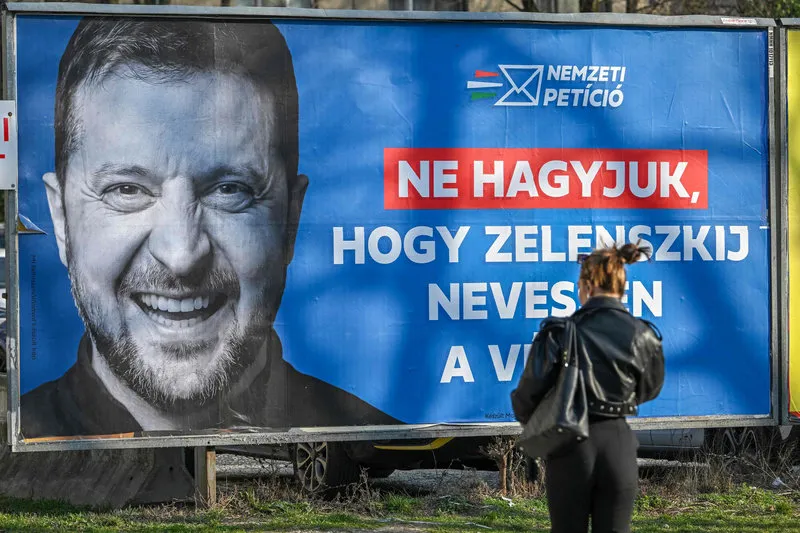
But the underlying numbers already pointed elsewhere. A January survey found 55% of Hungarians support EU membership for Ukraine. László Bruszt, Director of the Central European University's (CEU) Democracy Institute, stresses the context: this is "despite the Compact against Ukraine by Orbán"—his term for the organized anti-Ukraine posture Fidesz built across state media, party structures, and policy.
Bruszt expects a Magyar government to take "a pragmatic approach, like most of the other EU member states" towards Ukraine—neither enthusiastic support nor active obstruction.
Russia policy: the sovereignty reframe
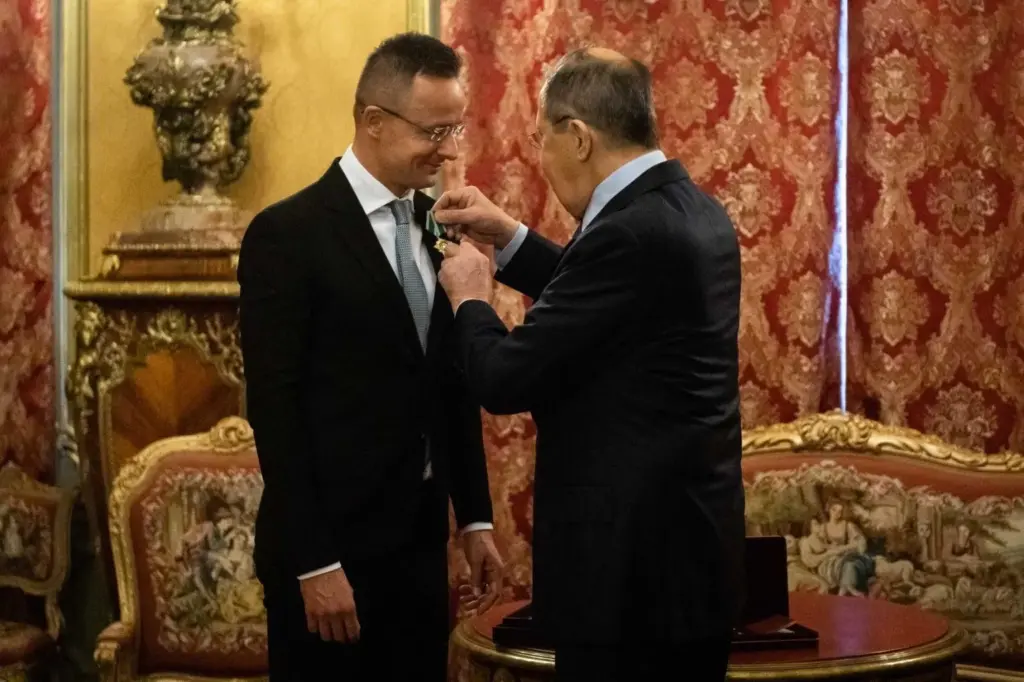
The recorded Szijjártó-Lavrov channel ended on 12 April. A VSquare investigation found Szijjártó boasted to Russia's deputy energy minister, Pavel Sorokin, that he had already removed 72 of 128 entities from a proposed EU sanctions list—then asked Sorokin's staff to help him draft arguments for removing more. "I am always at your disposal," Szijjártó told Russian FM Sergei Lavrov in a separate call, per VSquare.
Bruszt framed the philosophical pivot bluntly. Orbán, "[declared] himself as the biggest defender of peace[,] campaigning [by] having two allies, Trump and Putin. And Putin is for war."
Magyar, he argued, has "no kind of interest in weakening NATO" and approaches the EU through a different logic entirely: "Sovereignty is two things. One is to defend national interest. But the other is that since lots of the goods we get through the EU, from security to economic to cultural goods. It is in the national interest to have a functioning, reformed EU."
That reframe, if it holds, is what separates Magyar from Slovakia's Robert Fico: both are nationalists, but only one treats the EU as an asset rather than an adversary.
The €90 billion loan: the small-power strategy ends
The EU Council’s unanimity rule gave Orbán a veto over sanctions, the €90 billion loan and accession progress. András Rácz, an expert on Hungarian politics, described the logic to the Wilson Center: “To basically extort money or favors by promising not to cause any further problems. This is a small-power strategy: the only way you can exert influence is actually to misuse the veto you have by spoiling things.”
That playbook ended on 12 April. At his first post-election press conference the next day, Magyar confirmed he would not block the loan. Nevertheless, Magyar upheld the opt-out that Orbán secured at the December 2025 European Council, which exempts Budapest, along with the Czech Republic and Slovakia, from contributing funds.
"Hungary is in a very difficult financial situation, and our task is to bring back the EU funds that are owed to us. We cannot take on more loans," Magyar told reporters, framing the opt-out as a fiscal necessity rather than a political signal.
The 18th sanctions package—coordinated by Budapest with Moscow to stall, per VSquare—is also expected to move.
Trending Now
Tisza’s MEPs voted against the loan in February 2026, per Euronews. Bruszt sees this as campaign positioning rather than governing intent: as an EPP member, Magyar “will not continue this politics of Orbán, which was done primarily to show his loyalty to Trump and to Moscow. Both were interested in weakening the EU.”
Two complications remain. As Orbán’s poll numbers slipped, Slovakia’s Robert Fico announced that he would take Hungary’s place in blocking the loan—a reminder that unanimity still applies. Whether he follows through will be the first test of whether Sunday’s result translates into unblocked EU aid.
The second complication is the Oschadbank case. On 5 March 2026, Hungarian authorities detained seven Ukrainian bank employees and kept $82 million in cash and gold as “evidence.” The vehicles were returned, albeit damaged. The money has not been.
The constitutional question: the transformative scenario
The margin mattered for reasons the numbers alone do not show. A simple majority would have left Magyar governing within the Fidesz-engineered framework—supermajority requirements locked into taxation, pension law, and media, with opposition Fidesz retaining effective control over press, budget, and judiciary. A two-thirds win gives him the tools to undo that constitutional lock-in.
With the two-thirds now in hand, the question shifts, Bruszt said, to how to make the new constitution and how to include the fragmented opposition. "That will be the key question." He added one test specifically: the new constitution must give "a voice, also to Fidesz that will be in opposition." Whether Magyar treats Fidesz-in-opposition the way Fidesz treated opposition for sixteen years is, for Bruszt, the legitimacy test of the new order.
The supermajority also paves the way to reforming state broadcaster MTVA and the loyalist-packed media authority—the institutional amplifiers of anti-Ukrainian messaging inside Hungary—and to stripping away the legal scaffolding that Kremlin-linked networks, including Storm-1516 and the Social Design Agency, have used to reach Hungarian audiences.
Why the media machine outlasts the election
Sixteen years of messaging cannot be undone by decree, even with the supermajority. The scale is the reason.
Orbán's regime poured enormous resources into its propaganda machine. Fidesz was the top political advertiser on Google in the entire EU during the 2024 European Parliament campaign.
In the final week before EU rules banned political ads last October, Lakmusz found that Fidesz spent more promoting Viktor Orbán's Facebook page alone than 17 EU countries spent on all political advertising combined.
Due to its well-funded and entrenched nature, the pro-Fidesz media ecosystem will take time to dissipate, and may still persist as a lever for Russia to exploit. VSquare reported in March that Moscow had embedded a three-person GRU team in its Budapest embassy to aid Fidesz's re-election. Kremlin political chief Sergei Kiriyenko—architect of the 2025 Moldova interference—oversaw the operation.
The Financial Times separately documented a Kremlin-linked Social Design Agency plan to seed Hungarian social media with fabricated pro-Orbán content. Such an environment conducive to Russian influence ops will take time to dissipate.
Transcarpathia, Ukraine's westernmost region, is where that playbook crosses the border. Orbán used the region's 150,000 ethnic Hungarians as a pressure point against Kyiv, deploying intelligence agents and stoking interethnic tensions. Vitalii Diachuk, analyst at the Institute for Central European Strategy, described a familiar tempo when incidents occur: provocations appear, images spread within minutes, and official narratives follow within a day.
"Even if power changes in Hungary, the new leadership will face a dilemma: refuting the myth means attacking the feelings of 'our own'—and that is electoral suicide," Diachuk told Euromaidan Press.
Yet not all is doom and gloom, and there is room for change. Bruszt sees the underlying dispute as solvable—Hungary has settled similar ones with Slovakia, Croatia, and Romania. Magyar lacks Orbán's incentive to keep the issue burning, and he inherits the environment but not the appetite to sustain it.
What actually changes—and what doesn't
Magyar's victory pulls Hungary out of Russia's camp inside the EU. With the veto gone, the €90 billion loan is set to clear, sanctions against Moscow will move, and Szijjártó is out. That alone is a meaningful shift in how the bloc can act on Ukraine.
"He has to start with crisis management, because the economy is in a very bad situation," Bruszt told Euromaidan Press. Hungary's €18 billion in frozen EU funds, withheld over rule-of-law violations, will begin to be unlocked only after structural reforms. That process starts on election night but takes years.
The $82 million in Oschadbank assets still held in Budapest is the first concrete test. Whether Magyar's government returns it signals how far the reset goes.
What does not shift quickly is the soil in which those policies grew. Hungary sits at the bottom of the EU on Transparency International's 2025 Corruption Perceptions Index for the fourth consecutive year. Moreover, sixteen years of state media framing Ukraine as an economic threat do not dissolve overnight with a change of government.
Magyar is a conservative nationalist who will not be dragged into this war, and with a domestic economy in crisis, that fight comes first. His victory stops the bleeding, but closing the wound—returning the gold, rebuilding EU trust, and dismantling Orbán's propaganda ecosystem, among other things—will be the longer project.
This material was produced as part of a project by the Institute of Mass Information with the support of the Ministry of Foreign Affairs of the Netherlands. The content of this publication does not reflect the official position of the IMI or the Kingdom of the Netherlands.


