

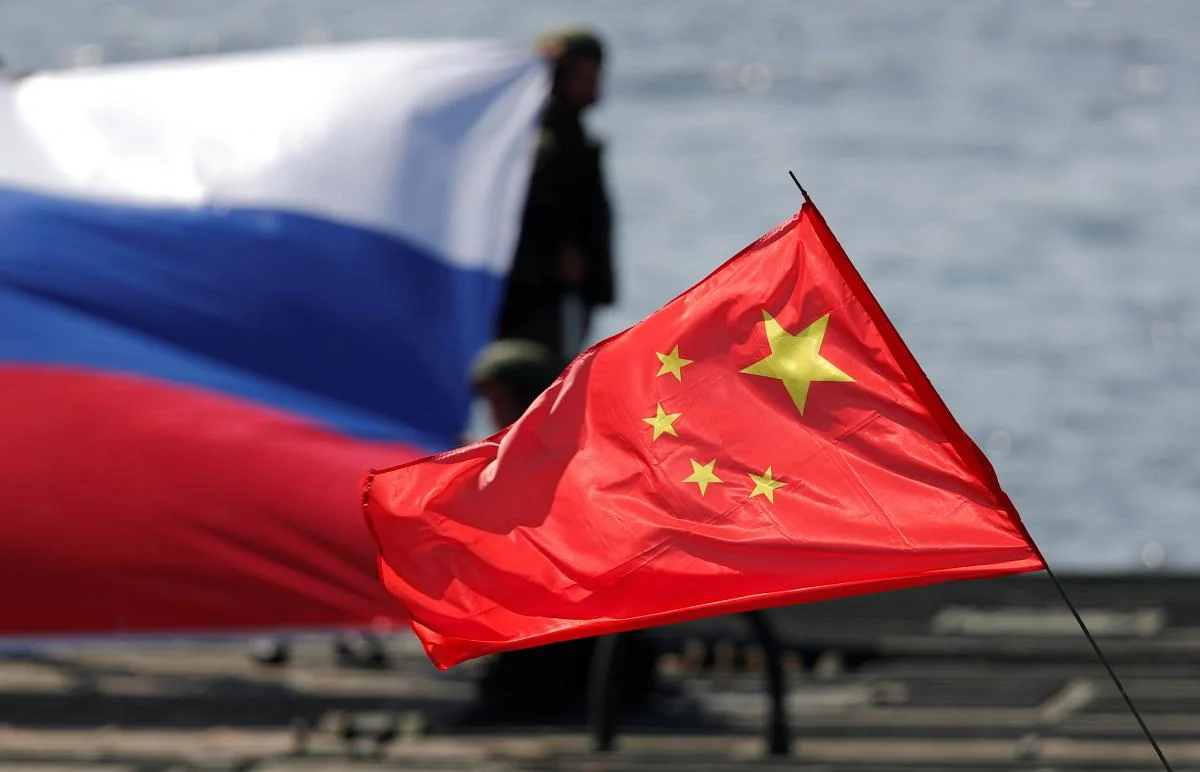
China today operates the world’s largest navy by hull count. A portion of its surface combatants and submarines was acquired from Russia decades ago, before Beijing achieved its own technological breakthrough in naval shipbuilding, Newsweek reports.
However, according to Australian naval analyst Alex Luck, the remaining Russian-built systems within China’s navy are likely to be phased out over the next one to two decades, gradually replaced by fully indigenous Chinese designs.
What really drives Beijing’s naval modernization?
In recent years, China has built a naval force capable of directly challenging the US. Today, the People’s Liberation Army Navy (PLAN) includes:
- More than 370 surface vessels and submarines
- Three aircraft carriers
- Eight destroyers in the 10,000-ton class
- Around 60 submarines
While most of these platforms are domestically designed, they incorporate earlier-generation Russian technologies. These include four Sovremenny-class destroyers and ten Kilo-class diesel-electric submarines, purchased from Russia in the 1990s and 2000s.
A defining symbol of this transition is the aircraft carrier CNS Liaoning, formerly the Soviet vessel Varyag. China acquired the unfinished hull and used it as a training and learning platform, gaining foundational expertise in aircraft carrier design, construction, and operations.
Why is China overtaking Russia at sea?
Luck notes that China’s Type 039A diesel-electric submarine is a clear example of hybrid engineering, with visible Russian influence in hull design. Yet in several critical domains, China has already surpassed Russia.
These include electronics, sensors, command-and-control systems, and communications, where Beijing benefits from a powerful domestic semiconductor and industrial base. The most visible gap is in aircraft carrier development.
While Liaoning still uses a ski-jump launch system inherited from Soviet design philosophy, China’s newest carrier, CNS Fujian, is equipped with catapult launch systems, enabling heavier aircraft and greater combat payloads.
In parallel, China is introducing a new generation of carrier-based aviation, including the J-35 fighter, which is expected to replace the J-15 derived from the Soviet Su-33.
To maintain the combat relevance of Russian-origin platforms, the PLAN has carried out systematic modernization. Nearly all Sovremenny-class destroyers have been integrated with modern Chinese air-defense and anti-ship missiles, upgraded sensors, and advanced C2 (command and control) systems.
Never miss a story.
Follow Euromaidan Press on Google News! Help us make more articles like this.
BECOME OUR PATRON!
Read also
-
Ukraine’s intelligence: Russia is running its Nepal, Cuba, Kenya, and India recruitment scheme in Indonesia now
-
Fix for Ukraine’s interceptors is radar seeker head, and American firm is selling one for $4,000, says president’s tech adviser
-
Four ground robots for one evacuation: Russia is targeting Ukraine’s robotic medevac missions
Follow Euromaidan Press on Google News! Help us make more articles like this.
BECOME OUR PATRON!


