Five Russian defense bosses lose their EU assets and travel rights over Iskander and Sarmat missile production

The listed individuals run plants that produce precision components for the Iskander-M ballistic missile and the RS-28 Sarmat intercontinental rocket. Three others head Russian companies building drone software, military radios, and space-based weapons technology.
five russian defense bosses lose eu assets travel rights over iskander sarmat missile production · post rs-28 (nato reporting name ss-x-30) liquid-fueled mirv-equipped superheavy thermonuclear armed intercontinental ballistic development makeyev
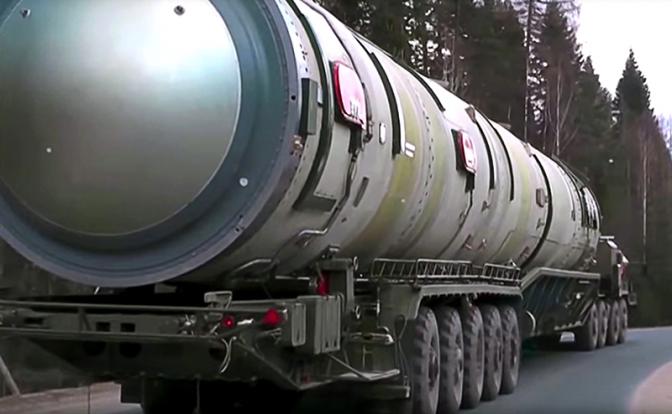
Russian RS-28 Sarmat (NATO reporting name SS-X-30) is a Russian liquid-fueled, MIRV-equipped, superheavy thermonuclear armed intercontinental ballistic missile, in development by the Makeyev Rocket Design Bureau since 2009. It is intended to replace the old R-36M missile (SS-18 Satan). Photo: Russian Ministry of Defense / TASS.
Five Russian defense bosses lose their EU assets and travel rights over Iskander and Sarmat missile production

The European Union sanctioned five directors of Russian defense companies involved in producing missiles and military technology, EU foreign policy chief Kaja Kallas announced on 7 August. The new listings target the heads of plants that build components for the Iskander-M and RS-28 Sarmat missiles, as the bloc responds to escalating Russian airstrikes on Ukraine, RFE/RL's project Krym.Realii reported.

This comes amid Russia's escalated ballistic missile attacks on Ukrainian cities. Russia's ballistic missile output now outpaces Western interceptor production, and dozens of enterprises in the missile supply chain remain outside any country's sanctions regime. Four years of Western sanctions have failed to cut Russia off from the foreign components its missile factories need — parts manufactured after sanctions were imposed still reach Russian assembly lines within months, keeping production at wartime rates.

EU names the factory bosses behind the missiles, as civilian casualties surge after Russia's shift to ballistic missiles

Among those sanctioned are Ramil Badgutdinov, CEO of the Serpukhov Metallist plant, which produces precision electromechanical components for the Iskander-M ballistic missile, and Aleksandr Dyukarev, CEO of the Krasnoyarsk Machine-Building Plant, which produces ballistic missiles including the RS-28 Sarmat intercontinental system. Three other directors head Russian companies producing military communications systems, drone software, and space-based military technology.

All five face EU asset freezes, a ban on providing them funds or economic resources, and a travel ban. The EU Council said the decision followed a European Council call from 18-19 June 2026 to intensify pressure on Russia through further sanctions.

"Each new attack on Ukraine is another reason for Europe to tighten the screws on Russia," Kallas wrote. "With its army stalled on the battlefield, Moscow is further escalating its campaign of terror against civilians. The EU must continue to intensify pressure on Russia until Moscow ends its war."

The new sanctions come as Russian strikes kill more Ukrainian civilians than at any point since the early months of the full-scale invasion. In the first six months of 2026, 1,396 civilians died and 7,978 were wounded — 37% more than the same period in 2025 and 114% more than 2024, according to the UN.
trade banks energy crypto—the eu keeps its full russia economic sanctions wall standing 2027 · post flags member states headquarters council european union brussels belgium 17 2025 getty images/thierry monasse
Explore further

Trade, banks, energy, crypto—the EU keeps its full Russia economic sanctions wall standing to 2027

Sanctions and strikes target the same factories

The EU has adopted 21 sanctions packages since 2014, with the latest — its largest ever — approved in July. EU leaders renewed the full economic sanctions regime for a year for the first time in June. Yet foreign components continue reaching Russian assembly lines — an Iskander built in 2025 contained parts made that same year.

Ukraine has pursued its own kinetic approach to the same supply chain. In June, Ukrainian missiles struck the Volgograd plant that builds Iskander components. The same month, drones hit a Voronezh factory supplying semiconductors for Iskander, Pantsir, and Kh-101 production. 

Ukrainian intelligence has identified dozens of Iskander production chain enterprises still outside any sanctions regime.

To suggest a correction or clarification, write to us here

You can also highlight the text and press Ctrl + Enter

Please leave your suggestions or corrections here


    Euromaidan Press

    We are an independent media outlet that relies solely on advertising revenue to sustain itself. We do not endorse or promote any products or services for financial gain. Therefore, we kindly ask for your support by disabling your ad blocker. Your assistance helps us continue providing quality content. Thank you!

    Related Posts

    Ads are disabled for Euromaidan patrons.

    Support us on Patreon for an ad-free experience.

    Already with us on Patreon?

    Enter the code you received on Patreon or by email to disable ads for 6 months

    Invalid code. Please try again

    Code successfully activated

    Ads will be hidden for 6 months.