


On 8 July, US President Donald Trump promised at NATO's summit in Ankara to let Ukraine build Patriot interceptors.
He left out one detail: whether Ukraine would produce any by winter—before renewed Russian attacks on Ukraine’s power grid leave civilians without heat.
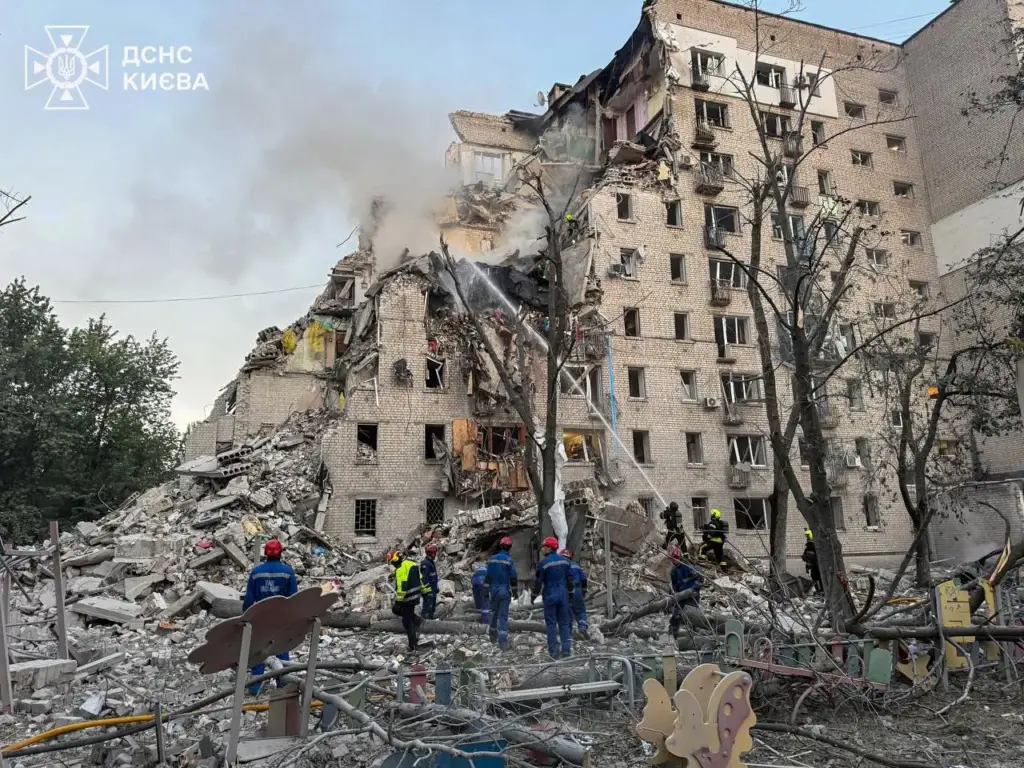
Ukraine has no reliable answer to Russia's ballistic-missile attacks, and Trump's pledge will not provide one this winter. During Russia’s 6 July barrage on Kyiv, Ukraine intercepted none of 29 ballistic and hypersonic missiles. The attack killed at least 28—four days after another strike killed at least 30.
On 7 July, Ukraine’s Defense Ministry said Ukraine had effectively run out of Patriot interceptors.
Trump’s Patriot promise remains just words. He had not even consulted Lockheed Martin or RTX—which build the interceptors—before making the pledge.
Speaking to Euromaidan Press, Ben Hodges—former US Army Europe commander and NATO senior logistics mentor—said Ukraine would not build any interceptors soon: “I am pretty certain it will not produce anything in the next three to six months.”
Outside estimates run longer: two expert groups advising the UK Defense Ministry judged production unlikely within a year, while other experts put the first interceptor about two years away.
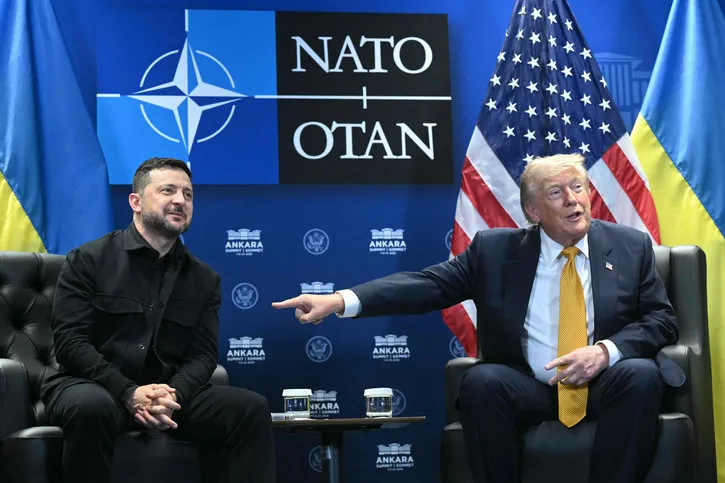
Hodges thinks Ukraine could beat that two-year timeline. Russia’s invasion, he said, has forced Ukraine’s defense industry and workforce to innovate faster than peacetime timelines assume.
Until allied supplies or Ukrainian production catch up, Hodges said, Kyiv’s best defense may be to strike Russia’s missile factories—to "kill the archer" rather than stop every arrow.
Hodges' hope does not extend to Trump’s administration. He is “withholding applause” until he sees “concrete actions," citing the administration’s refusal to recognize Russia as the aggressor and Vice President JD Vance’s description of halting US aid as “one of his proudest achievements.”
That record, Hodges noted, makes it “hard to be confident” that Trump’s approach has changed.
Interview edited for length and clarity.
What Trump’s Patriot pledge would actually require
Daniel Thomas: When Trump said Ukraine could produce Patriot interceptors under license, what did he actually commit the United States to—and was it real policy or mainly a political announcement?
Lieutenant General Ben Hodges: I was pleased that Trump made the pledge, but I remain very skeptical until I start seeing actual movement.
For now, it is a pledge, and he has made many pledges about Russia and Ukraine that he has not followed through on. So I am cautiously optimistic, but it is not yet a certainty.
If the plan moves forward, Lockheed Martin—the main contractor for the PAC-3, the Patriot interceptor Ukraine relies on to stop ballistic missiles—would have to be involved. Commercial arrangements would have to protect its technology and intellectual property, with the US government likely providing some form of support or guarantees.
Trump said the company did not know about it. I doubt that.
Why Trump cannot start Patriot production on his own
Thomas: Once political approval is given, what must happen before Ukraine can actually begin producing Patriot interceptors?
Hodges: Lockheed would have something to say. We are not in a system where the government owns the company and can simply direct it to begin production. This is a commercial enterprise with a board and shareholders, so the relevant laws and agreements would have to be sorted out.
The Departments of Commerce, Defense, State, and Treasury would all have a say, and Congress would probably need to be notified. If this is a genuine policy decision with a disciplined process behind it, much of that coordination should already have begun. And if those authorities have already been lined up, that part could move quickly.
Trump's administration is not famous for that, but I hope they already have the ball rolling.
Then come the harder, practical challenges. Patriot systems are sophisticated weapons, not hammers and nails. Ukraine would need trained workers and the right tools. Components would have to come together through a complex supply chain. And Russia would try to strike the facility before it became operational, making its location and protection critical.
What can Ukraine build on its own—and what does it still need from elsewhere?
Thomas: What would Patriot production in Ukraine initially involve: building complete interceptors, assembling imported components, or making selected parts? And could that shift toward full interceptor production over time?
Hodges: One possibility is that subassemblies would be sent to Ukraine, given the supply chain's complexity. Components come from different places before being assembled into a PAC-3 interceptor capable of countering ballistic missiles. But I do not know whether that model has been selected.
Whatever Ukrainian company took part would have to work with Lockheed, and its personnel would need training. They might go to the United States, where the interceptors are made, or a team might come over to train them. All of this is doable.
I have also seen people speculating that Ukraine will work it out with Poland or Germany, or somewhere else, to actually do this. That could be the case.
Has Trump’s Ukraine policy actually changed?
Thomas: Does Trump’s Patriot pledge signal a real shift in his Ukraine policy, or is it too early to tell?
Hodges: I am withholding applause until I see concrete actions showing that the president has directed this to happen.
I hope it does. But his approach has been to push Russian talking points and pressure Ukraine to give up land for the sake of stopping the fighting. The administration has shown little concern about the origin of the war and has struggled even to identify Russia as the aggressor.
Remember, Vice President Vance said one of his proudest accomplishments was stopping the flow of aid to Ukraine. What the hell is that?
It is therefore hard to be confident that the Trump White House’s overall view has changed. Washington treats this as a transaction: Germany or other countries can buy American equipment and give it to Ukraine, rather than the United States providing direct aid because it wants Ukraine to win.
I take the president at his word that he wants the killing to stop. These ballistic missiles are blowing up apartment buildings. But I have not seen him put meaningful pressure on Russia.
Trending Now
How quickly could Ukraine build Patriots?
Thomas: Even if everyone moved quickly, how soon could Ukraine produce usable Patriot interceptors—and could they affect this war immediately, or would they mainly be a longer-term investment?
Hodges: Maybe a little bit of both. I have heard estimates of about two years before the first Patriot interceptor could be produced, although people may all be repeating the same initial report.*
That sounds like a normal timetable. Ukraine works at a different speed because it is fighting for survival and has a technologically capable, educated workforce. I would not automatically apply the same timeline used for other countries.
It might not necessarily take Ukraine two years once the process starts, but I am pretty certain it will not produce anything in the next three to six months.
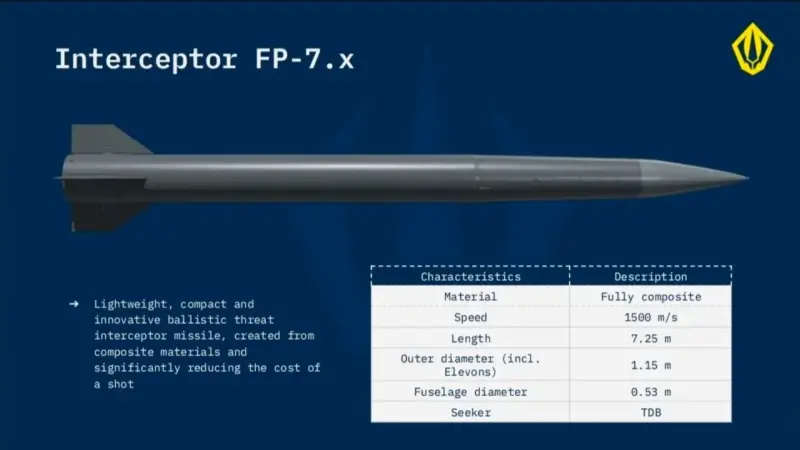
Ukraine may also learn things that help it improve or develop other systems. It does not have to be a Patriot interceptor; it needs a weapon capable of intercepting a ballistic missile moving at tremendous speed and altitude. Ukraine is trying with Freya but we will see what happens.**
* Japan took about two years to establish licensed Patriot production but still imports key US components. Ukrainian experts estimate that Ukraine’s first PAC-3 missile could emerge no earlier than 2029.
**Freya is Fire Point's ballistic interceptor, which Ukraine hopes to build within the next 12 months.
What Patriot production would not fix
Thomas: In military terms, how much could Ukrainian Patriot production shift the strategic balance—or would it mainly ease a critical shortage?
Hodges: It would fill a gap. Ukraine has changed the momentum of the war in several areas. It has had significant success in the Black Sea, stopped Russia from making meaningful progress on the ground, and developed long-range precision-strike capabilities against Russian oil and gas infrastructure.
The one thing Ukraine has not been able to stop consistently is Russia's ballistic-missile attacks against its cities. So this effort is primarily about protecting Ukrainian civilians from those missiles.
Thomas: But Ukrainian-produced interceptors will not be available for this winter. How do you assess that immediate gap?
Hodges: It will be a rough winter. But the resilience of Ukrainian society is something we will marvel at for decades. That does not make it any easier, but what Ukrainians have withstood is incredible.
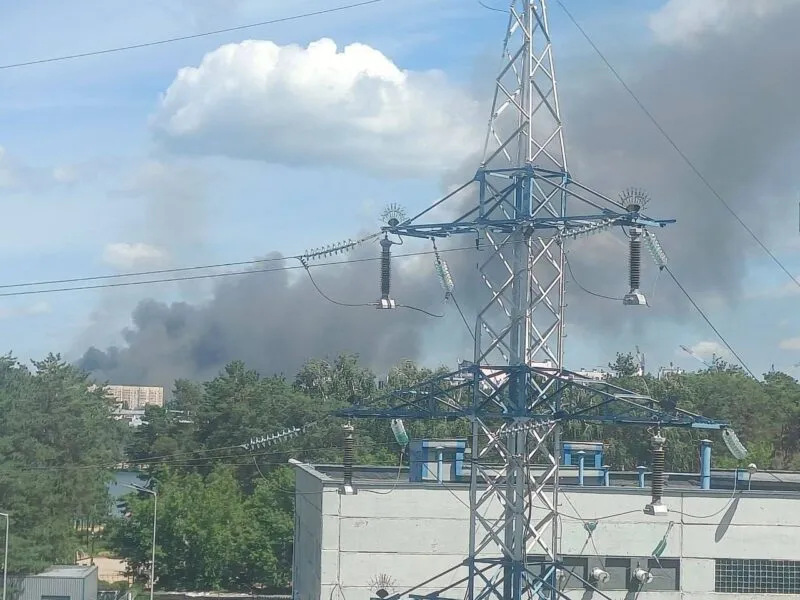
I imagine—and certainly hope—that Ukraine is finding ways to disrupt Russia’s ballistic-missile production. Its long-range weapons can now reach almost any relevant factory, and it recently struck a plant that produced components for those missiles.
"It is better to kill the archer than to try to intercept all the arrows."
Thomas: Can Patriot ever "close the skies" over Ukraine? What scale of deployment would that take?
Hodges: What Ukraine needs is integrated air and missile defense.***
Russia is launching hundreds of drones, a couple dozen ballistic missiles, and other weapons in these attacks. Its aim is to overwhelm Ukrainian defenses. Ukraine may shoot down 90% or 95%, but that still leaves dozens of drones and missiles getting through.
***This could entail cheap interceptors for the drones, medium-range systems for cruise missiles, Patriot for the ballistics, all fed by a shared radar network.
“We are absolutely not prepared”: NATO could not stop the kind of attack Kyiv faces nightly
Thomas: Ankara did not address European air defense for Ukraine. Setting Ukraine aside, could Europe defend itself against the kind of attack Kyiv faces on an ordinary night?
Hodges: My biggest concern for years has been the lack of adequate air and missile defense for Europe.
If the sort of attack that happens against Kyiv on a typical night were to happen against Bremerhaven, or Gdansk, or some of Europe’s other major seaports or airports, we would not be able to stop it. We are absolutely not prepared.
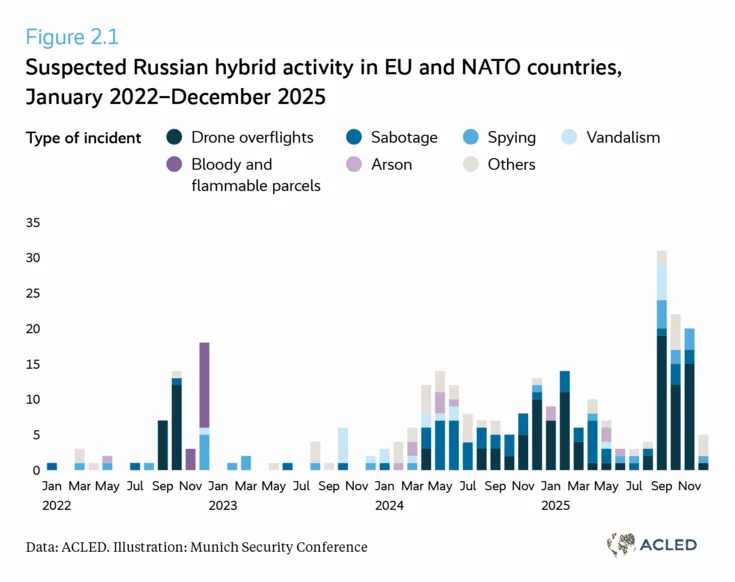
It is a combination of capabilities, but it is also that we have not done the exercises. We have not done large-scale, multinational, joint exercises, going against an attack like the ones Ukrainians deal with, in a heavily contested electronic warfare environment. We have not practiced that to scale.
So people know there is a requirement. But it is also a requirement you have to exercise. You have to practice in the most rigorous conditions to sort out who shoots at what, where the sensors are, what the priorities are for what gets protected.
You can never, ever protect everything. There is always a prioritization made by commanders and by civil authorities.
Not everybody is going to be under some famous shield. It does not exist.
This material was produced as part of a project by the Institute of Mass Information with the support of the Ministry of Foreign Affairs of the Netherlands. The content of this publication does not reflect the official position of the IMI or the Kingdom of the Netherlands.


