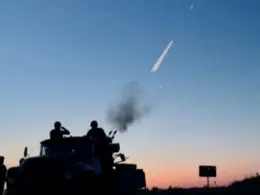
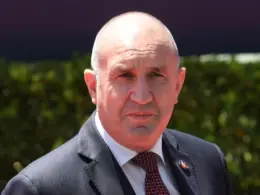
Ukraine is finishing its own anti-ballistic missile. President Volodymyr Zelenskyy said at the first meeting of the European Anti-Ballistic Coalition that Ukraine will contribute a missile to FREYJA, a joint European missile defense system.
Ten countries have joined the Coalition — Ukraine, France, Britain, Germany, Italy, Norway, Denmark, Sweden, the Netherlands, and Spain — along with representatives of NATO, the European Union, and leading European defense companies.
"Ukraine can provide its part — the anti-ballistic missile. We are now completing work on it. Others have radar and other critical components. It is important that we combine our efforts," he said.
Four days ago, Zelenskyy told journalists that eight countries might join. Zelenskyy coordinated positions with French President Emmanuel Macron in a call before the meeting.
Zelenskyy set a timeline for his expectations for the new air defense missile.
"I hope that within the next 12 months we will see FREYJA in operation," he revealed.
Zelenskyy divides work: Ukraine builds missile, partners build rest
Europe needs a modern, reliable, and more affordable system of protection against ballistic missiles, and partner countries are capable of building one together, Zelenskyy claimed.
He argued FREYJA should receive political support as a joint European initiative aimed at strengthening the security of the entire continent.
The division of labor Zelenskyy described aligns with the program's technical structure. Freya recycles a Soviet S-300 interceptor and relies on a German infrared seeker co-developed with Diehl Defense, and Kyiv munitions firm Fire Point is transforming its FP-7 ballistic missile into an air-defense missile under the initiative.
Radars and command systems come from partners. The Ukrainian company Fire Point aims to begin serial production in August 2026, building airframes and storing them until German seekers arrive.
Demand is rising faster than supply
Russia is betting on ballistic strikes against Ukrainian cities, and the missile programs of Russia, Iran, and North Korea are compounding the global threat.
Europe has all the technological preconditions to become a world leader in producing modern anti-ballistic systems without political dependence on other states, he said.
Russia produces roughly 800 ballistic missiles a year, compared with about 600 American PAC-3 interceptors, and a single Iskander can require two or three interceptors to bring down. Ukraine's Ministry of Defense reported an 89% interception rate against Russian air threats in June but only 40% against ballistic missiles.
Read also
-
Washington said Ukraine’s Patriot shortage was solved. Lockheed and RTX hadn’t been told.
-
Drones now cause about 96% of Russia’s battlefield losses. Ukraine’s drone force says it has hit more than 100,000 Russian troops this year alone
-
Fears that Ukraine will lose Starlink are back after Musk backed Trump against Zelenskyy. Adviser says profit makes cutoff unlikely