

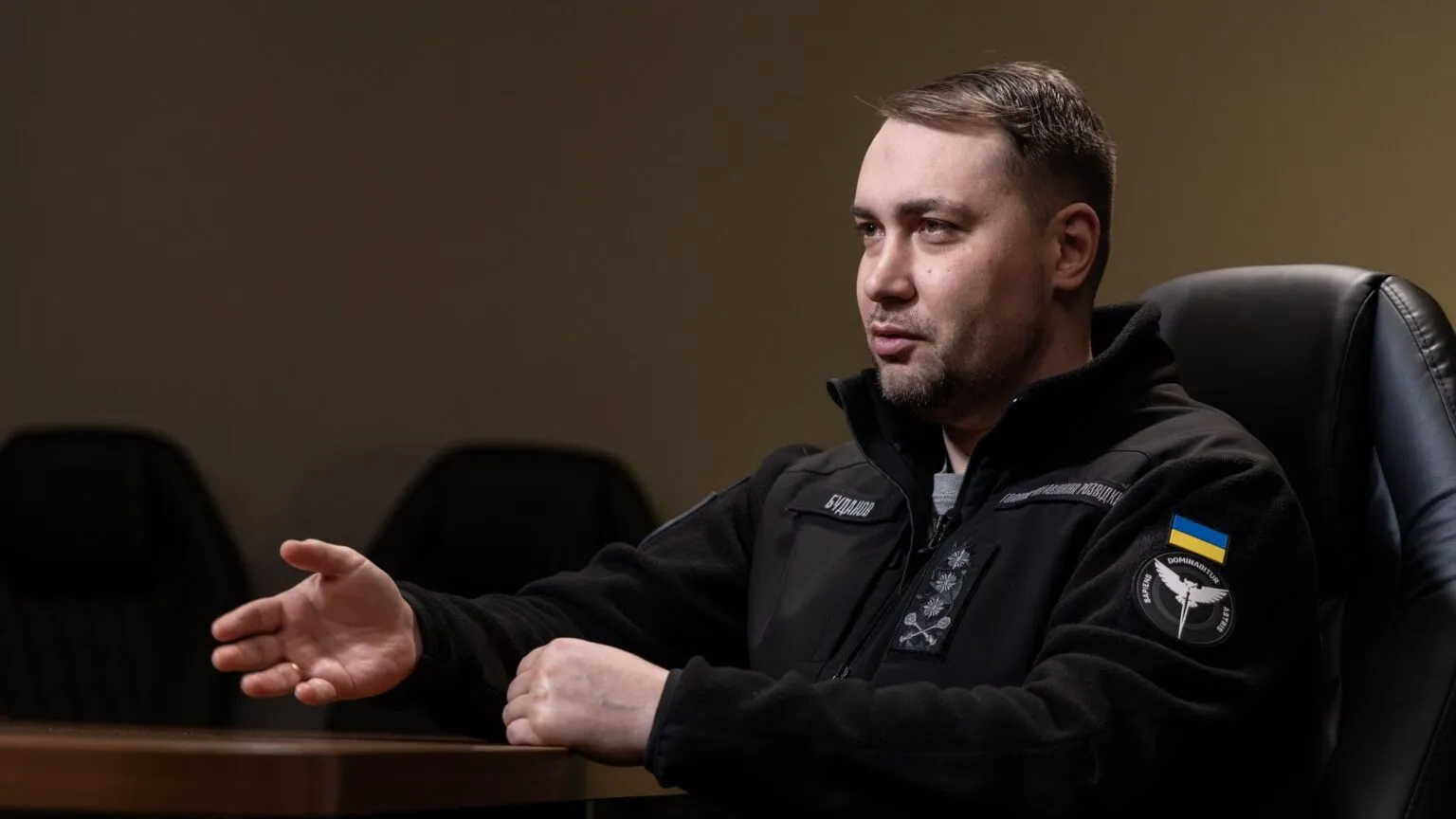
Kyrylo Budanov, the head of Ukraine's Office of the President, said Poland is preparing a series of "immature escalatory steps" before the 11 July anniversary of the Volyn tragedy, and that Ukraine will accept ultimatums from no one, in an exclusive interview with RBK-Ukraine published on 7 July.
The remarks put the head of Ukraine's most powerful appointed office publicly bracketing a European Union and NATO ally with Russia — days after Polish Prime Minister Donald Tusk said Kyiv should take the first step to ease the dispute, and while Warsaw's president threatens to obstruct Ukraine's path into the EU over the same wartime quarrel. Poland is Ukraine's indispensable overland route for Western aid, which makes the timing, not only the language, the problem: the friction is sharpening at the point Kyiv can least afford a rupture with Warsaw, already the lowest since the full-scale invasion.
"No offense to Poland"
Budanov drew the comparison himself. "Ukraine will not accept ultimatums from anyone in this world. The last one who tried to give us an ultimatum was the Russian Federation. No offense to Poland, but it is somewhat more powerful than Poland. And we still did not accept it," he said, adding that Kyiv "should not be spoken to through an ultimatum."
He said Ukraine does not intend to act preemptively, but would answer concrete moves rather than absorb them. Asked whether Kyiv could do anything to de-escalate, he said there was no reason to make wrong steps ahead of Warsaw's: "Nobody is going to sit in silence."
A quarrel with a hard date
The rupture traces to 26 May, when President Volodymyr Zelenskyy signed a decree naming a special operations unit "Heroes of the UPA," after the Ukrainian Insurgent Army. Poland recognizes the 1943–1945 killings of Polish civilians in Volhynia as genocide; Ukraine regards the UPA mainly as a movement that fought Soviet rule for independence. Polish President Karol Nawrocki responded by stripping Zelenskyy of the Order of the White Eagle, Poland's highest honor; Zelenskyy returned it by post. Budanov, who visited Warsaw in June for talks that produced no public breakthrough, now expects the hardest phase still to come, with 11 July as the trigger.
Tusk has called the standoff a strategic mistake and said Ukraine should move first to calm it. A recent poll in Poland found nearly half of respondents blaming Ukraine for the escalation.
What is at stake beyond the symbolism
Warsaw recently scrapped a planned transfer of MiG-29 fighters to Ukraine, and Nawrocki has said Kyiv has no place in the EU until it answers for Volyn — a threat that outruns his formal powers but shadows accession all the same. Rzeszów airport in south-eastern Poland remains a primary hub for Western military aid.
Budanov cast the coming days as part of a wider escalation he expects to break one way or the other. "Peak escalation always leads either to catastrophe or to de-escalation," he said. "I hope we go toward de-escalation."


