

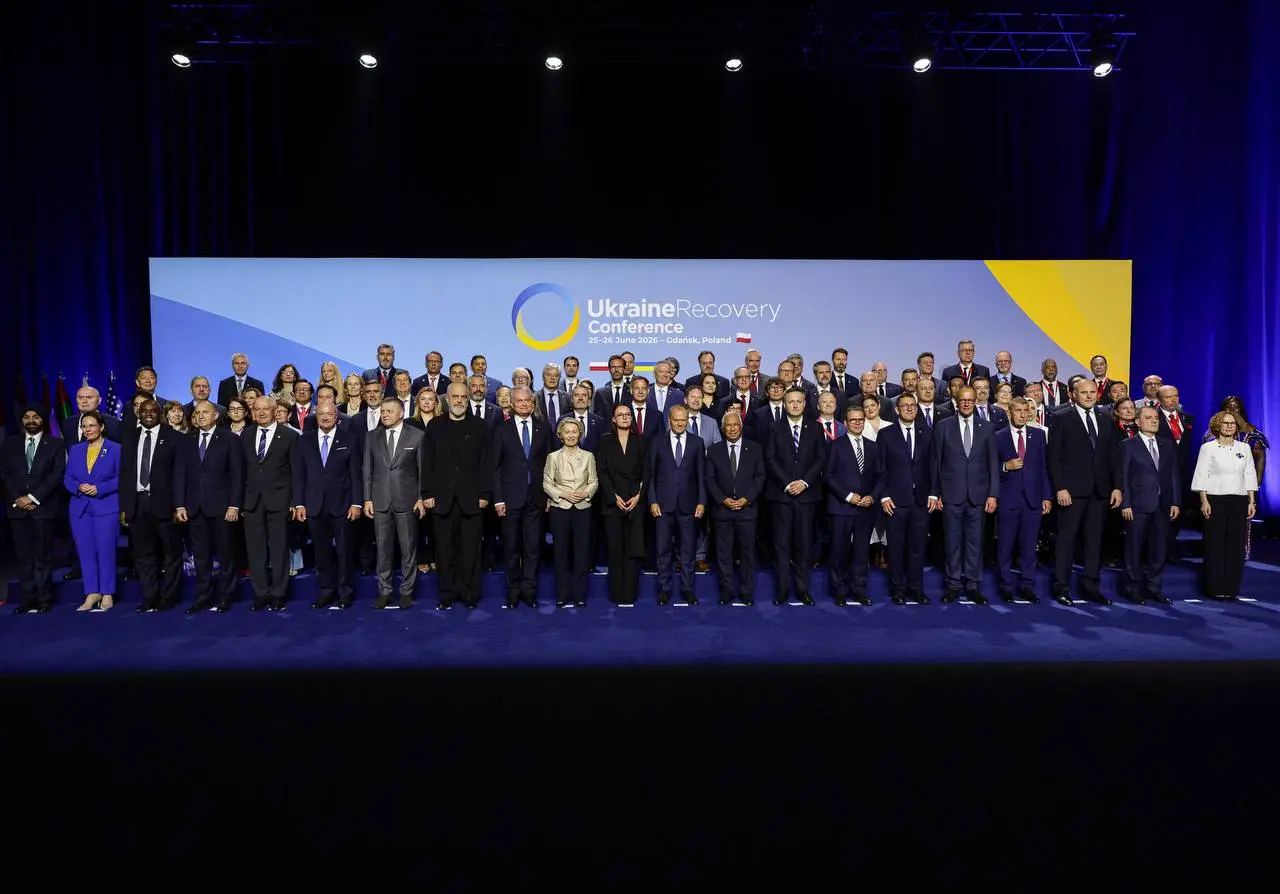
Gdansk — More than 5,000 politicians, diplomats, investors, and representatives of international organizations gathered in the Polish city of Gdańsk on 25 June for the opening of Ukraine Recovery Conference 2026 (URC), the flagship international event dedicated to Ukraine’s reconstruction.
Yet from the first hours of the conference, it became clear that this year’s discussions would focus on more than rebuilding Ukraine.
The event is taking place at a moment when Polish-Ukrainian relations are experiencing one of their most serious crises since the start of Russia’s full-scale invasion. The most visible symbol of the tensions was the absence of both presidents.
The past weeks have been one long and sad line of tit-for-tat measures between Warsaw and Kyiv, with awarded medals and ordens being publicly and demonstratively returned to sender, Polish nationalists making much political hay on Ukrainian president Zelensky’s decision to approve the naming a Ukrainian military unit after the Ukrainian Insurgent Army (UPA). This Spring has also seen an increase of anti-Ukrainian incidents in Polish society.
President Volodymyr Zelenskyy decided several days ago not to attend the conference in person. Polish President Karol Nawrocki, meanwhile, was not invited by either Prime Minister Donald Tusk or the Ukrainian side. As a result, neither the president nor representatives of his office came to Gdańsk.
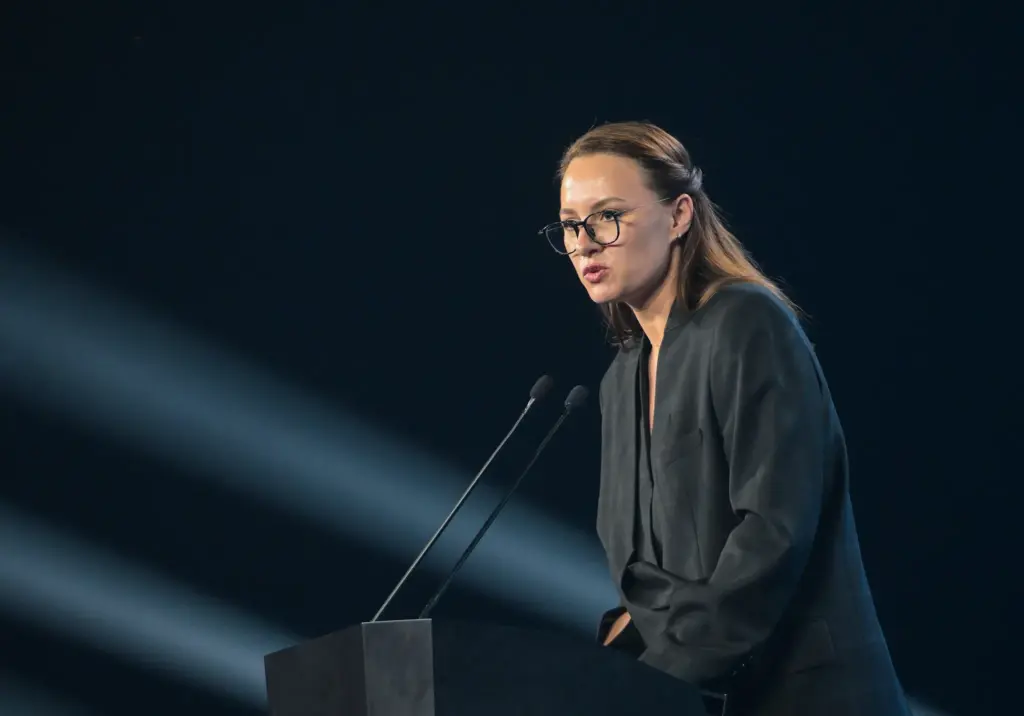
Officially, speakers focused on investment, reconstruction, European integration, and long-term support for Ukraine. Polish Prime Minister Donald Tusk, European Commission President Ursula von der Leyen, and Ukrainian First Deputy Prime Minister Yuliia Svyrydenko all emphasized solidarity and the need to work together on Ukraine’s future.
Many participants acknowledged that holding the conference in Poland against the backdrop of the current diplomatic dispute felt unusual.
“Of course, people are talking about the tensions,” one representative told Euromaidan Press. “But everyone who came here came to work on Ukraine’s recovery.”
“For Polish business, this is not the ideal moment,” said a participant in the conference’s business forum. “But nobody wants this situation to become a long-term problem.”
Another attendee involved in reconstruction projects said that most participants viewed the crisis as temporary. “Poland and Ukraine have invested too much in this partnership. People here hope both sides will return to close cooperation as soon as possible,” he said.

Despite the political tensions, most discussions throughout the day remained focused on Ukraine’s long-term future. In that context, Swedish former Foreign Minister Carl Bildt drew a comparison between Ukraine’s prospects and Poland’s economic transformation.
“If you look at the long-term potential of Ukraine, it can clearly become a new Poland in terms of economic development,” Bildt said on the sidelines of the conference.
Trending Now
The conference began at a fast pace, with dozens of panel discussions, business meetings, and negotiations between government officials and investors throughout the day. The Ukrainian side expects new agreements and multi-billion-euro support programs to be announced during the event.
At the same time, deteriorating relations between Kyiv and Warsaw are already affecting calculations on both sides. Polish companies had hoped that URC would strengthen their position in Ukraine’s future reconstruction efforts. Now, many observers acknowledge that political tensions have complicated that picture.
Former Polish Ambassador to Ukraine Bartosz Cichocki warned that if Poland loses influence due to the current crisis, it could be excluded from future discussions on Ukraine’s reconstruction. Several days before the conference, Tusk also argued that Poland should be involved in any future negotiations concerning Ukraine and said Warsaw would not simply accept arrangements made without its participation.
Meanwhile, the European Union announced the transfer of a first €3.2 billion tranche from its broader €90 billion support package for Ukraine. Additional funding for Ukraine’s drone production sector is expected to follow in the coming days.
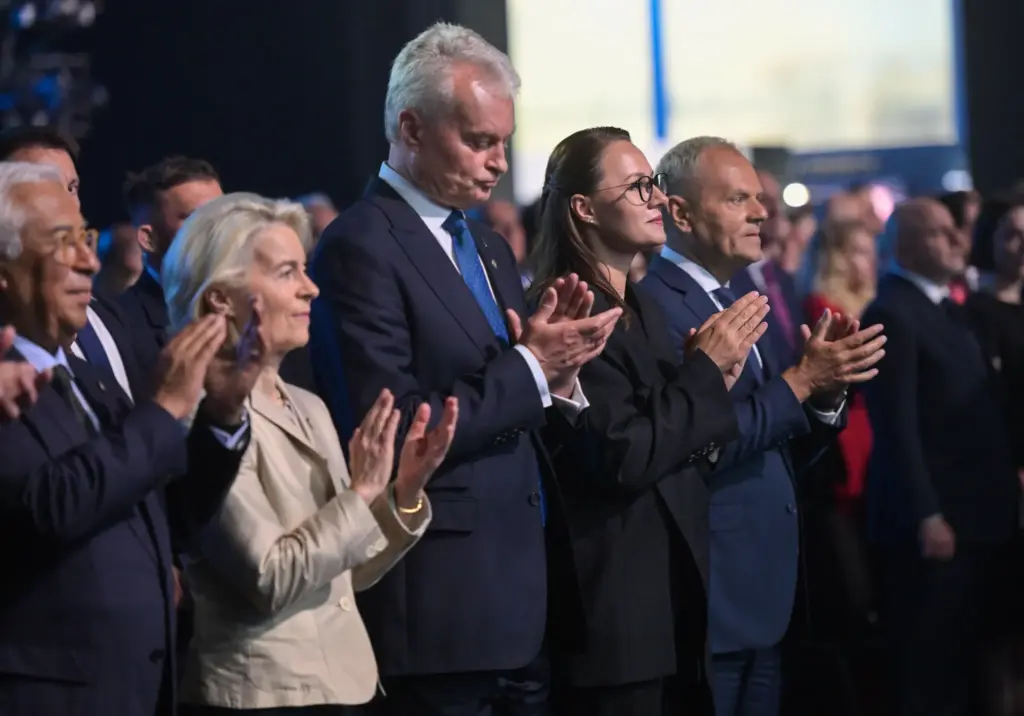
The first day of the conference highlighted a striking paradox. Inside the halls of AmberExpo, discussions focused on investment, reconstruction, and Ukraine’s future in Europe. Yet one of the most frequent topics inside conversations remained the future of relations between Kyiv and Warsaw.
For many participants, the key question is no longer only how Ukraine will rebuild after the war, but whether two countries that became some of each other’s closest partners after 2022 can quickly move beyond their current political dispute.
-Taisiia Vivdych, EP special correspondent at the URC
Read Also
-
“A warning to companies that remain”: Russia takes control of Nestlé and Auchan’s assets – companies that stayed in Russia following the full-scale invasion of Ukraine
-
“I can travel back to Finland and be safe. That is a luxury”: Sanna Marin on the Russian strike that stopped her train from Kyiv
-
Ukraine put its own peace proposals on the table as two US envoys reached Kyiv for the first time


