Latvia's new prime minister Andris Kulbergs said the country must sever its remaining economic ties with Russia and Belarus, but signaled that pharmaceutical exporters will likely be exempted from the cutoff on national security grounds, more than 4 years into Russia's war on Ukraine.
At a 2 June 2026 press conference after a Cabinet meeting, Kulbergs told reporters he is "iron-clad" on cutting the link, calling it "unnecessary dependence that only worsens the situation," Delfi reported. He has tasked Foreign Minister Baiba Braže (New Unity) with finding an implementation route in coordination with the European Union, "because we are not isolated."
Pressed on whether the planned halt to imports and exports would carry exemptions, Kulbergs confirmed it would—though he could not say whether the carve-out would apply only to pharmaceuticals or to other sectors as well. "These are critical companies with manufacturing capacity and knowledge. They are essential to us in a critical situation, including for defense, and these capabilities must be protected," he said. "I am speaking here from a security viewpoint. It cannot be a 'black or white' question."
A reversal from opposition demands
Until last month, Kulbergs's United List sat in opposition and publicly accused the ruling coalition of foot-dragging on the same policy. In March 2024, the party tabled a Saeima motion demanding the Cabinet draft a full halt to economic cooperation with the aggressor states. The parliamentary majority rejected it, adopting instead a counter-text from then-deputy speaker Zanda Kalniņa-Lukaševica (New Unity).
Kulbergs derided the Kalniņa-Lukaševica text from the rostrum at the time, calling it a "limp document" stuffed with verbs like "express," "indicate," "call on," and "remind." "Nowhere is it written what the action is, what the date, what the deadline," he said. "It is a document with which you want to dump responsibility onto the EU, so that the EU deals with it."
The pharma exception would chiefly benefit Grindeks and Olpha (formerly Olainfarm), Latvia's 2 largest drugmakers. Both appeared on the Economics Ministry's December 2025 list of remaining Russia exporters; Grindeks owner Kirovs Lipmans has said the firm is winding down its eastern sales and now sells only 6 products in Russia. Medicines are not covered by EU sanctions on Russia or Belarus.
Latvian exports to Russia totalled €962.5 million in 2025, down 7.3% year-on-year, while imports from Russia fell 68.2% to €125.6 million, Central Statistical Bureau data showed. Exports to Belarus were €132.5 million, down 7.1%. The number of Latvian companies exporting to Russia has fallen from almost 400 in 2023 to 128 by late 2025, according to the Economics Ministry.
A government born of a drone crisis
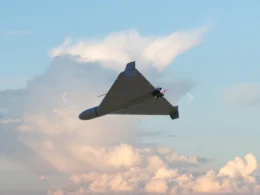
Kulbergs took office on 28 May 2026 after the previous coalition led by Evika Siliņa (New Unity) collapsed over its handling of 2 Ukrainian-launched drones that crossed into Latvian airspace from Russia. Defense Minister Andris Sprūds resigned first; Siliņa stepped down on 14 May 2026 after the Progressives withdrew from the coalition.
The new 4-party government—United List, New Unity, National Alliance, and the Union of Greens and Farmers—has roughly 4 months in office before the next Saeima elections on 3 October 2026. Whether Braže can deliver an EU-coordinated trade halt in that window, and whether the pharma carve-out widens to other sectors, remains open.