

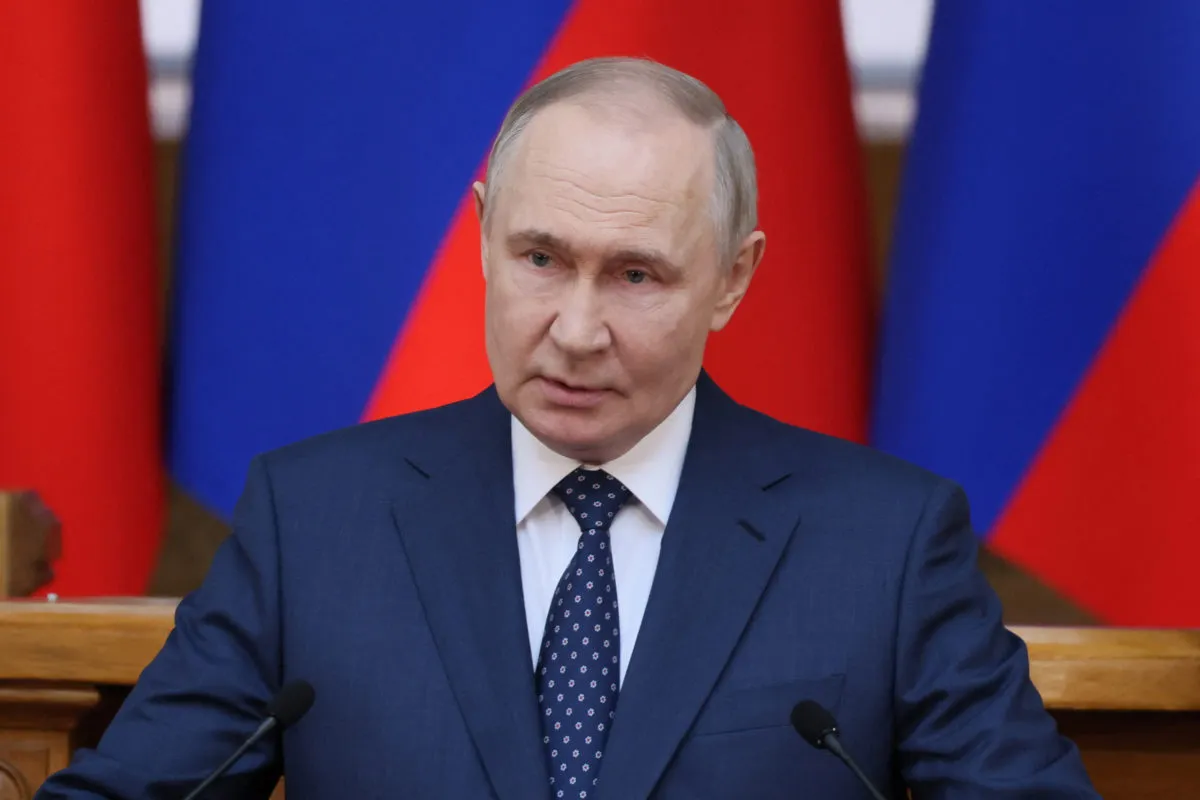
Russian President Vladimir Putin warned that Armenia could face a "Ukrainian scenario" over its European integration ambitions, speaking at a press conference after the Eurasian Economic Union (EAEU) summit in Astana on 29 May, The Moscow Times reported.
During the press conference, Putin also responded to Lithuanian Foreign Minister Kęstutis Budrys, who had said that NATO would be capable of completely destroying Russian bases in Kaliningrad Oblast in the event of a conflict. The Russian leader replied that Moscow would raze to the ground anyone who attempted such a strike.
Commenting on Yerevan's EU aspirations, the Kremlin leader drew a parallel with Ukraine, claiming that "the crisis in Ukraine began with attempts by Ukraine to join the EU" and that Moscow had not objected at the time.
Years of strain between Moscow and Yerevan
Relations between Russia and Armenia have been in deep crisis. Yerevan has accused Moscow of failing to meet its security obligations and has moved noticeably closer to the West, effectively freezing its participation in the Russian-led Collective Security Treaty Organization. At an earlier press conference in May, Putin had already pressed Armenia to hold a referendum choosing between the EAEU and the EU, framing a split as a "soft, intelligent and mutually beneficial divorce" — a characterization Prime Minister Nikol Pashinyan rejected, saying Armenia had no plans for such a vote. Pashinyan skipped the Astana summit, delegating Deputy Prime Minister Mher Grigoryan and citing the parliamentary election campaign.
Washington steps in
The warnings land as the United States deepens its ties with Yerevan. On 26 May, Secretary of State Marco Rubio visited the Armenian capital and signed a strategic partnership charter, a memorandum on critical minerals, and a framework on the Trump Route for International Peace and Prosperity (TRIPP) with Foreign Minister Ararat Mirzoyan. The corridor would run a roughly 43-kilometer road and rail route through southern Armenia, linking Azerbaijan to its Nakhchivan exclave and opening a transit path for US energy companies toward Central Asia; under the framework, a US-backed company would hold a 74% stake for an initial 49-year term, with Armenia retaining full sovereignty over the project areas. Days later, President Donald Trump endorsed Pashinyan ahead of the 7 June parliamentary election in a Truth Social post, calling him "a great friend and Leader" and pledging to break ground on the corridor.
Moscow has criticized Armenia's westward course, while Yerevan maintains that its foreign policy is not directed against Russia. The 7 June vote is widely viewed as a test of Pashinyan's pro-Western direction.
Read also
-
Ukraine, long keeping its weapons at home, now lets 18 arms makers export, approving over 90% of more than 400 applications
-
EU imports record 12.18 million tons of Russian Arctic LNG in nine months, 9.5% more than year earlier — research group
-
Deals with dictators lead to hell: Estonia’s PM urges Europe to help Ukraine destroy Russia’s refineries after Washington eased sanctions on diesel


