


Imagine a village in a European country on the border with Russia. Green men without insignia enter. They capture the village and throw three people in the basement—the mayor, the sheriff, and one other. For 20 armed people, this is easy.
Now imagine it is a NATO country. The government sends a note of protest, calls in the Russian ambassador. Putin says: "It's not us, we don't know who it is."
What does the country do?
"Declare an anti-terrorist operation," says Captain Oleksandr Yabchanka, walking through the scenario at GLOBSEC in Prague on 22 May 2026.
"These are armed people, so armed people in armoured vehicles or helicopters are supposed to go there and clear this area. With Russia's current technical capabilities, it's extremely easy to create a kill zone of 20 kilometres near this territory and I guarantee you that nobody will enter this zone. What will the country do in this case? Are they going to bomb the village? Are they going to bomb the Kremlin? Maybe they'll invoke NATO's fifth article? Fifth article will say, well, Russia didn't attack you. This is a terrorist operation; you have to fight the terrorists."
Yabchanka, 45, commands the Unmanned Systems Control Platoon of the Da Vinci Wolves regiment. He builds the systems that create the kill zones he is describing. He is among the people on the continent best qualified to explain why the scenario cannot be solved by the equipment Europe has and the doctrines it has written.
He is also the person making sure Europe hears it.
"I'm not saying that it will be like that. I don't understand anything in international politics. But from the technical side, the Russians can do it in a cinch. That's why I'm going around and telling about it. To decrease the chances of it actually happening."
The kill zone
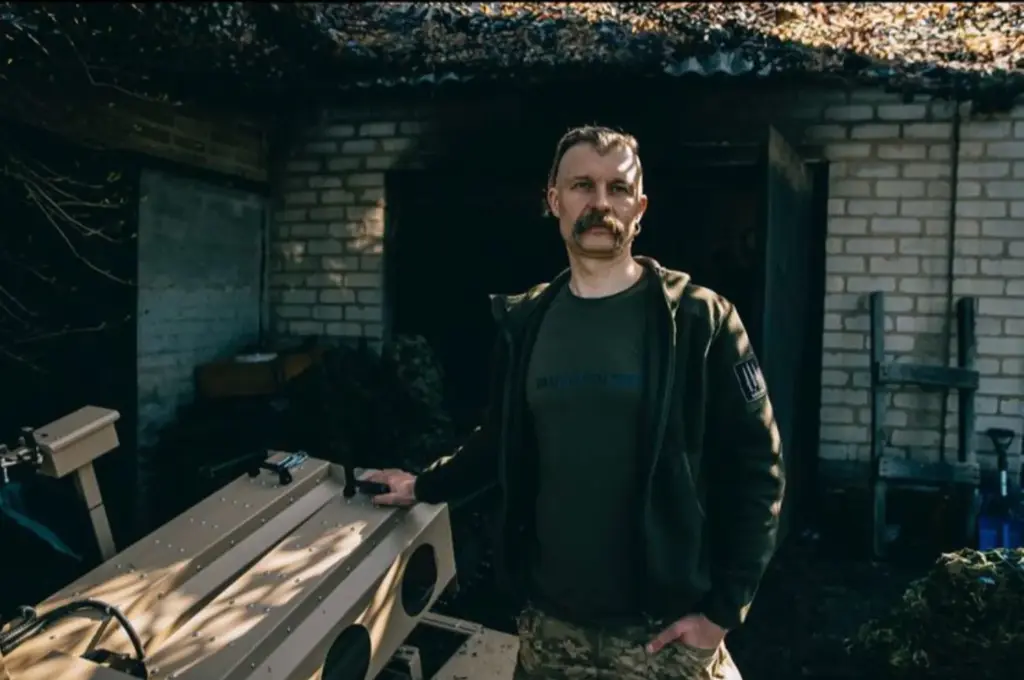
The village scenario rests on operational reality that has hardened around Ukraine's front lines over the past two years. Yabchanka describes it as a zone, not a line.
"20, 30 kilometers," he says. "At point zero, you have a 98% likelihood that your car, an armored vehicle, will be destroyed. Only infantry can survive there if that infantryman is well hidden. But the infantryman needs ammunition and food and water—both theirs and ours. So our task is to find and destroy their infantryman and destroy all of his logistics as far back as possible. And they have the same goal."
This architecture would make the village uncapturable. Not the 20 men in the village—those are a forensic problem. The 20-kilometer belt around the village, into which no armored vehicle can drive and survive, is the strategic problem. Helicopters fare no better. The zone is built from cheap reconnaissance drones, mid-range strike drones, and increasingly the robotic ground systems Yabchanka's units are pioneering. Not a wall, but a saturated battlespace.
The depth is extending. "We lunged ahead regarding the depth by which we can strike them in the mid-strike. Now our middle strike drones are pounding the Russians in Mariupol. So just imagine, their southern route is already under fire. We're not severing their logistics yet, but we're severely complicating it. But that is only a temporary advantage."
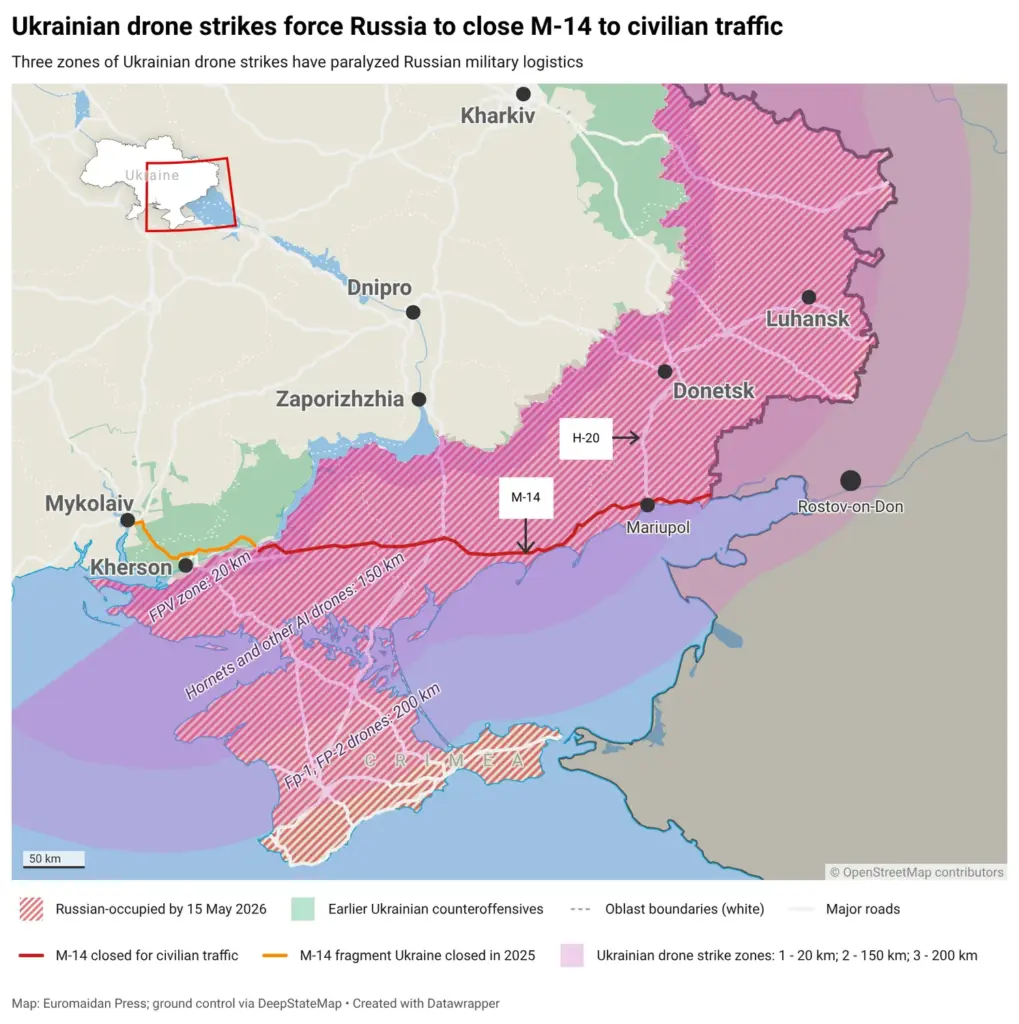
Temporary because the kill zone is a moving frontier, and both sides extend it constantly. The question for Europe is whether anyone is keeping up.

The Silicon Valley in the dugouts
The systems that create the zone are not being conceived by defense ministries or established manufacturers. They are coming from workshops 20 to 40 kilometers behind the line of contact.
"If there is a military Silicon Valley anywhere, it is in that strip near the front line," Yabchanka says. "Just imagine, our battalion has five workshops. And every battalion has their own labs. Then we have separate workshops at the brigade level. That's thousands of R&D developers."
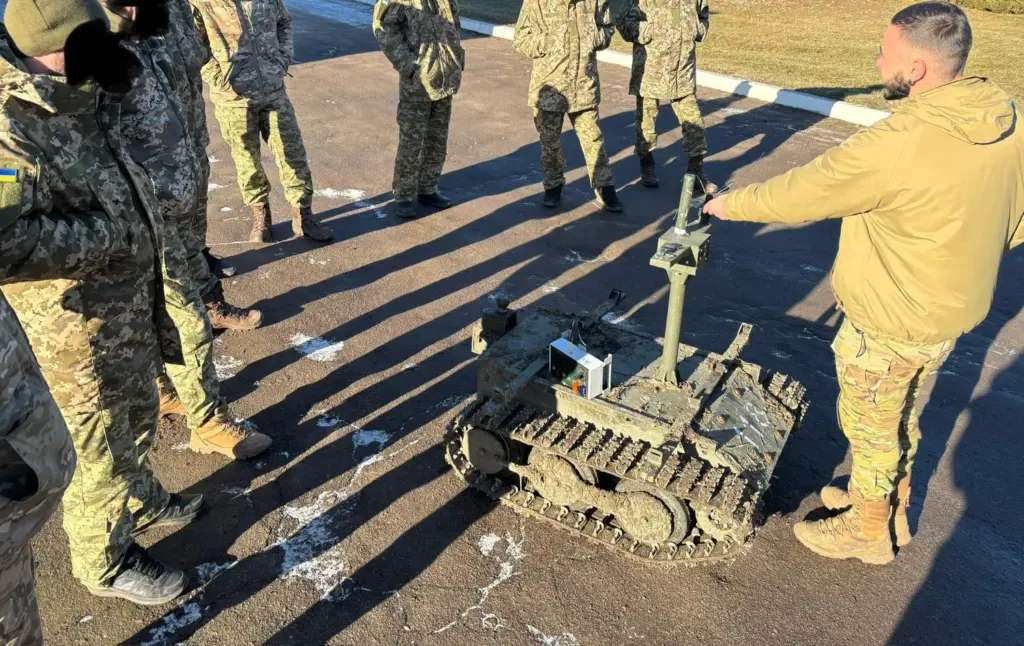
The model is not formalized. It runs on volunteer initiative, Signal chats with manufacturers, and an army culture that does not require official position to authorize work. "In the Ukrainian army, if you are a person with an active civic position, you can do many, many things. Even if you aren't in the official position, don't have the rank."
The workshops talk constantly to producers—Ukrainian and foreign—over WhatsApp and Signal groups. With each producer, a separate group. Videos go back and forth: a soldering iron in the workshop, a robot working on the positions.
The Ukrainian drone ecosystem behind these workshops is dominated by a few dozen players with deep state ties, but the frontline iteration is on the timescale of days regardless.
The workshops are small, dispersed, hidden. "Usually it's hidden, we try to hide it underground."
The strategic warning for Europe lands here, and it comes unprompted.
"When I travelled abroad and saw the foreign manufacturing, I understood that this is not a good story. It's going to get targeted with a Shahed in the best case. When the munitions are so cheap, like a Shahed for $50,000, and your manufacturing is just on the open ground, then this is very dangerous. I tell that to all of our allies: be careful!"

European defense manufacturing is consolidated, surface-built, and largely undefended against the category of cheap mass-precision munitions Russia has industrialized. Yabchanka has seen the facilities. He is telling the European audience that they are targets. The strategic class talks about defense industrial scale-up; the practitioner is telling them the form factor is wrong.
The low sky
Trending Now
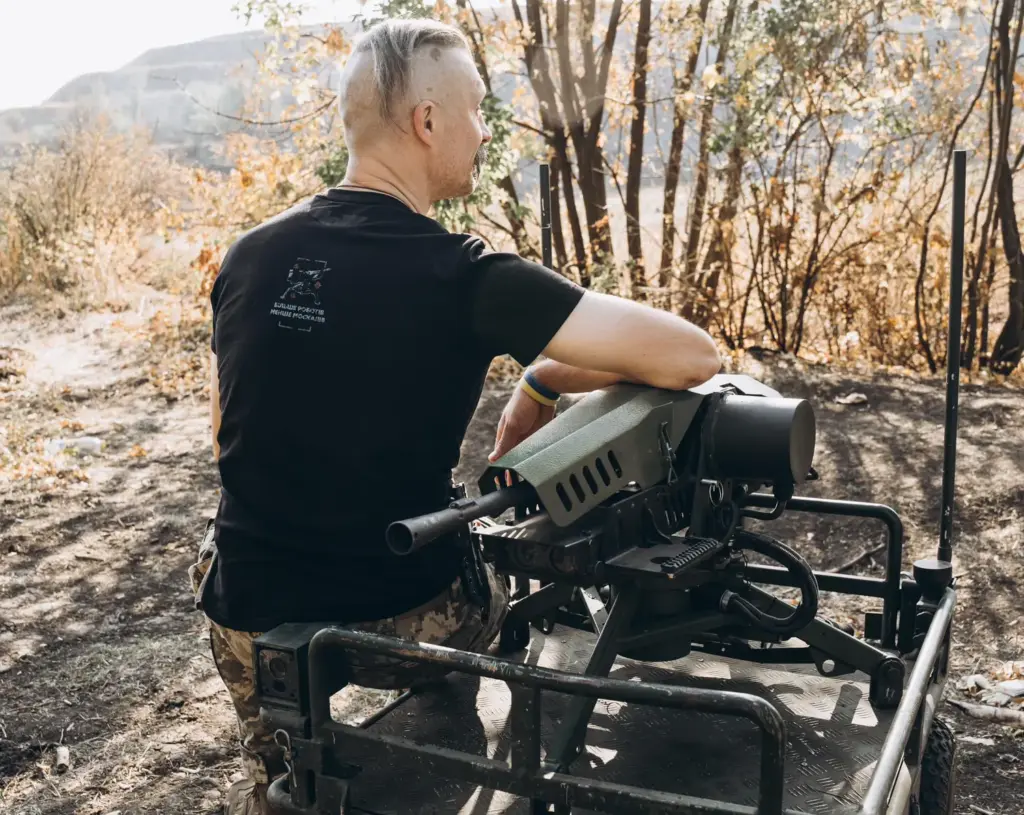
The current developmental priority, Yabchanka says, is the low sky—the airspace below traditional radar coverage, roughly the first few hundred meters above the ground, where small drones operate and where most legacy air defense was never designed to look.
"What am I dealing with right now? It's to protect the low sky. I hope that we will be ahead of the Russians there, because they are also searching how to protect their low sky. But does military Europe pose itself such a question? It's not any secret, there is plenty stuff about it on the internet."
There is no mystery to the engineering. Da Vinci Wolves and other advanced brigades are mounting robotic counter-drone systems—turrets on ground platforms that engage incoming drones. The Russians are working on similar systems, and on mounting electronic warfare packages on their own ground robots. Both sides improvising rapidly. The "secret" lies in nothing more than who has the means to build at scale.
"And little Ukraine has fewer capabilities than huge Russia. But huge Europe has much more capabilities than big Russia."
How a paediatrician built it
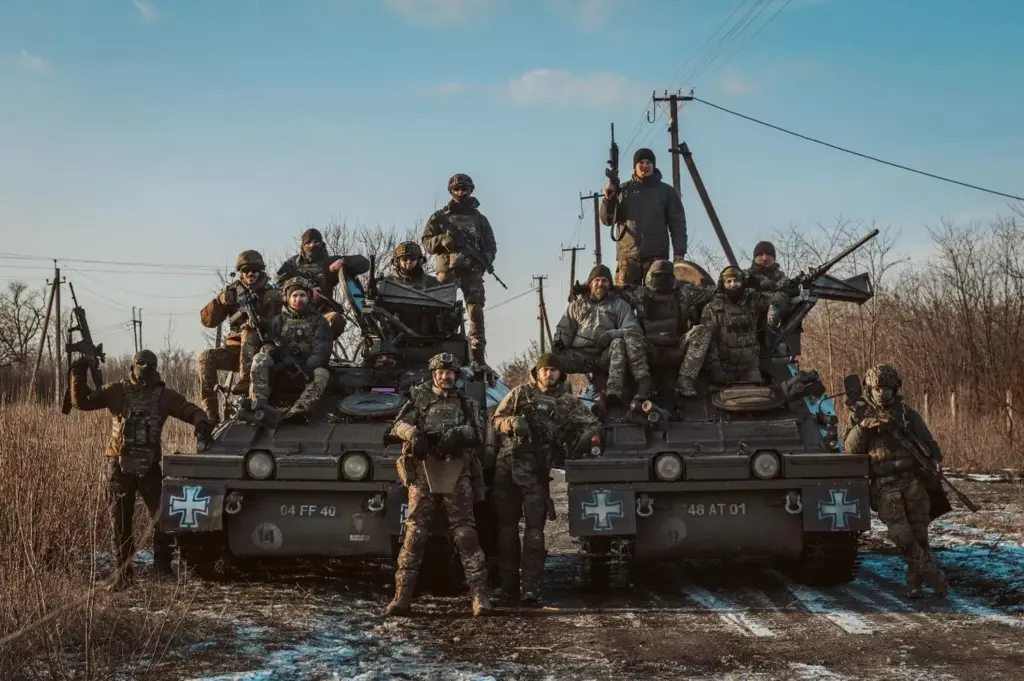
Yabchanka was a paediatrician for eight years. He participated in the Euromaidan revolution in 2014. He stayed in Kyiv to work on medical reform, served as the Health Ministry's spokesperson, then taught at the Ukrainian Catholic University in Lviv.
When the full-scale invasion came, he joined the volunteer group Honor with friends from civil society. After the Russians fled Kyiv Oblast, the group reformed under what is now Da Vinci Wolves.
Yabchanka started as a medic. He quickly understood "that it is technologies what decides the fate of the war." He learned to pilot Mavic drones. From May 2022, he was conducting battle missions, coordinating artillery strikes over Signal chats with hundreds of strangers—"you say like, 'Hey, I found a target,' and the artillerist writes you, 'Let's go to direct messages.'"
By 2023 he was commanding the Honor infantry company. By summer 2024, the unit was deploying robotized machine-gun turrets. He now commands a platoon dedicated to unmanned systems and helps build the doctrine.
"That's the answer to why the Ukrainian army is developing so quickly," he says. "Because we want to stay alive."
Big Europe of military capabilities
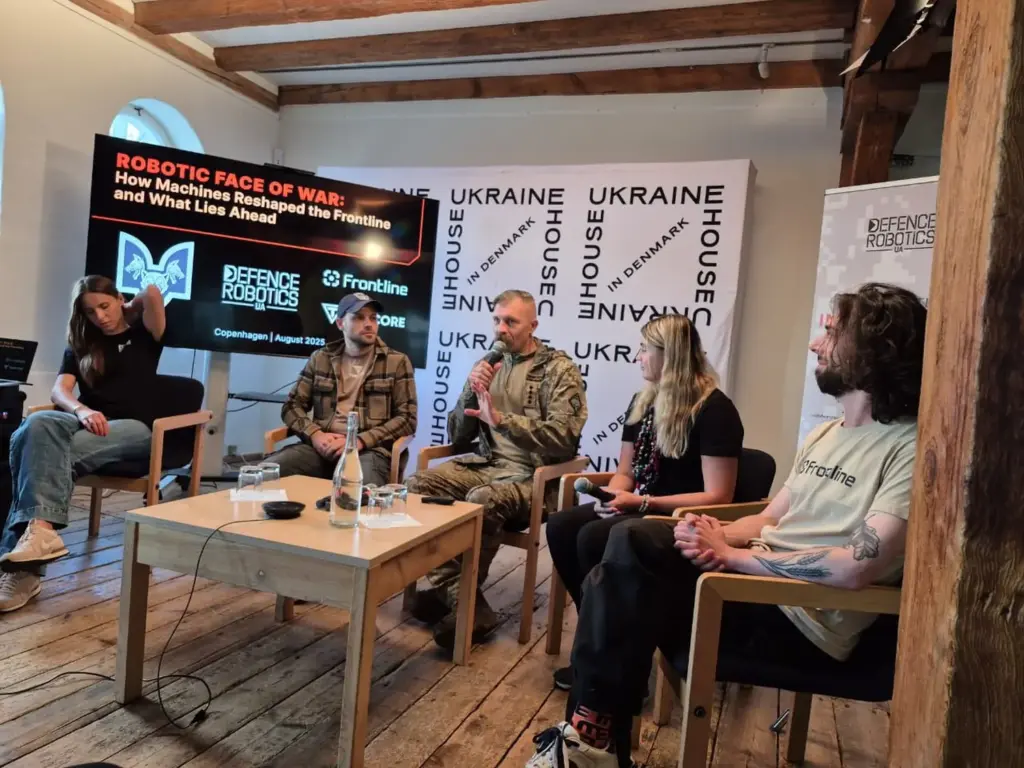
Yabchanka's international work runs through a fund called defencerobotics.org.ua. Over the past year he has travelled "across all of Europe and especially the Europe that borders Russia." Not in a position of international relations. He writes proposals, takes them to his command, gets approval, finds the time and resources, goes. "But whoever initiates must carry it through. If you have the idea, then it's your job to go implement the idea."
The point is prevention.
"Russia does not attack only in the case that it understands that it will get pushed back. That it will get punched in the face."
Not abstract. The village scenario inverted: Russia opens kill zones around vulnerable territories because nothing prevents it. The remedy is to make prevention credible. That requires Europe building, deploying, and integrating the same categories of systems Ukraine has developed under fire.
"I think that our possibilities are lying in close conjunction with our allies. We need to create this big Europe of military capabilities."
A continent that can build at the relevant scale, in the relevant form factors, on the relevant timelines. A continent whose manufacturing is dispersed and hidden because it has learned what happens to consolidated factories under Shahed strikes. A continent that has answered the low-sky question. A continent where a NATO state on the Russian border is not a target Russia can solve with 20 men and a kill zone.

The forcing question
Yabchanka returns to the village.
"I'm not saying that it will be like that. I don't understand anything in international politics. But from the technical side, the Russians can do it in a cinch. That's why I'm going around and telling about it. To decrease the chances of it actually happening."
He is a frontline commander who has built, over four years, the operational doctrine that makes the scenario credible. He is also the only person at GLOBSEC Forum 2026 posing the scenario as an operational question rather than a strategic abstraction.
Captain Oleksandr Yabchanka commands the Unmanned Systems Control Platoon of the Da Vinci Wolves regiment, a Ukrainian Ground Forces unit known for early adoption of robotized combat systems. The fund defencerobotics.org.ua supports the regiment's work and organizes its international engagement. Yabchanka spoke at GLOBSEC Forum 2026 in Prague, 21–23 May 2026
Read also
-
What if Russia uses nuclear weapons? Can we say Ukraine brought peace to world? Norwegian professor who nominated Zelenskyy and Ukrainians for 2026 Nobel Peace Prize takes on tough questions
-
NATO no longer deters Russia. A new coalition could
-
The US Army’s former commander in Europe is “withholding applause” for Trump’s Patriot pledge—and expects no interceptors before winter.
This material was produced as part of a project by the Institute of Mass Information with the support of the Ministry of Foreign Affairs of the Netherlands. The content of this publication does not reflect the official position of the IMI or the Kingdom of the Netherlands.


