

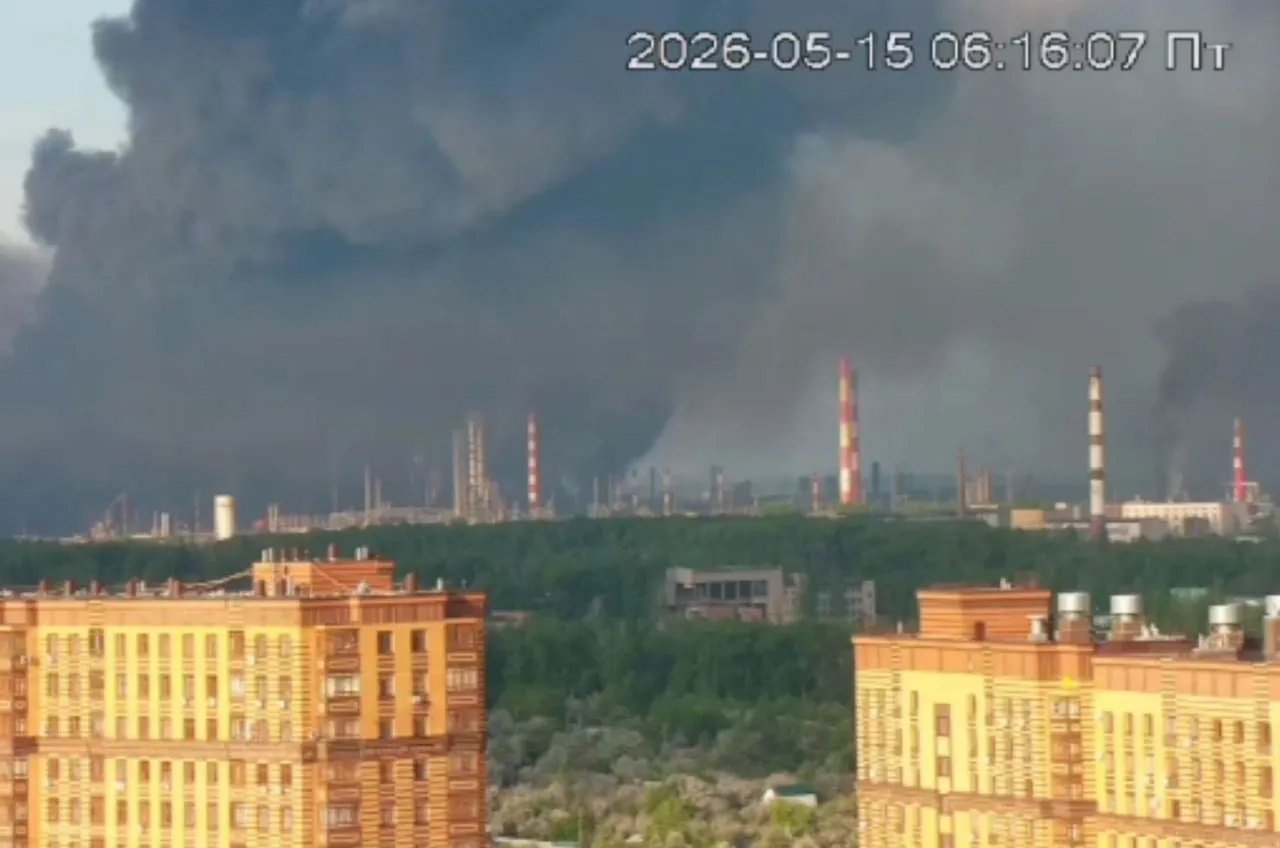
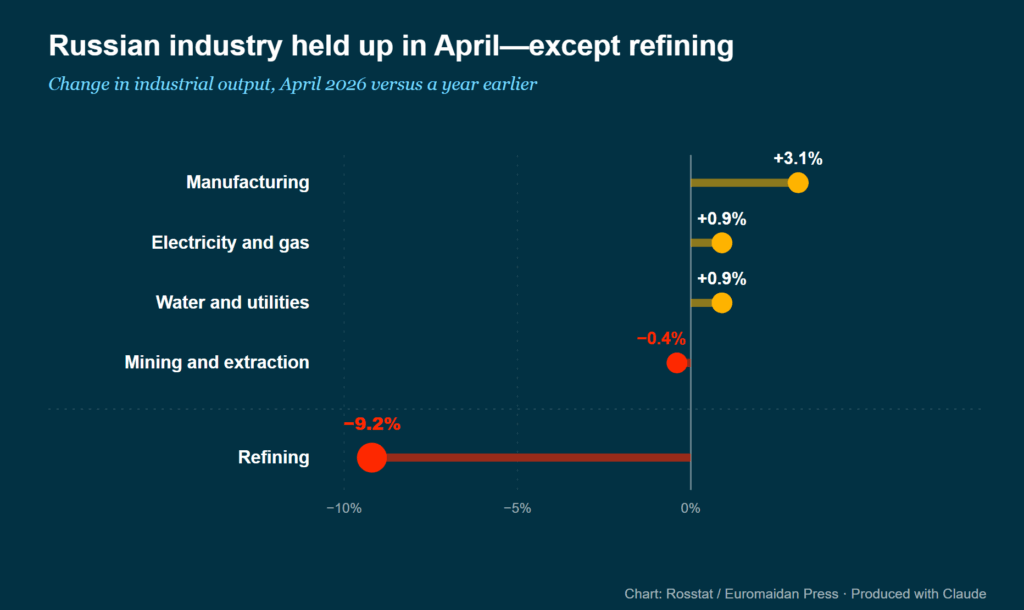
Ukrainian drone strikes have pushed Russia’s fuel output down far enough to surface in Moscow’s own official statistics—even after the Kremlin stopped publishing how much oil and fuel the country makes. Rosstat’s April report still shows output of coke and oil products—essentially what refineries produce—down 9.2% from a year earlier and 11.3% from March.
The refineries Ukraine keeps hitting turn crude into diesel, gasoline, and jet fuel.
Russia is among the world’s biggest oil and fuel exporters, and the refineries Ukraine keeps hitting turn crude into the diesel, gasoline, and jet fuel the General Staff calls critical to the enemy army’s logistics.
Kyiv’s aim, Bloomberg reports, is to cut the windfall Moscow is reaping from the Iran-war rally in oil prices. The campaign struck Russian oil sites more than 180 times in 2025, cutting refining capacity by about a quarter and forcing gasoline export bans at home. This time, the damage showed up in Moscow’s own numbers.
The number Rosstat tried not to report
Russia pulled crude oil output from public statistics with a 2023 decree and stopped reporting oil products volumes as well.
Across the rest of Russian industry, output held up: manufacturing as a whole ran about 3% higher than a year before.
But Rosstat’s own report still carries a production index for coke and oil products, and in April that index fell to 90.8% of its year-earlier level and to 88.7% of March’s—down 11.3% in a single month. Across the rest of Russian industry, output held up: manufacturing as a whole ran about 3% higher than a year before. The fuel sector was the outlier.
Over the first four months of 2026, the sector was down just 2.7% on the year. Almost all of that landed in April. After stripping out seasonal swings, the Russian research group Tverdye Tsifry—“Hard Numbers”—put the single-month fall at 8.5%. The figures exclude occupied parts of Ukraine, which Rosstat counts as its own.
What the strikes did
Ukraine hit Russian oil targets—refineries, export terminals, and pipeline pumping stations—at least 21 times in April, the most in any month since December 2025, Bloomberg reported, counting public statements from both sides.
Three attacks in two weeks halted operations and set fires that burned for days.
Nine or more of those strikes hit refineries, and average refinery runs fell to 4.69 million barrels per day, the lowest since December 2009, on estimates from the analytics firm OilX.
Trending Now
At Rosneft’s Tuapse refinery on the Black Sea, three attacks in two weeks halted operations and set fires that burned for days—triggering an environmental crisis around the plant, with oil-product spills, polluted rain, and toxic air; authorities told residents to stay indoors and avoid unfiltered water.
With port attacks easing, Russia raised seaborne crude exports in April, and its Soviet-era pipeline network rerouted around the damaged pumping stations.
But the blow did not fully land. With port attacks easing, Russia raised seaborne crude exports in April, and its Soviet-era pipeline network rerouted around the damaged pumping stations, with no lasting impact on domestic supply.
The squeeze is on refined fuel, not crude—and because Russia is a key diesel exporter, the lost output presses on a global fuel market that the Iran-war oil rally had already lifted.

From refineries to the forecast
Russia’s own forecasters see it too. The Kremlin-linked research center CMASF cut its outlook for Russian oil and oil-products exports—it now expects a drop in 2026 from 2025—and trimmed its forecast for oil and gas output, blaming strikes on ports and refineries, the halted Druzhba export pipeline, and Transneft’s storage filling up.
Moscow moved to ban jet fuel exports for one to two months—its first such curb aimed at big producers like Rosneft and Lukoil.
The cut came even though crude is running more than 50% above last year’s average, lifted by the Iran war—a level the Bank of Russia flagged as it warned the economy slowed more than expected in the first quarter and put 2026 growth at just 0.5–1.5%.
Through May, the strikes kept landing, and Moscow moved to ban jet fuel exports for one to two months—its first such curb aimed at big producers like Rosneft and Lukoil, which the partial export ban running since 31 January had spared.


