


In July, most of Ukraine’s grain left through its Black Sea ports. From 1 to 26 August, after Russian attacks sharply reduced ship traffic, Ukraine exported just 1.42 million tons of agricultural products—about a third of its potential volume. Rail and the Danube carried about 600,000 tons each, Agriculture Minister Taras Vysotskyi said.
The locomotives carrying that cargo are now among Russia’s main targets.
Ukraine now expects to export 38–40 million tons of grain in the 2026/27 season, down from 43 million before the attacks intensified, Agriculture Minister Taras Vysotskyi told Reuters. Agricultural products generated more than half of the country’s export revenue last year.
By 24 August, the total number of damaged locomotives had risen to 492.
Russia now sends camera-equipped drones to search for trains and redirects others toward rolling stock that their operators spot in flight. The campaign is no longer confined to fixed targets such as stations, bridges, and substations.
Ukraine’s railways keep running. Damaged lines often reopen within hours, while buses carry passengers around closed sections. With far fewer ships calling at the ports, each damaged locomotive leaves the railway less room to absorb the next disruption.
Export traffic moves inland
Before the current wave of strikes, the ports of Greater Odesa handled about 80% of Ukraine’s agricultural exports. Rail’s share then rose sharply, but the railway did not carry more grain: Ukrzaliznytsia said 461,000 tons went by rail during the first 25 days of August—67% less than in July and 77% below the corresponding period last year, according to figures reported by Rail.insider. Rail had taken a larger share of a collapsing export flow.
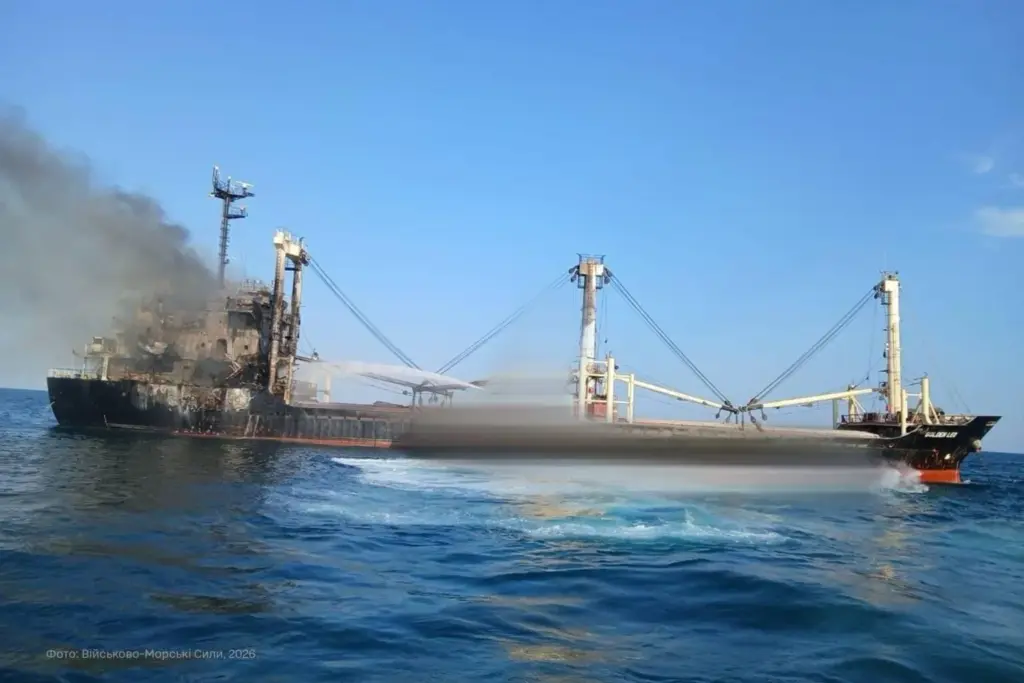
Traffic through the Black Sea corridor collapsed after a series of attacks on civilian vessels in July. One of the deadliest strikes was on the bulk carrier Golden Leo on 19 July, killing 10 people, including a Ukrainian maritime pilot. The ship later sank. On 22 July, for the first time since the sea corridor opened, not a single vessel entered the Odesa ports.

In July, 169 ships entered, but only 7 did so during the first 11 days of August, the Ukrainian Sea Ports Authority told Kyiv Post. By 24 August, traffic had partly recovered. Three or four ships were entering and leaving the ports of Odesa each day. However, cargo volumes remained three to four times lower than before the intensified attacks, President Volodymyr Zelenskyy pointed out.
Maersk and Hapag-Lloyd suspended feeder services to Greater Odesa in late July and early August, with Maersk rerouting imports to Constanța.
The attacks changed the calculations of shipowners and insurers, even though the ports remained formally open. The late-August recovery shows that Russia did not impose a total blockade, but commercial traffic remained far below its previous capacity.
Ukraine normally moves 4 to 4.5 million tons of farm goods a month; the National Bank of Ukraine estimated in July that alternative routes could initially carry about 2.5 million tons a month. That leaves part of the usual flow with nowhere to go this year—about $2.5 billion in export revenue delayed from the second half of 2026 to the first half of 2027.
The Agriculture Ministry estimates that elevators and grain warehouses with nearly 59 million tons of capacity could be full by early November, leaving an 11-million-ton storage shortfall by the end of autumn.

Russia turned the drones on the trains
Russia is going after locomotives to cut the export corridors that tie the industrial regions around Kryvyi Rih, Zaporizhzhia, and the east to Odesa’s ports and the western border, Ukrzaliznytsia CEO Oleksandr Pertsovskyi told Reuters in June. He also described the method: Russia is using drones with video cameras and remote control, which allow operators to hit rolling stock in real time.
The climb is in the quarterly data: nine locomotives hit in the first half of 2025, 119 in the second, and 81 in the first quarter of 2026.By 15 August, Pertsovskyi put the figure at more than 250 damaged in the previous six months.
In the first quarter alone, Russia struck the railway 541 times, about half its total for all of 2025, damaging 1,718 objects across the network. By 24 August, the number of attacks on railway infrastructure in 2026 had reached 1,534, Infrastructure Minister Mykola Kalashnyk said.
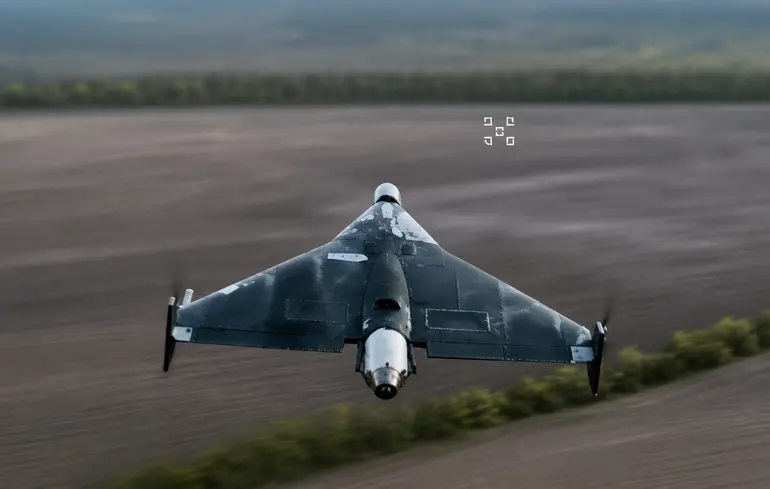
On 19 July, Russia’s Defense Ministry acknowledged a Geran-4 Seeker drone had struck a locomotive hauling Ukrainian military equipment near Volniansk in Zaporizhzhia Oblast the previous day, and released strike footage.
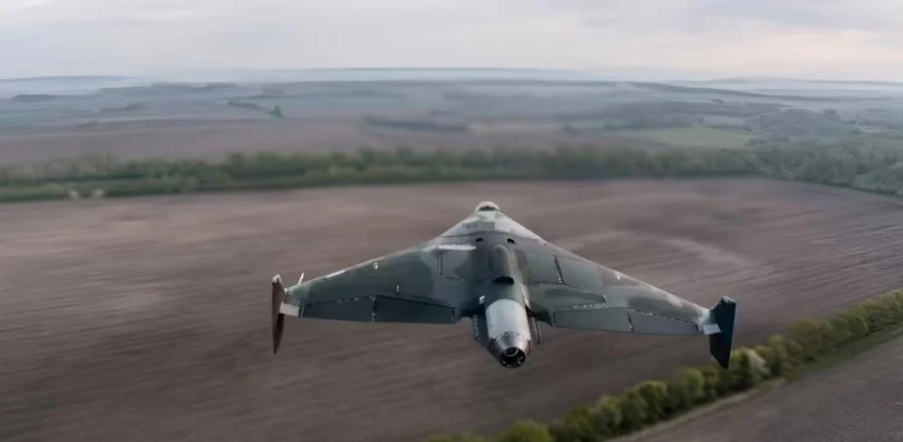
The Geran-4 Seeker sends video to an operator searching for targets. Once the operator selects one, onboard software guides the final approach. Russia says it has used the system against ships near Chornomorsk, but public evidence does not show how many locomotive strikes involved Seeker; moving trains can also be hit by hand-flown drones redirected in flight.
A $50 computer just flew Russia’s newest jet drone into a Ukrainian grain ship—and jamming couldn’t stop it
Trending Now
Jammers cannot protect every train
Ukraine has fitted trains with jammers, which Ukrainian drone and electronic-warfare specialist Serhii “Flash” Beskrestnov says have protected a significant number of trains. But Russian drones use different frequency bands, so each train needs several systems, and even those cannot provide complete protection.
“Whatever we do, drones will periodically hit trains in the frontline zone,” Beskrestnov wrote in March. “As, unfortunately, they will hit buses and civilian cars.”
Seeker is not the only way to hit a moving train. Russian operators have repeatedly redirected hand-flown drones after spotting trains below, Beskrestnov wrote in April. He said military airspace data allows railway dispatchers to change schedules or evacuate passengers when necessary, and that several hundred trains had been moved out of danger.
The cost is not only rolling stock. On 13 August, a jet-powered Shahed struck the locomotive of the Odesa–Dnipro passenger train at Buialyk station in Odesa Oblast, killing the driver, Ivan Shevchyk, and his assistant, Vasyl Morozov, both of the Znamianka locomotive depot.
The monitoring team had flagged the drone and ordered a stop; the train was entering the station so its 340 passengers, 67 of them children, could get off. All of them were evacuated unhurt. “A sharp maneuver by a jet Shahed is a matter of minutes, and the locomotive crew did not have enough time to come to a full stop and evacuate themselves,” Pertsovskyi wrote.
Prosecutors opened proceedings under Article 438 of the criminal code, violation of the laws and customs of war, causing death.
Two days later, Ukrzaliznytsia changed its rules, increasing the distance at which a train is halted and evacuated when a threat appears—a decision Pertsovskyi tied to the growing number of jet drones. Eight railway workers had been killed in the preceding weeks, at Lozova and Erastivka stations and on the train at Buialyk.
Ukraine is going after the equipment that makes the operator’s link work. On 13 and 14 August, Ukrainian forces struck two ground-based relay stations near Zaliznyi Port in Kherson Oblast that transmit control signals between Russian operators and Geran and Gerbera drones, extending their range and steadying the connection, along with five UAV command posts.
Such relays extend the operator-controlled phase of Geran and Gerbera attacks, including variants that may switch to onboard guidance for the final approach.

Delays reveal resilience—and attrition
Russia has not carved the railway into islands. When seven drone strikes hit a junction between Dnipro and Zaporizhzhia in a single day on 30 January, wrecking locomotives, wagons, and track, trains were rerouted through Dnipro, and evening passengers were put on buses.
Freight was moving again within a day; passenger service stayed cut longer, judged too dangerous for civilians, Le Monde reported. Track and power lines are repaired quickly, and a diesel engine can stand in where electric traction is out of service.
The cost lands on the rolling stock. A locomotive is harder to replace than track, and some of that loss is already permanent. By April, around 50 of more than 300 locomotives hit since the full-scale invasion had been destroyed beyond repair, Deputy Communities Minister Oleksii Balesta said. By 24 August, the total number of damaged locomotives had risen to 492, Infrastructure Minister Mykola Kalashnyk said.
New locomotives will arrive slowly. The first machines from a 55-locomotive order placed with French producer Alstom through a World Bank tender are due in early 2027 for certification, with the full batch expected by May 2029.

Rail cannot replace the sea
Even undamaged, the railway could not move as much export cargo across the EU border as the ports did by sea. The EU lines are slower, more expensive, and interrupted by a change in track gauge at the border. The Danube is running too low this summer to float full barges, and road haulage was never more than a sliver of Ukraine’s bulk grain.
The strain reaches past agriculture. Ferrexpo stopped seaborne iron ore pellet exports, the Southern Mining and Processing Plant in Kryvyi Rih cut back, and Ukrzaliznytsia throttled some cargo runs to the Odesa port stations, according to Ukrainian industry reports.
The shortfall does not stay inside Ukraine. Egypt, Algeria, and Indonesia together bought about 8.7 million tons of Ukraine’s wheat last season—roughly 62% of the total, with Egypt alone taking more than a quarter.
A long closure of the deep-water ports would send those import-dependent buyers hunting elsewhere: the trade analytics firm ASAP Agri puts Ukraine’s 2026/27 wheat exports at 5 to 10 million tons if the blockade holds, with buyers like Bangladesh turning to Indian wheat instead.
Ukraine is responding with air defenses around key rail nodes, dispersed locomotives, and repair kits pre-positioned for fast fixes, and its transport ministry has taken a railway-resilience plan to NATO, built on early warning and centralized recovery management.
Russia drove most ships from the sea route, leaving Ukraine more dependent on constrained alternatives, and has been hitting the locomotives serving its rail corridors—more than 250 damaged in six months, some beyond repair. But the railway still functions.
Read also
-
Russia destroyed most of Ukraine’s big warehouses. Now the country is scrambling to build small ones everywhere
-
Russia keeps striking Ukraine’s energy system. Winter resilience plans are less than half complete
-
Shares in Russia’s second-largest bank hit record low as Wildberries-linked offering price holds steady


