


For more than twenty years, Russia ran an unrelenting hybrid warfare campaign against Ukraine—patient, sustained, multi-dimensional. It was, in the end, self-defeating.
European governments have spent the same twenty years preparing to be on the receiving end of something like it. They may not get twenty years. Moscow has now watched where that playbook led—a hardened Ukrainian military, a society that cohered under pressure, a war Russia is losing—and has every reason to reach for something faster against NATO's eastern flank.
Russian methods in Ukraine were varied and overlapping: political subversion, economic pressure, cyberattacks, information operations, the slow corruption of a political class.
Narrowly judged, it worked. Ukraine's economy was repeatedly disrupted. Its politics were penetrated. Donbas tied down the military, produced refugees, and absorbed national attention. Western investors kept their distance. Moscow pursued clear objectives and "red lines"—sometimes strategically, sometimes opportunistically, almost always patiently. Ukraine stayed poor, divided, and, as the Kremlin read it, manageable.
Manageable is not subdued. That is where the doctrine broke.

By 2022, Moscow had concluded that hybrid pressure would not deliver what it most wanted: keeping Ukraine inside the Russian orbit and out of Western institutions. The Euromaidan revolution, the EU Association Agreement, deepening military cooperation with NATO and the United States—all of it pointed one direction, and the direction was away.
So Russia abandoned the "sub-threshold" game and reached for what it thought would settle the question: a full invasion.
What it hit was not the hollowed-out state twenty years of pressure were supposed to have produced. It was a country that had been forged by that pressure. Ukraine had rebuilt its military—much of it on Western assistance unlocked, ironically, by Western alarm over Russia's hybrid aggression. It had hardened its networks. It had walked its energy sector out of Russian dependency. Civil society had the institutional reflexes and grassroots muscle that come from two decades of adversarial pressure.
The citizens, by the time the tanks moved, had already decided what kind of country they wanted. Putin—this is the line everyone repeats now—turned out to be the greatest catalyst of modern Ukrainian nationalism. A nationalism fully cut loose from its Soviet past. With, at this point, no meaningful tie to Russia or Russianness.
Kyiv was supposed to fall in three days. Four years on, Ukraine is still fighting. The hybrid attacks have not stopped—the power grid gets hit again every winter—but Ukrainians have absorbed that into daily life and not shifted on the fundamentals. At the political level, Zelenskyy has shown a maturity few expected, most recently by closing a deal with Saudi Arabia in the middle of a war in Iran. Kyiv is behaving like a serious Western player. The EU, by contrast, is being mocked for its statements of concern.
It would be naive to think Moscow has not absorbed what happened here. Prolonged hybrid warfare, however tactically satisfying, risks making your eventual enemy stronger. It gives them time. It gives them reasons. It hardens institutions. It builds international sympathy, and sympathy, eventually, becomes materiel. If the goal is conquest or capitulation, patience may be the worst option on the menu.
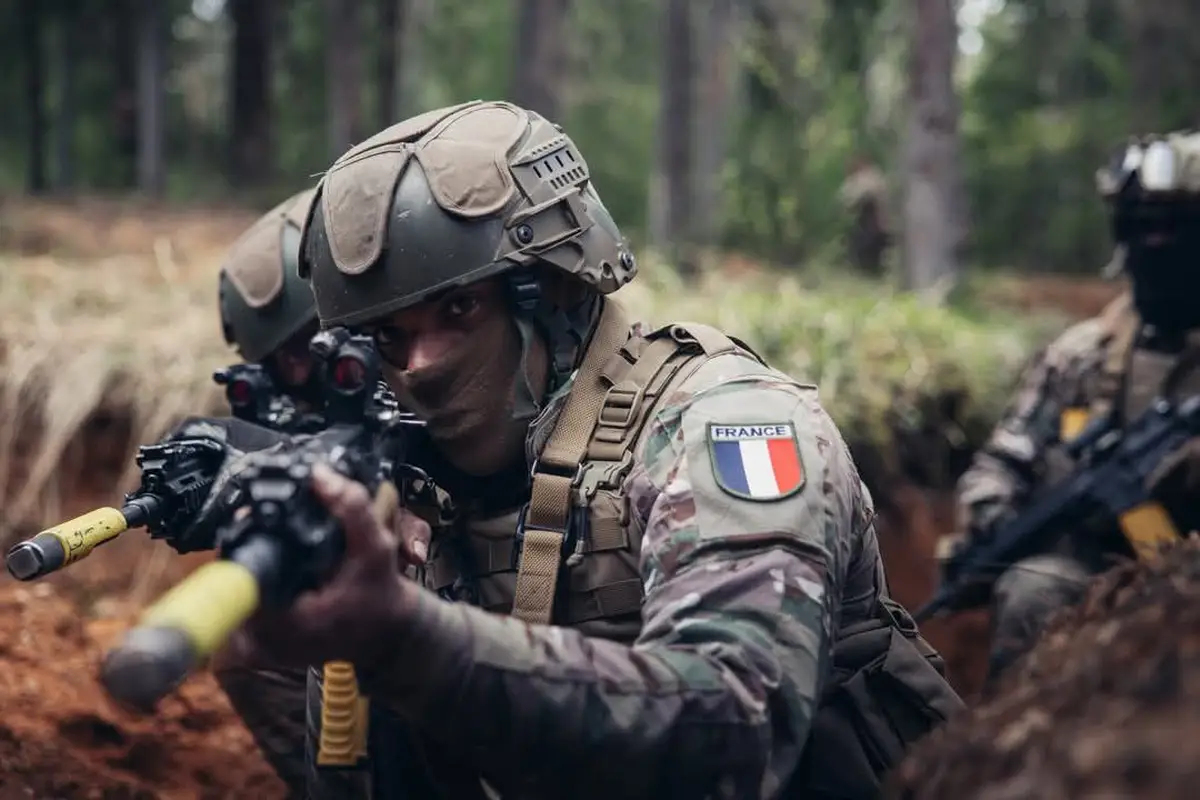
And the ground has shifted in ways that make faster action easier to imagine, not harder. The rules-based order that imposed at least some friction on overt territorial aggression is unraveling in real time. The current American administration has shown, across several files, that unilateral action in pursuit of national interest is an acceptable instrument again—and sometimes a productive one. How Moscow reads all this is still unclear. The signal it is receiving is not. Decisive action is back on the table. "You can just do things," as the phrase goes now.
A core driver of Soviet grand strategy during the Cold War was the fear of surprise. The Nazi invasion of June 1941 and the Great Patriotic War remain foundational experiences—for the state, and for the people. Hardliners in Moscow are gaining ground, and they may yet shift the calculus of a president who has so far leaned on the language of deterrence and strategic restraint.
European planners should be treating this convergence with more urgency than they currently are. If Russia turns next to the Baltic states, or Finland's long border, or another soft edge—there is no reason to assume it will slow-play the way it slow-played Ukraine.
Twenty years of probing before committing? Why would the Kremlin hand a second adversary the same gift?
The decades of pressure that accidentally built Ukrainian resolve and Ukrainian capability will not be extended to NATO's eastern flank. European governments, militaries, and critical infrastructure operators need to achieve in years—perhaps in months—what Ukraine built over decades. Tallinn and Helsinki do not have twenty years. They may not have two.


