The European Union will present proposals to restrict former Russian combatants' entry into the bloc by June's European Council, EU High Representative Kaja Kallas announced following a meeting of EU foreign ministers in Brussels.
"Finally, we will come with proposals to restrict former Russian combatants' entry to the European Union by the time of June's European Council," Kallas said, listing the initiative among a wider set of measures aimed at countering Russian destabilization efforts.
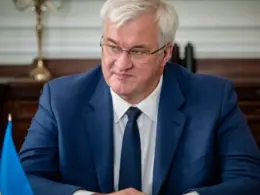
Ukrainian Foreign Minister Andrii Sybiha endorsed the proposal on X. Sybiha framed the entry ban as a logical response to Russian aggression and argued that participation in the war should carry political consequences alongside military ones.
"This is a timely and welcome step that will show every Russian that by signing a contract to fight a criminal war of agression against Ukraine they also sign an entry ban to Europe," Sybiha said. He called on all EU member states to support the initiative and to adopt corresponding decisions at the national level.
Part of a wider Russia package
The combatants proposal sits alongside other measures the Foreign Affairs Council approved or advanced the same day. Ministers signed off on additional sanctions against those behind disinformation campaigns inside the European Union and extended measures against actors destabilizing Moldova.
Kallas also flagged a cultural front. "While Russia bombs museums, destroys churches and seeks to erase Ukrainian culture, it should not be allowed to exhibit its own," she said, calling Russia's return to the Venice Biennale "morally wrong" and confirming the EU intends to cut its funding.
€90 billion loan and sanctions packages
Kallas said she expects a positive decision on the €90 billion loan to Ukraine within 24 hours, citing new momentum following Hungarian elections. Ministers also urged the bloc to move forward with the 20th sanctions package, which Kallas described as "long overdue," while some ministers floated ideas for a 21st package.
She said the EU's EUMAM mission has trained over 90,000 Ukrainian soldiers, and reported broad support for advancing a fourth pillar of European security guarantees focused on defense sector reform, hybrid and cyber threats, and veterans.
On the Druzhba pipeline dispute, Kallas said Ukraine had committed to resuming flows — the obstacle, she said, for Hungarian and Slovak counterparts. Asked who holds the leverage, she replied: "if you are buying Russian oil and gas, then the leverage is with Russia."
Read also
-
Ukraine’s bomber drones, ones that dropped ground robots in its recent Donetsk counteroffensive, are getting 2.4-kilogram jammer to shield them from FPVs
-
As Russia expands attacks on Kyiv, Ukraine prepares to hit Moscow’s oil industry harder in response
-
Ukraine’s top general wants to end Soviet rules in army. But president’s wartime headquarters may still hold reforms, commander says