


In the first ten months of 2025, Hungary paid more into the EU budget than it received back—the first time since Budapest joined the bloc in 2004, per official Hungarian data from the Ministry for National Economy.
The cause: roughly €35 billion ($41 billion) in EU funds frozen since 2022 over rule-of-law failures.
Péter Magyar won last week’s election largely on a promise to bring that money home. What he inherits is more complicated than the headline number suggests.
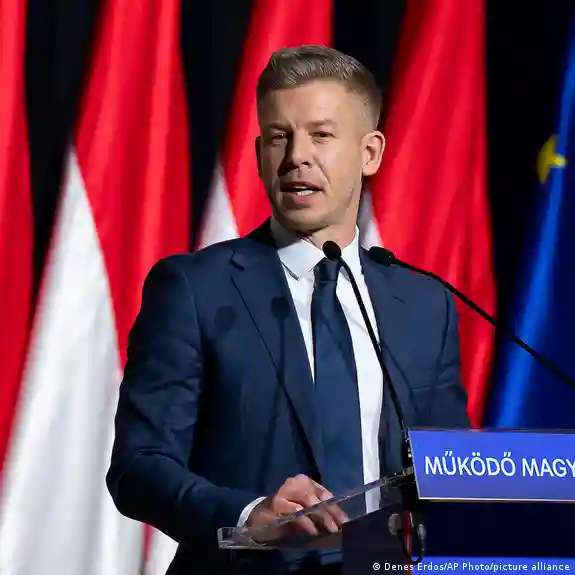
EU hands Hungary’s new leader 27 conditions. One of them is unlocking €90 billion for Ukraine
Two pots, not one
The first and larger portion is cohesion and structural funding—money the EU distributes to poorer member states to build infrastructure and close the economic gap with wealthier neighbors. The Commission froze it in 2022 after concluding that Hungary’s judicial system, public procurement processes, and university governance had all been compromised to a degree that made lawful spending impossible to guarantee.
More than €2 billion ($2.4 billion) has since been permanently written off under the EU’s two-year “use it or lose it” rule.
A partial thaw came in December 2023, when Brussels released roughly half the suspended cohesion funds after limited judicial reforms—a decision the European Parliament criticized as a political deal rather than a verified compliance milestone.
More than €2 billion ($2.4 billion) has since been permanently written off under the EU’s two-year “use it or lose it” rule, with further forfeiture deadlines ahead.
The second pot—about €17 billion ($20 billion)—is a separate instrument entirely: concessional loans under the EU’s SAFE program, created to help member states invest in defense production and industrial capacity.
Hungary remains the only EU member state still waiting.
This money is not frozen over rule-of-law concerns—Hungary simply has not yet submitted a national plan that the Commission considers ready for assessment. France and the Czech Republic were both cleared in March 2026. Hungary remains the only EU member state still waiting.
For Ukraine, the stakes are direct: one of Brussels’s 27 conditions for releasing the funds is that Hungary lift its veto on the €90 billion ($106 billion) EU loan to Kyiv.
Trending Now
The August deadline
The most urgent problem is a deadline that predates the election. Under EU rules, Hungary must hit a set of reform “super-milestones” by 31 August 2026 to access its Recovery and Resilience Facility allocation—the post-pandemic investment fund the EU created to help economies rebuild.
Magyar is targeting a government handover by 5 May.
Miss it, and €10.4 billion ($12.3 billion) is forfeited, including advance payments already received that would have to be repaid. Magyar is targeting a government handover by 5 May, leaving him roughly three months from inauguration to show sufficient progress.
What the freeze cost
EU transfers have been Hungary’s main growth engine. EU funds historically contributed an average of 1.4 percentage points to Hungary’s annual GDP growth, according to GKI, Hungary’s leading independent economic research institute.
Strip them out and average annual growth since EU accession would have been 0.7%—against the 2.1% actually achieved. When the funds dried up, the European Commission projected 2025 GDP growth of just 0.4%, while cumulative inflation from 2016 to 2025 reached 73.2%—the highest in the EU.
Markets reacted immediately to Magyar’s win.
On top of the frozen funds, an ECJ ruling on asylum has been costing Hungary €1 million ($1.18 million) per day in fines since 2024, with nearly €900 million ($1.06 billion) already deducted from its EU budget share.
Markets reacted immediately to Magyar’s win. The forint strengthened to a four-year high against the euro—a roughly 4% move in days—as investors priced in the prospect of EU funds being unlocked. Analysts cautioned that much of the optimism may already be reflected in the exchange rate.


