American defense contractor Raytheon signed a $3.7 billion deal to build Patriot missiles for Ukraine using German funding, the company announced on 14 April.
This will provide an air defense lifeline for Ukraine — for now, Patriots are Ukraine’s only answer to Russian ballistic missiles, although the types of missiles to be produced are older models, less effective against modern ballistics compared to newer versions.
The specific generation Raytheon will supply to Kyiv are Patriot Advanced Capability-2 (PAC-2) Guidance Enhanced Missile-Tactical (GEM-T) designed to counter tactical ballistic missiles and other airborne threats. According to Raytheon and Kyiv officials, “several hundred” missiles will be provided.
"Raytheon is investing heavily to increase GEM-T production to support growing global demand, driven by major internal and partner investments, second‑sourcing initiatives and the expansion of our global supply chain,” Raytheon President Phil Jasper said in a statement.
The new GEM-T production facility in Schrobenhausen, Germany will play a "key role" — this facility is operated by a joint venture between Raytheon and MBDA Deutschland, a large German missile manufacturer.
The arrangement is part of a new strategic partnership agreement reached today between Kyiv and Berlin, which included a flurry of arms deals to the tune of 4 billion euros. These include Germany providing Ukraine with more IRIS-T air defense missile launchers, investing in Kyiv’s deep strike capabilities, and exchanging battlefield data.

"Today we have new cooperation agreements — 10 in total in key areas," said President Volodymyr Zelenskyy.
Part of that includes the joint production of drones, including mid-strike drones enhanced with AI, according to Ukrainian Defense Minister Mykhailo Fedorov.
“Our experience can be integrated into the European security system,” Zelenskyy said.
Why "several hundred" missiles?
PAC-2 GEM-Ts haven’t been procured by the US military for a while. While some publications have put per-unit cost at $4 million, that price is likely much lower, with $2 million a conservative bottom estimate, US open source analyst John Ridge said. The newer PAC-3 Missile Segment Enhancement (MSE) costs $3.8 million apiece, according to US Army documents.
This would mean that $3.7 billion could theoretically pay for anywhere between 925 to 1,850 GEM-T missiles.
The announcements did not clarify how the money would be spent or what the production capacity of the Schrobenhausen facility is.
“Several hundred missiles” could be vague diplomatic language designed to obscure the specifics of the deals or to hide the true number of missiles from Russia.
It's also unclear when Ukraine will get these missiles. In December, Hartpunkt reported that Germany plans to produce PAC-2 GEM-Ts on its territory with Raytheon, but the delivery date of the first 1,000 to Germany and several other European countries was listed as 2028.
Patriot missile hunger
There is a global hunger for Patriot missiles, especially after the start of the US-Israeli war on Iran.
US defense contractors can produce 550 PAC-3 MSE interceptors per year, according to the Department of Defense Fiscal Year 2026 Budget Estimates. The US Army is buying 224 of them, while the remaining amount is slated for foreign sales. PAC-2s are produced in fewer numbers, Ridge said.
Washington is trying to remedy this. The DoD recently signed a framework with defense giant Lockheed Martin to raise PAC-3 MSE production from 550 to 2,000 units per year over the next 6-7 years.
Business Insider reported that Lockheed is on track to produce more than 600, promising a "significant increase" in 2027.
Oslo University missile expert Fabian Hoffmann estimated that the current annual production of PAC-2 GEM-T and PAC-3 MSE interceptors is around 850 to 880. However, this barely exceeds the lower-end estimate for annual 9M723 and Kh-47M2 Kinzhal ballistic missile production, he wrote.
Trending Now
Ukrainian intelligence wrote that Russia produces at least 70 ballistic missiles of various types per month, many of which go straight from the factory to the launch site, to be used against Ukraine.
Other miltech agreements
German company Diehl Defence is also providing Ukraine with more IRIS-T launchers, according to the German Defense Ministry. Ukraine's Defense Minister Mykhailo Fedorov said a total of 36 IRIS-T launchers will be supplied.
IRIS-T surface-launched missiles come in different variants, including short-range (SLS) and medium-range (SLM) variants, which have a higher operational ceiling.
Diehl also signed a cooperation agreement with Ukrainian companies Fire Point and Luch Design Bureau. The former makes a range of attack drones and missiles including the Flamingo, while the latter is behind the Neptune cruise missile and the recently re-unveiled Koral surface to air missile, among other products.
Additionally, Germany will invest 300 million euros in Ukraine’s long-range capabilities, to help Ukraine ramp up its production of drones and missiles that can hit Russia.

This will add further momentum to Ukraine’s scaling deep strike campaign targeting Russia’s energy and military infrastructure. Said campaign hit a new peak last month, with some estimates saying that Ukraine launched more long-range drone strikes than Russia in March — over 7,000 systems, at ranges of up to 1,500 kilometers into Russia’s territory.
“The campaign's results speak for themselves, likely crossing thresholds earlier phases did not reach: cumulative damage to Russian energy infrastructure now appears to be outpacing Russia’s capacity to repair and replace it,” Hoffmann wrote.
Then, Ukraine and Germany are also jointly producing mid-strike drones, which have been giving the Russian troops extra trouble of late. These mid-range drones like the FP-2, the Rubaka, and others, are striking Russian deployment points, HQs, repair bases, warehouses, aircraft, ships, and so on, much to the chagrin of Russian warfighters and military bloggers.
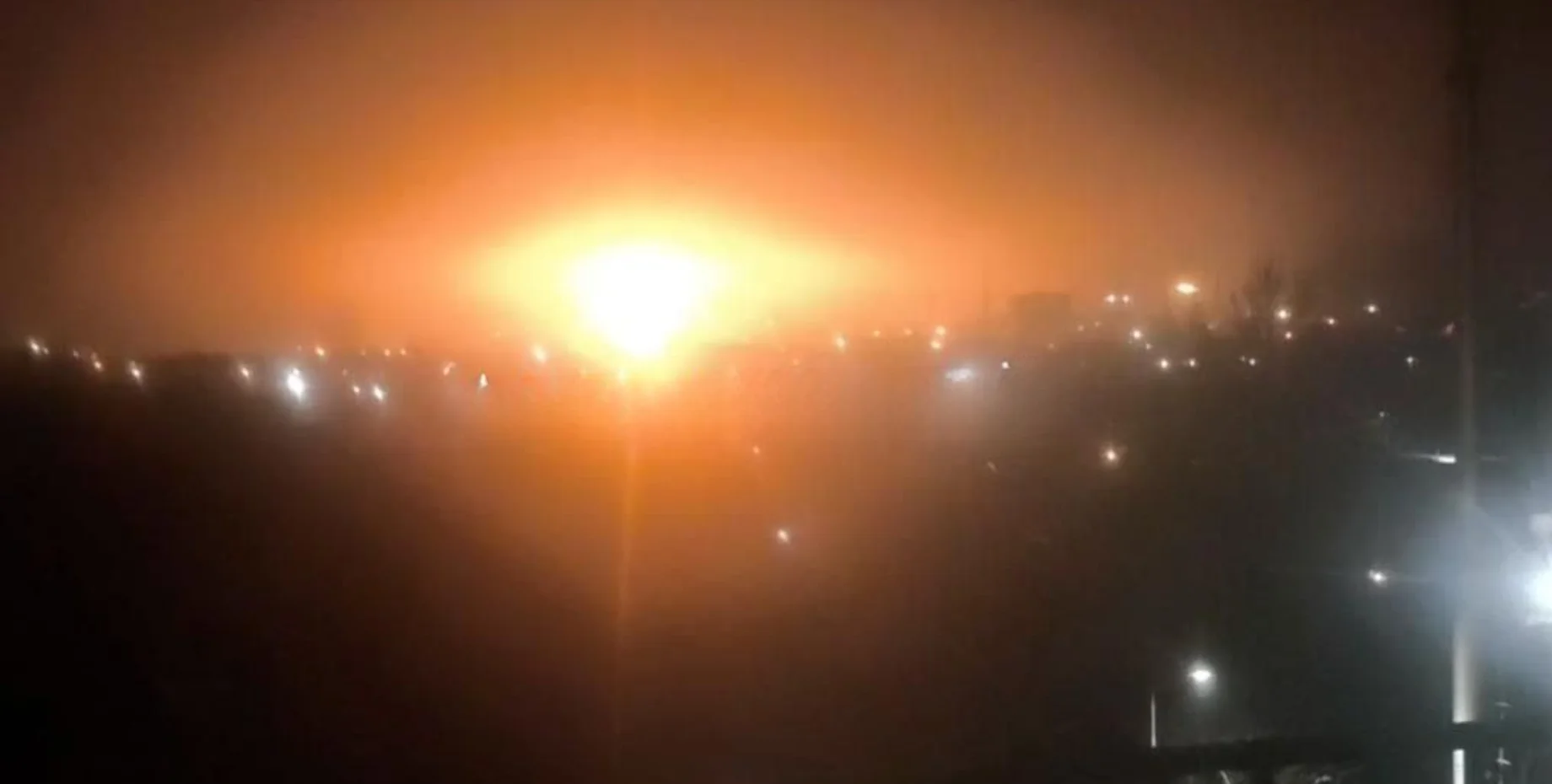
Fedorov said that in the first phase of the agreement, 5,000 AI-enhanced drones will be built for the Ukrainian military.
“Grateful to Boris Pistorius for his leadership and systemic support,” Fedorov said in a statement. “This is a win-win cooperation that strengthens the defense of Ukraine and the security of all of Europe.”
Finally, Germany and Ukraine agreed to share battlefield data. That includes analysis of the deployment of German weapon systems, including the PzH 2000, RCH 155, and IRIS-T, as well as the exchange of Ukrainian expertise and battlefield data, including digital systems such as Avengers, DELTA, and other solutions.
Last month, Ukraine opened up its battlefield data to allies, to help train their military AI. According to Fedorov, the data sharing platform will allow partners to safely train models without direct access to sensitive information, and work with a large array of labeled photo and video materials, which is constantly updated.
Experts told Euromaidan Press that Ukraine is most likely a world leader in such data, making it an attractive partner for any ally seeking to implement machine learning in their weapons.
Full list of 14 April agreements
- A declaration of strategic partnership between Ukraine and Germany
- Cooperation on battlefield data — enhanced interaction between the ministries of defense on tech and data use to upgrade battlefield equipment
- Joint declaration supporting industrial recovery and resilience — Germany will contribute an initial 30 million euros to aid Ukrainian industry and restore capacity
- Implementation of the agreement on joint production of Anubis and Seth-X-G unmanned systems. The contract value is 281 million euros
- Raytheon deal for the supply of PAC-2 missiles and Diehl deal for IRIS-T systems
- Memorandum of Cooperation between the Ministry of Community and Territorial Development of Ukraine and the German Federal Ministry of Housing, Urban Development, and Construction
- A Memorandum of Understanding between the State Service of Geology and Subsoil of Ukraine and the Federal Institute for Geosciences and Natural Resources of Germany on mineral exploration
- Joint Communiqué on Ukrainian-German Cooperation in the Field of Mineral Resources
- Joint Declaration of Intent on expanding institutional partnership between Germany’s Ministry of Labor and Social Affairs and Ukraine’s Ministry of Social Policy, Family, and Unity
Read also
-
This is the fancy new F-16 Ukraine could get. It’s not what its pilots need most.
-
One year of Ukrainian arms exports, and industry has questions: how much army gained, where Berlin office is, who joins joint ventures
-
Ukraine’s answer to Russia’s jet Shaheds: a jet drone named Bars, built to strike Russia and now turned around to hunt them