


Péter Magyar's Tisza party won Hungary's parliamentary election on 12 April 2026 in a landslide, ending Viktor Orbán's 16-year rule and stripping Putin of his most reliable ally within the EU. The result — a two-thirds supermajority for Tisza — carries potentially far-reaching consequences for Ukraine, the European Union, and the global far right that had championed Orbán as its model.
Landslide on record turnout
With nearly 99% of ballots counted in the early hours of 13 April, Tisza secured 138 seats in Hungary's 199-seat parliament, against 55 for Orbán's Fidesz-KDNP alliance and 6 for the far-right Mi Hazánk Mozgalom. The result gives Magyar a constitutional supermajority — enough to amend the basic law Orbán rewrote in his own image after his first two-thirds win in 2010. Turnout reached nearly 80%, the highest in Hungary's post-communist history.
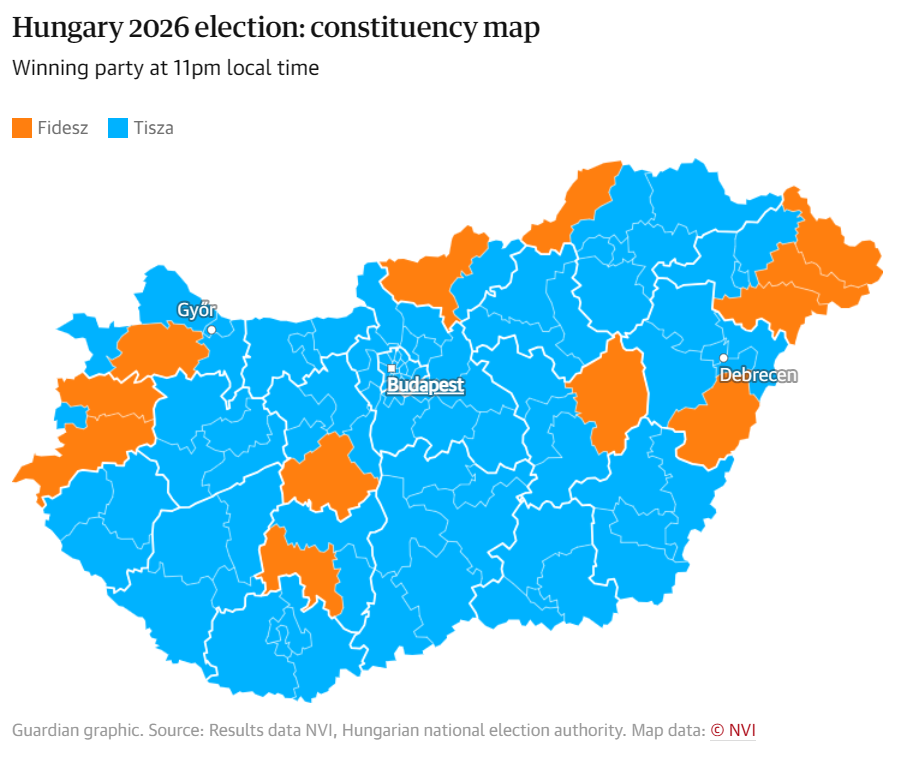
Shortly after the vote counting started yesterday, Orbán conceded defeat and called the result "painful" but "clear," congratulating Magyar directly. Speaking to tens of thousands of supporters on the bank of the Danube, with Hungary's parliament building lit up across the river, Magyar promised to bring Hungary back into the European mainstream and pledged a pro-EU, pro-NATO course after years of isolation. He compared Orbán's ouster to Hungary's 1848 revolution and the 1956 uprising against Soviet rule.
At opposition events, including the victory rally, one of the popular chants was "Russians go home."
What Orbán's campaign was actually about
Magyar ran on fighting corruption and domestic reform — Hungary's stagnating economy, its deteriorating healthcare, and its gutted judicial system.
Orbán ran on fear. His campaign centered on false allegations against Ukraine and Zelenskyy personally, depicting Hungary as one step away from being dragged into the war. He denigrated EU leadership as "Brusselians" and championed continued purchases of Russian gas, deepening an energy dependency his government had spent years building.

The BBC noted the central contradiction of his rule: Orbán "painted himself as the champion of national sovereignty, but refused to stand up for Ukrainian sovereignty against Russia. He railed against immigration, but quietly encouraged immigration to build his new factories."
Magyar himself was not an outsider. He served as a foreign affairs official in Orbán's 2010 administration before resigning from Fidesz in 2024 over a presidential pardons scandal.
Trump, Vance, and silence from Washington
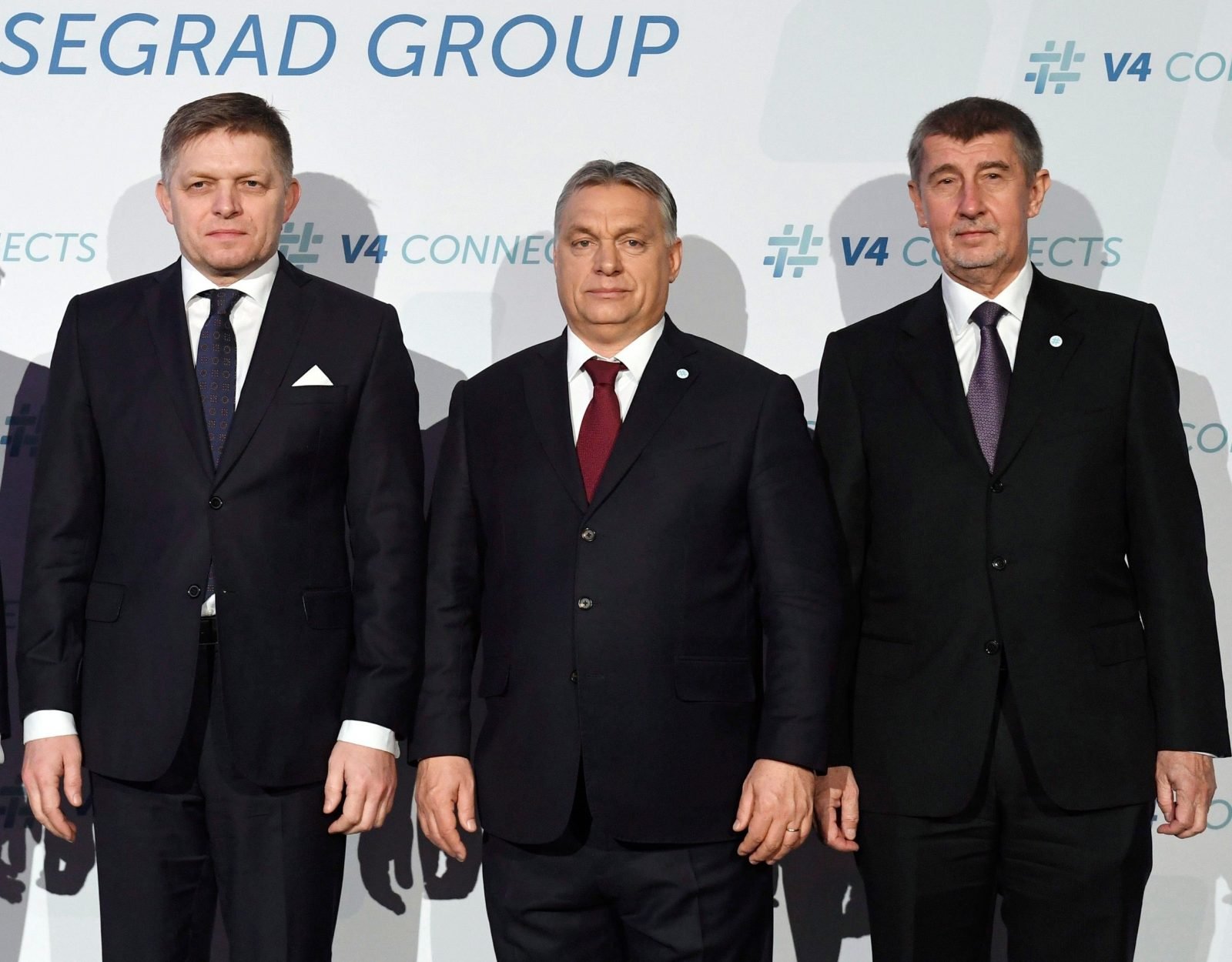
US President Donald Trump publicly endorsed Orbán and told Hungarians to vote for him. Vice President JD Vance flew to Budapest on 7 April, held a bilateral meeting with Orbán, called him "one of the only true statesmen in Europe," and appeared at a campaign rally where he said:
"We've got to get Viktor Orbán re-elected as prime minister of Hungary, don't we?"
Neither Trump nor Vance had commented on their ally's defeat by Monday morning.
When asked about Orbán's defeat, Trump ignored the question and just walked away from the reporters:
EU, Ukraine react
EU Commission President Ursula von der Leyen wrote:
"Europe's heart is beating stronger in Hungary tonight," and later added: "Hungary has chosen Europe. Europe has always chosen Hungary. A country reclaims its European path. The Union grows stronger."
Leaders from across EU member states congratulated Magyar.
Zelenskyy welcomed the result directly:
"Congratulations to Péter Magyar and the Tisza party on their resounding victory. Ukraine has always sought good-neighbourly relations with everyone in Europe and we are ready to advance our cooperation with Hungary."
The implications for Ukraine could be substantial. Orbán had vetoed the EU's 20th sanctions package against Russia and a €90 billion loan to Ukraine on the eve of the war's fourth anniversary, breaking a pledge made at the December EU summit.
Read also
-
Hungary robbed $82 million from Ukraine’s state bank, now it has fabricated subtitles on a toilet-office joke video to justify it
-
Leaked documents show Hungary agreed to Russian teachers, energy deals, and circus cooperation with Moscow. Magyar calls it outright betrayal
-
Hungary votes Sunday: what could change if Viktor Orbán loses to Péter Magyar—and what may not
-
Vance openly supports Russia’s favorite European ally in Budapest, while accusing Ukraine in meddling Hungarian elections


