As European leaders rallied in Davos to present a united front against President Donald Trump's demands for Greenland, Hungary's Foreign Minister Péter Szijjártó declared Budapest would not support a joint EU statement on the issue—calling it a "bilateral matter" that doesn't concern the bloc.
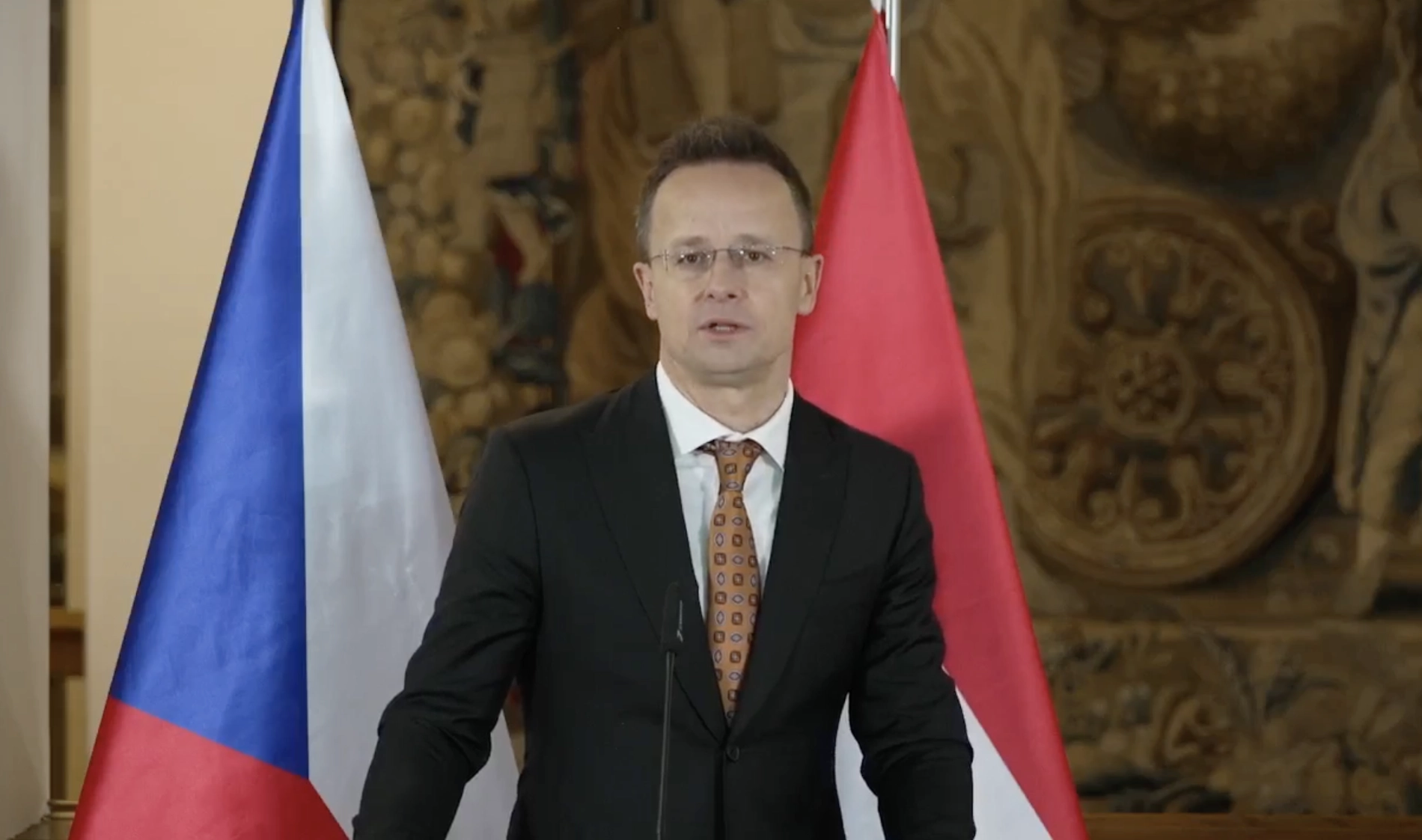
"We consider this a bilateral issue that can be resolved through negotiations between the two parties. I don't think this is an EU matter," Szijjártó said at a joint press conference with Czech Foreign Minister Petr Macinka in Prague on 20 January, according to Index.hu.
The Hungarian minister confirmed Budapest had already communicated its position at the EU permanent representatives' meeting, stating they see "no need, and therefore no possibility" for a common EU declaration.
Hungary's stance clashes with EU solidarity push
Szijjártó's remarks came as European Commission President Ursula von der Leyen pledged an "unflinching, united and proportional" EU response to Trump's tariff threats over Greenland. Speaking at Davos, von der Leyen called the threatened duties "a mistake, especially between long-standing allies," PBS News reported.
Trump announced 10% tariffs starting February on eight European nations—Denmark, Norway, Sweden, France, Germany, the UK, the Netherlands, and Finland—that deployed troops to Greenland last week. Those countries responded with a joint statement affirming solidarity with Denmark.
Hungary was not among them.
French President Emmanuel Macron warned at Davos that the tariffs could force the EU to activate its anti-coercion mechanism against the United States "for the very first time." EU High Representative Kaja Kallas told the European Parliament that no country has the right to seize another's territory—"not in Ukraine, not in Greenland, not anywhere in the world," Anadolu Agency reported.
Eager for Trump's peace council, absent on Ukraine
While breaking from EU consensus on Greenland, Hungary moved swiftly in another direction. At the same Prague press conference, Szijjártó confirmed Hungary had begun internal legal procedures to join Trump's "Board of Peace"—a new body meant to oversee Gaza's reconstruction that critics say could rival the UN Security Council.
Prime Minister Viktor Orbán accepted Trump's invitation within days of receiving it. Szijjártó told public radio the government considered the invitation "an honour" and would gladly participate in the board's work. Permanent membership on the board costs $1 billion, though three-year terms carry no fee.
The contrast with Hungary's stance on Ukraine is stark. Budapest has never provided military aid to Ukraine, has repeatedly blocked EU sanctions against Russia, and continues to veto Ukraine's EU accession talks. In June 2025, Szijjártó pledged to block "any new financial aid, any new arms deliveries, or any new military operations" supporting Kyiv.
Czech Foreign Minister Macinka, while not as categorical as Szijjártó, also avoided strong support for EU unity. He suggested Czechia could mediate between Washington and Copenhagen, noting Prague has better relations with the Trump administration than many European countries, HVG reported. When asked about the Gaza Peace Council, Macinka noted Czechia wasn't invited—but added they wouldn't pay $1 billion even if they were.
Pattern of breaking EU unity
Hungary's Greenland stance fits a pattern. Since Russia's 2022 invasion of Ukraine, Orbán's government has consistently used its veto power to delay or block EU measures supporting Kyiv while maintaining warm relations with Moscow. The European Parliament has repeatedly debated stripping Hungary of its voting rights under Article 7.
Now, as Trump pressures a NATO ally over Arctic territory, Hungary has chosen alignment with Washington over European solidarity—while simultaneously rushing to join an American-led initiative that France has already rejected as potentially undermining the UN.
Trump arrived in Davos Wednesday for scheduled meetings with European leaders. He posted an AI-generated image on Truth Social of himself planting an American flag on Greenland with a sign reading "US Territory, Est. 2026."