
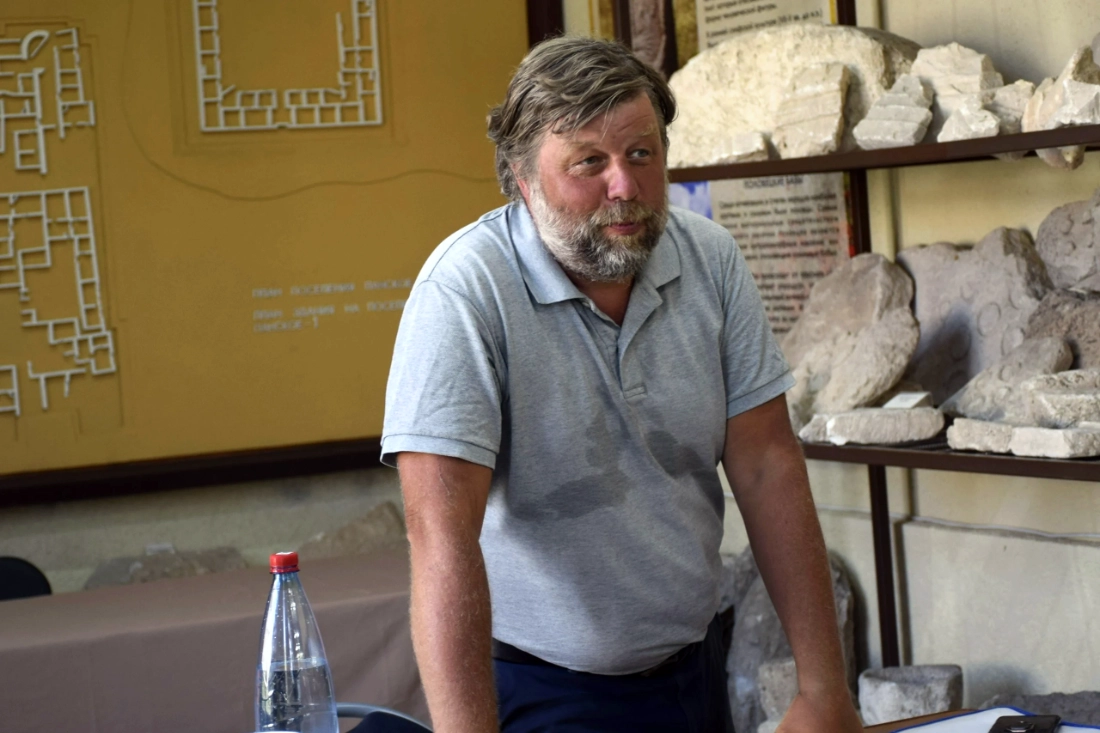
A Warsaw court has extended the detention of Alexander Butyagin, a senior Russian archaeologist from the State Hermitage Museum, until 4 March as Poland weighs Ukraine's extradition request, RMF FM reported on 12 January.
Butyagin is one of at least eight Hermitage employees identified as conducting unauthorized excavations in occupied Crimea since Russia's 2014 annexation. Ukraine's Defense Intelligence has documented artifacts stolen from occupied territories and published the data in the "Stolen Heritage" section of the War&Sanctions portal.
Why Ukraine is prosecuting Butyagin
Ukrainian prosecutors say Butyagin led excavations at the ancient Greek city of Myrmekion near Kerch from 2014 to 2019 without permits from Ukrainian authorities. His teams removed approximately two meters of what archaeologists call the "cultural layer"—the stratified soil containing artifacts and evidence of ancient habitation—causing damage Ukraine's Security Service estimates at over 200 million hryvnias (approximately $4.8 million).
International law prohibits archaeological excavations on occupied territories without authorization from the internationally recognized authority.
Poland's extradition process
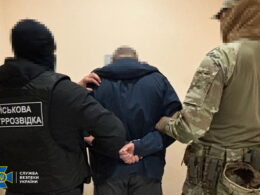
Poland's Internal Security Agency detained the researcher at his Warsaw hotel on 4 December. A court initially ordered him held for 40 days.
Polish prosecutors now support Ukraine's extradition request. The Warsaw court found that the alleged crime has Polish equivalents, is prosecutable under Polish law, and charges can still be brought, RMF FM reported. The court also noted Butyagin poses a flight risk since he has no permanent residence in Poland.
A ruling on whether extradition is legally permissible is scheduled for Thursday, 15 January. If approved, Poland's Justice Minister makes the final decision.
Moscow calls charges "absurd"
Russia summoned Poland's ambassador on 12 January to protest, calling Ukraine's accusations "absurd" and demanding Butyagin's immediate release. The Foreign Ministry insisted that Crimea is "an inalienable part of Russia" and that Butyagin's work was legitimate scientific research.
The Hermitage has claimed artifacts from the Myrmekion excavations were not removed from Crimea and were recorded with the East Crimean Historical and Cultural Museum-Reserve in Kerch. Some defenders of Butyagin argue his salvage research was aimed at preserving historical monuments from illegal treasure hunters rather than looting.
Russia's systematic looting of occupied Crimea
Butyagin is far from alone. A May 2025 human rights report identified seven Hermitage employees conducting unauthorized excavations across Crimea between 2014 and 2024, working at sites including the UNESCO World Heritage site of Chersonesos Taurica, the Genoese fortress at Balaklava, and the ancient city of Nymphaeum.
Russia's Ministry of Culture issued over 1,355 permits for Crimean excavations between 2014 and 2023—all illegal under Ukrainian law because they lack Ukrainian government approval.
"In the past, when Russians stole our name and our history, they transported exhibits to the Hermitage or Moscow museums," Ukrainian Culture Minister Mykola Tochytskyi said. "Now they successfully trade them on the black market."
Russian attacks have damaged or destroyed over 1,600 Ukrainian cultural heritage sites and nearly 2,500 cultural objects since 2022. In February 2024, UNESCO estimated damage to Ukraine's cultural property at $3.5 billion, with recovery costs projected at $9 billion over the next decade.
"By appropriating Ukrainian culture and history, Russia is attempting to erase Ukrainian national identity and legitimize its aggression and occupation," Ukraine's Defense Intelligence stated.